


Water Quality
Protecting Public Health with Every Drop
Milwaukee Water Works (MWW) is committed to providing the people of Milwaukee with safe, high-quality drinking water every day. By continuously investing in our infrastructure and maintaining one of the most comprehensive water quality monitoring programs in the country, we work to ensure reliable service and protect the health of our community.
2025 Water Quality Report
Each year, the U.S. Environmental Protection Agency (EPA) and state agencies require public water systems to publish a Water Quality Report (Consumer Confidence Report). Milwaukee Water Works publishes this report to summarize where your water comes from, how it is treated, and how it meets safety standards.
The 2025 report includes key water quality testing results for Milwaukee.
Water Quality Monitoring
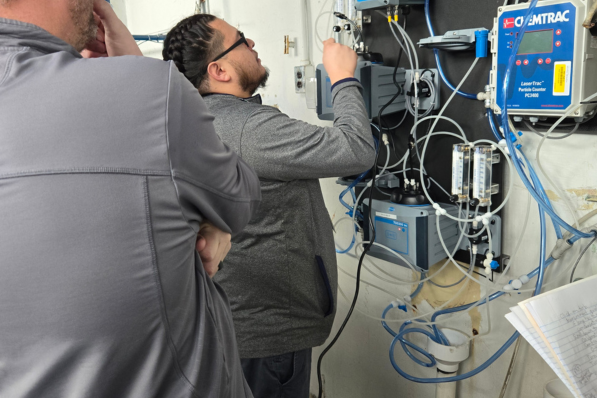
Milwaukee Water Works treats water from Lake Michigan through multiple steps, including ozone disinfection, advanced filtration, and chloramine protection, to keep water safe and great-tasting.
We go beyond regulatory requirements with continuous water quality monitoring throughout the system.
Learn more about our Water Quality Monitoring Program.
PFAS Testing

PFAS are a group of human-made chemicals used in a variety of products to resist water and stains. The full name is Per- and Polyfluoroalkyl Substances.
Milwaukee Water Works has tested for PFAS since 2008 and now monitors 45 different compounds each year. We also participated in a Wisconsin Department of Natural Resources testing program in 2022.

Lead and Copper
Milwaukee Water Works complies with the federal Lead and Copper Rule (LCR), which sets limits on the amount of lead and copper allowed in drinking water. The rule also helps control corrosion in pipes to reduce the risk of metals entering water.
Under the LCR, utilities must ensure that at least 90 percent of sampled household tap water is below action levels of 15 micrograms per liter (µg/L) for lead and 1300 micrograms per liter for copper.
Understanding Your Tap Water: Answers to Common Questions
Why is my water cloudy for a few minutes before clearing?
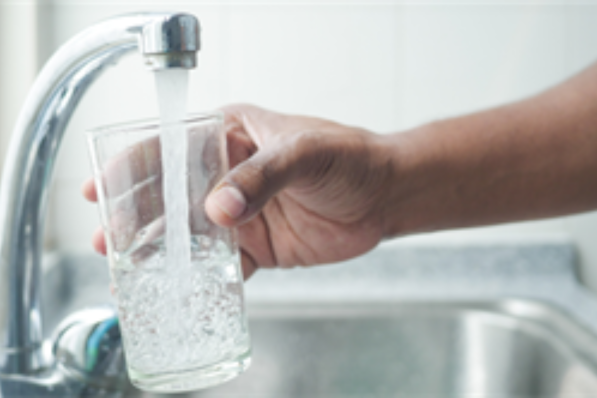
Air bubbles! Milwaukee Water Works begins the treatment process by adding ozone to the water to kill pathogens and improve taste and odor. As the ozone breaks down, it turns into oxygen, adding air to the water. When water leaves the pressure of the pipes, tiny air bubbles can form, giving it a cloudy appearance. This is completely normal and safe to drink—oxygen in the water even enhances its fresh taste!
To observe this effect, fill a glass and let it sit. If the cloudiness slowly rises as the water clears, these are air bubbles escaping.
Key Takeaway: Cloudy water is usually caused by harmless air bubbles. It is safe to drink and will clear up in a few minutes.
Why does my water have some color when I first turn it on, then clear up?
Stagnant water. When water is not used for an extended period, it sits in the service line and household plumbing. Over time, particles or minerals from the pipes may enter the water, causing mild discoloration. Milwaukee Water Works recommends running the water for at least three minutes first thing in the morning to flush out stagnant water and ensure fresh water to start the day. This is especially important for homes with lead service lines or older plumbing.
Should I drink bottled water instead?
While it is good to have some bottled water on hand in case of emergencies, bottled water comes with its own challenges:
Cost
The average cost of a 20-ounce bottle of water is $1.50—that adds up to $9.60 per gallon! Meanwhile, Milwaukee Water Works provides about three gallons of water for just one penny ($0.01). That means bottled water can be 2,000 to 3,000 times more expensive than tap water.
Source
It is not always clear where bottled water comes from. No water source is 100% pure, including springs and artesian wells. Milwaukee’s drinking water comes from one known and protected source: Lake Michigan.
Labeling & Transparency
Bottled water labels do not always provide details about treatment and contaminants. Milwaukee Water Works tests for hundreds of contaminants and shares water quality reports every year. Available on this page or at milwaukee.gov/AWQR.
Testing & Health Standards
While the FDA regulates bottled water, testing rules vary by plant. Milwaukee Water Works tests for bacteria multiple times per day at the treatment plants and over 200 times per month at locations across the city, while bottled water plants are only required to test once per week.
Key Takeaway: Tap water from Milwaukee Water Works is safe, affordable, and rigorously tested, making it a much more cost-effective and transparent choice compared to bottled water.
What's the smell?
The most common cause of a bad smell in the water is actually a smelly drain. Your sink’s drain has a ‘p-trap,’ a curved section of pipe that stays filled with water to prevent sewer gas from coming into your home. If the water in the p-trap drains out, sewer gas can rise up and cause a foul odor near your sink.
To check: Fill a glass with water and take it to another room to smell it. If there is no odor, the smell likely came from the drain, not the tap water. Running your faucet for a couple of minutes will refill the p-trap and usually solve the problem.
Another possibility is your hot water heater. If the smell disappears when you run only cold water but returns when you use hot water, you may need to repair or replace your hot water heater.
Key Takeaway: If your tap water smells, it’s often due to a problem with the sink drain or the hot water heater, not the water itself. A quick check can help you identify and resolve the issue.
What if I become ill and I am worried my tap water caused it?
If you are concerned that an illness may be caused by food or water, contact your doctor immediately. The most important step is getting a diagnosis to help determine the cause.
If your doctor suspects a waterborne illness, they will work with public health officials to investigate. If any issue is linked to the drinking water system, Milwaukee Water Works will work closely with the Milwaukee Health Department to quickly inform the public and take action to eliminate the source, ensuring the community’s safety.
Learn more about Bottled Water Regulations and Quality in Wisconsin:

Customer Service Center
For billing and related questions:
24-Hour Control Center
For water emergencies only:
414-286-5452 (Fax)
Zeidler Municipal Building
841 N. Broadway, Room 406
Milwaukee, WI 53202
Monday - Friday, 8:00 AM - 4:45 PM