Celebrate National Nurses Week
Meet the Nurses Navigating Milwaukee's Health
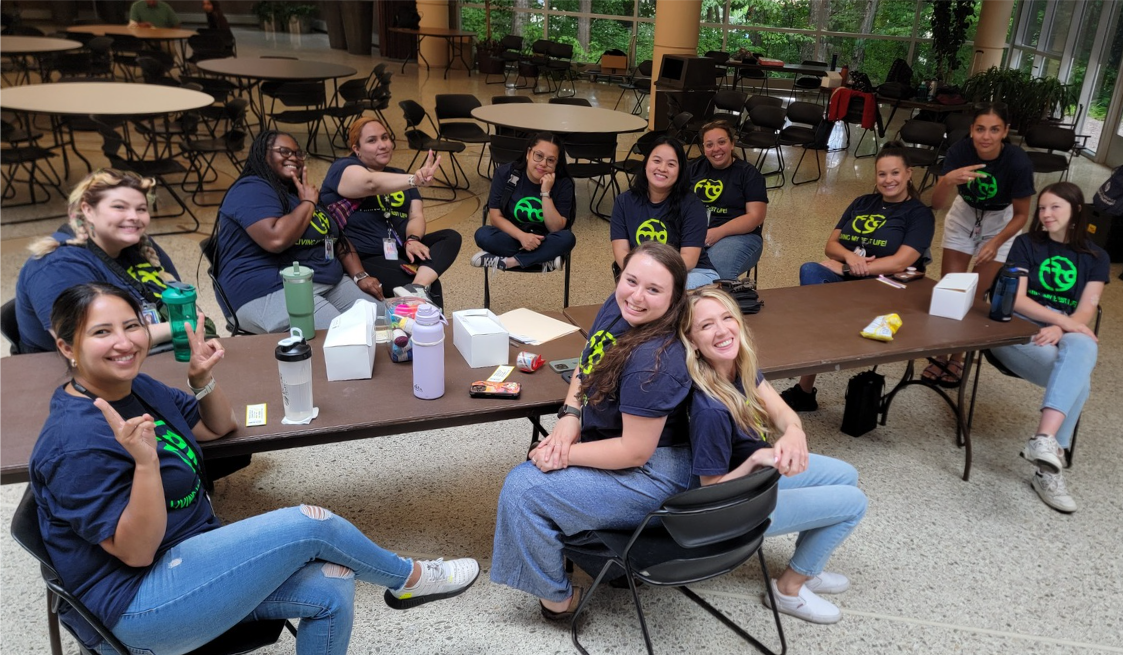 During National Nurses Week (May 6-12), the City of Milwaukee Health Department (MHD) is celebrating its dedicated public health nurses and the work they do every day, often behind the scenes.
MHD nurses work across multiple programs, serving families in clinics, homes, and communities throughout the city. From consulting with families navigating child lead poisoning, to offering immunizations, and meeting with people for sexual and reproductive health, MHD nurses are building relationships and taking meaningful steps to improve Milwaukee’s health.
This post focuses on four MHD nurses, and explores why they got into public health nursing, the moments that have stuck with them through their careers, and why serving Milwaukee is part of their calling.
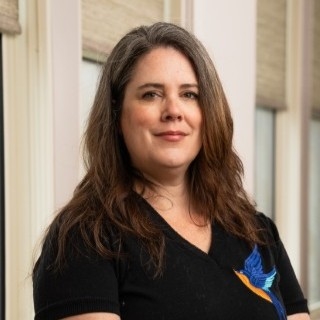
Erin Cronn, BSN, RN
MHD Public Health Nursing Administrator
When asked about what drew her to the field of public health nursing, Erin Cronn points back to the community.
“Whenever we talk about being a nurse, people always ask us, ‘What hospital do you work at?’ People don't know what public health is, or how nurses fit into that,” Cronn said. “It’s such a different role.”
"Public health nurses have such a unique viewpoint when it comes to health. Not only do we focus on the individual, but we also consider how that person impacts the community, and how the community, including their friends, family, and larger systems, impacts their health. It all blends, it all matters, and impacts health."
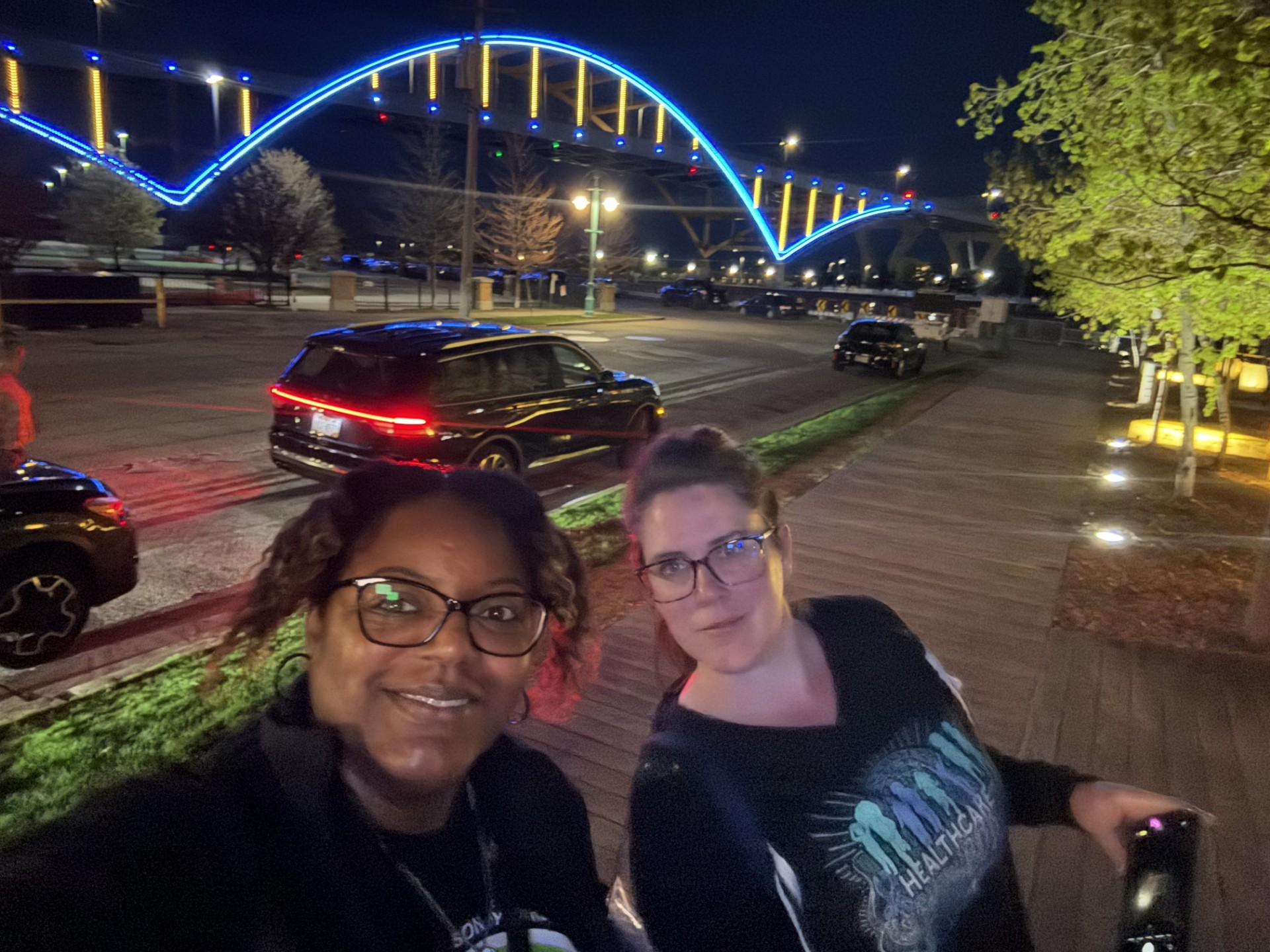 D.C. Jefflyn Brown and Erin Cronn at Light Up the Sky Nurses Week event. Hoan Bridge, 2025
Cronn has worked at MHD on and off for nine years. She first started in a temporary position on the Immunizations and Communicable Disease team, then worked across programs including Nurse-Family Partnership, Prenatal Care Coordination, and Newborn Hearing and Screening.
Since January 2025, Cronn has served as MHD’s Public Health Nursing Administrator. In her role, she oversees MHD nurses, supports their professional development, and leads quality improvement efforts across programs.
Cronn is also in charge of launching MHD’s Scales Neighborhood Nursing program this fall. The program will bring nurses directly into Milwaukee neighborhoods, meeting residents where they are and providing low-barrier support, education, and connections to care. Cronn’s team has already been testing the waters by going out into the community on a weekly basis to work in areas where high-risk activity has been identified.
“Our nurses go to encampments, we talk to people on the street, and in parks. Being able to get them to talk to us and connect with us is a huge win,” Cronn said. “Maybe it’s around substance use, maybe it’s a wound we can look at and get them connected to care, or maybe they just need us to listen for a moment. Everything is on their timeline, and if they’re ready to make that change, we’re there to support them.”
The work is focused on meeting immediate needs while building trust within the community.
“We're just walking around the area, getting people support and resources. We give out snacks. We’ve seen people passed out with needles, so we hand out Narcan."
"We know there is sex work in the area, so we make sure people have condoms,” Cronn said. “Our main goal right now is to build trust in the community and give them access to safer practices; that’s how we start to make a deeper impact.”
 In Milwaukee, access to care isn’t always guaranteed. MHD’s 2025 Community Health Assessment (CHA) found that about 15% of Milwaukee adults do not have a regular healthcare provider.
Cronn, like many public health nurses, is a strong advocate for home visiting programs. She said every time a door is opened or a call is answered, it’s a meaningful moment of connection.
“Our care is not forced, it’s not required. It’s optional. So, getting people to engage with us on any level is a huge win,” Cronn said.
“I remember one mother I worked with through our programs had a lot of traumatic things happen to her. She was with an abusive partner, she had multiple addictions, she had a traumatic birth. So many things went wrong,” Cronn said. “She ended up having an emergency C-section. Then at one point postpartum, while I was meeting with her, I showed her how she could splint her belly to feel more supported and not be in pain.”
“At the end of the program, I asked her, ‘So what was your favorite part of the program?’ Of all the things that we went through, for the three years I was with her, she said, ‘When you told me how to do the splint after I gave birth.’ That moment for me was not momentous at all, but it mattered to her,” Cronn said. “Managing her pain a little, me helping her, mattered."
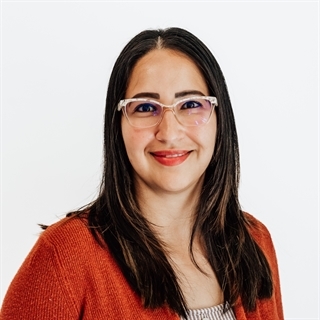
Brandy Carbonell, BSN, RN
Public Health Nurse Coordinator, MHD’s Empowering Families of Milwaukee and DAD Project
Brandy Carbonell remembers when she decided she wanted to be a public health nurse.
“One of my close family members experiences a serious medical emergency and needed ongoing follow-up care, but without insurance, he was unable to access it, and was left confused about his diagnosis,” Carbonell remembered. “He eventually went to a community health clinic and met with a nurse practitioner.”
Carbonell said seeing how the public health nurse cared for her family member was a pivotal moment for her.
“That experience played a major role in my decision to become a nurse,” Carbonell said. “I saw how she took the time to explain his condition clearly, answer his questions, and communicate with him in his language. Her warmth and compassion made him feel understood and respected during a vulnerable time,” said Carbonell.
“Witnessing the impact she had showed me the power of nursing and solidified my path,” Carbonell said.
As one of MHD’s Public Health Nurse Coordinators for the DAD Project and EFM teams, Carbonell meets with families in their homes, provides nursing consultation, and supports coordination, training, and community outreach efforts. She also assists in MHD’s immunization clinics and contributes to broader department efforts, including emergency preparedness.
“Most of our work happens in families’ homes, over time. We build trusting relationships and provide ongoing support, not just during pregnancy, but as families navigate parenting and day to day successes and struggles,” Carbonell said.
June 2026 will mark ten years for Carbonell as a public health nurse with MHD. She added that even though the work is called home visiting, it’s much more than that.
“We’re addressing social and cultural factors that impact health, while walking alongside families and supporting them in creating safe, stable, and healthy environments for their children and families,” Carbonell said.
“Most of our work happens in families’ homes, over time. We build trusting relationships and provide ongoing support, not just during pregnancy, but as families navigate parenting and day to day successes and struggles.We’re addressing social and cultural factors that impact health, while walking alongside families and supporting them in creating safe, stable, and healthy environments for their children and families."
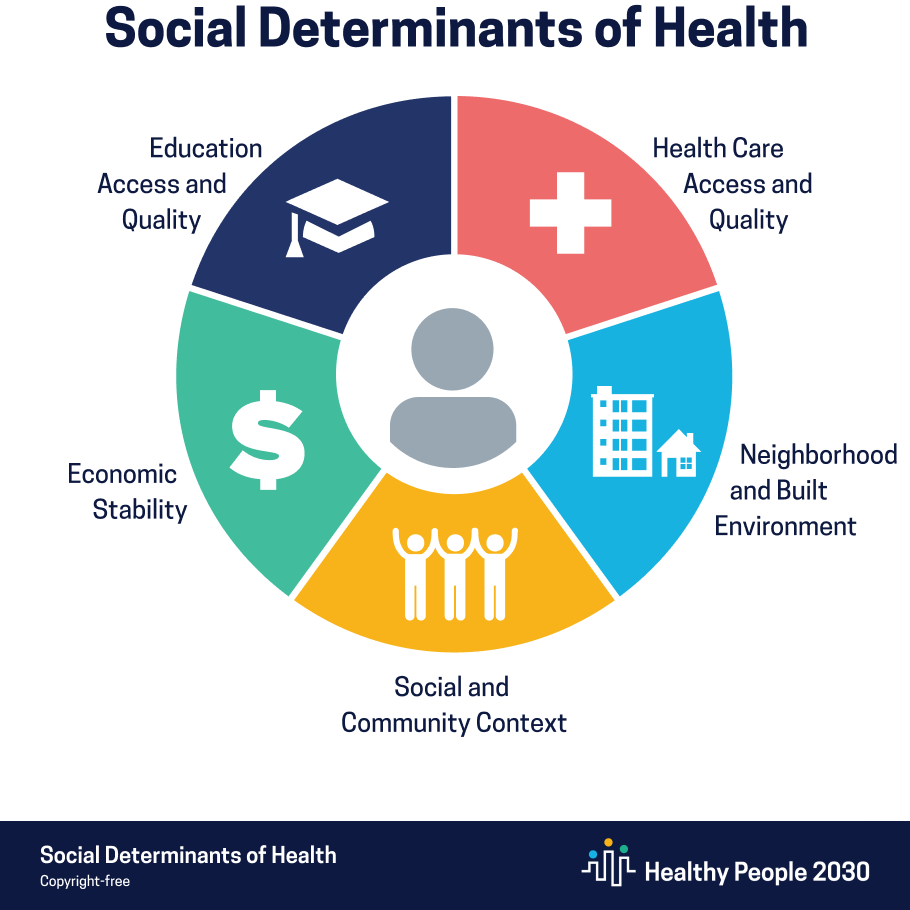 As demonstrated in the 2025 CHA, a person’s health outcomes are heavily influenced by things like housing, access to resources, safety, and economic stability.
The bulk of MHD’s work, and the work of public health in general, is largely shaped by those social determinants of health. For many of the families MHD serves, these challenges are part of daily life, making the role of public health nurses even more critical.
“I can recall a time working with a first-time mom who was displaced from her home country and in Milwaukee as a refugee. She was here for about six months before connecting with the EFM program,” Carbonell recalled. “She knew very little English, was socially isolated, and did not fully understand how to navigate available resources.”
“Initially during our home visits, I remember her being very shy, but over time she opened up and shared that she was interested and motivated to learn English,” Carbonell said. “I was able to connect her to an English as a Second Language (ESL) resource that provided in-home tutoring. Over time, she was able to build a support system, which in turn gave her the confidence to advocate for herself and her family when accessing resources, learn parenting skills, and successfully adjust to her new home in Milwaukee.”
Carbonell said that story is one example of why she loves working as a nurse at MHD.
“Working with families from different cultures and backgrounds deepens my understanding and allows me to provide more meaningful and well-rounded care,” Carbonell said.
“That’s what public health nursing is all about. Building meaningful relationships and supporting people beyond clinical care. Through education, advocacy, and addressing the social factors that impact their health,” Carbonell said. “It also means providing culturally responsive care, recognizing and respecting every individual and family’s background, and ensuring they feel seen, heard and understood.”
Holly Nannis, RN, BSN, PHN
Public Health Nurse Supervisor, MHD’s Home Environmental Health
Holly Nannis has spent more than two decades working in public health across Milwaukee, with multiple roles at MHD throughout her career.
Her first stint with the department began in the 1990s, where she worked in district services, staff development, and immunizations, helping shape early public health programs in the city. She later returned to MHD in 2019, where she now leads nursing efforts within the Home Environmental Health (HEH) program, supporting children impacted by lead poisoning and working closely with families, inspectors, and community partners to ensure homes are safe.
“To me, working as a public health nurse means working a specialty practice within the nursing profession. Public health nurses contribute to the health of people, their families, and their neighborhoods. Having that understanding of how systems fit together is vital to creating change with long-term benefits to our community.”
"I have always been a Public Health Nurse, throughout my career,” Nannis said. “I was a public health nurse while working at the federal level with the Health Resources and Services Administration. I was a public health nurse during my time at Medical College of Wisconsin. I was a public health nurse at Sixteenth Street Community Health Centers, and I’m a public health nurse now at MHD.”
“I started out as a Nurse Aide at a nursing home right out of high school and later worked at a family-owned pharmacy that specialized home health equipment and supplies,” Nannis said. “I really enjoyed the health education aspect of working directly with people and empowering them toward self-sufficiency. I helped fit clients for everything from mastectomy protheses, lumbar braces, wheelchairs, even ostomy supplies.”
Nannis has worked through several major public health events during her time in Milwaukee, including the 1989–1990 measles epidemic, the 1992 meningitis outbreak at Marquette University, and the 1993 cryptosporidium outbreak that affected hundreds of thousands of residents. She also played a role in early efforts to address childhood lead poisoning and helped support the development of what is now the Wisconsin Immunization Registry.
“I remember families thanking me when I was out in the field during home visits. It was like I became part of their family. I was respected in the neighborhood I served,” Nannis said. “I’d sit on families’ porches and talk with them. I remember letting kids braid my hair while visiting. All of those memories still make me smile.”
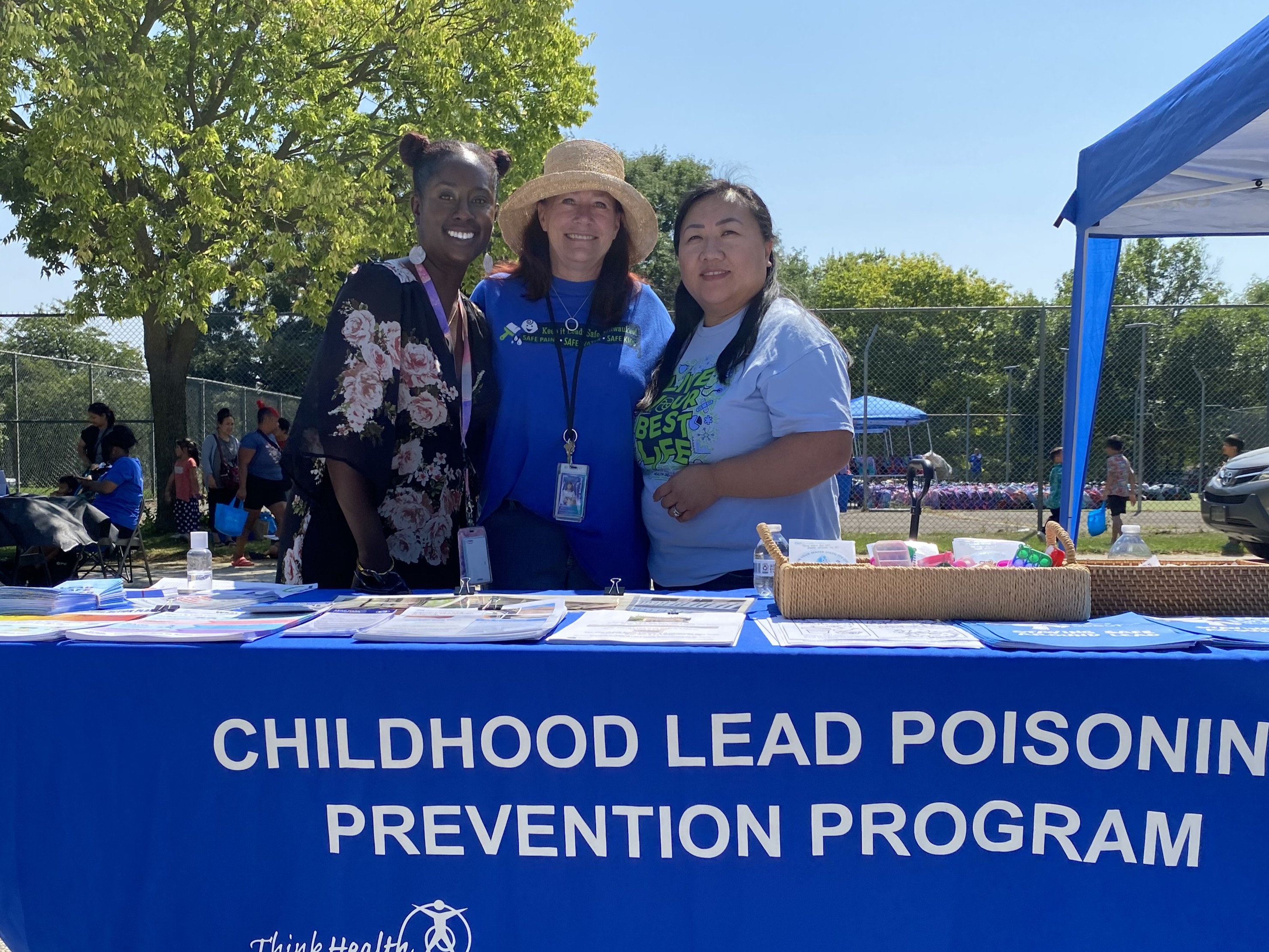 Holly Nannis (center) and colleagues at community outreach event. Summer, 2025.
In her current role, Nannis helps supervise HEH case management staff, and coordinates with inspectors who identify and remediate hazards in homes. She also manages community education efforts focused on lead, in partnership with healthcare providers and community organizations.
“To me, working as a public health nurse means working a specialty practice within the nursing profession,” Nannis said. “Public health nurses contribute to the health of people, their families, and their neighborhoods.”
“Having that understanding of how systems fit together is vital to effecting change to the benefit of our community,” Nannis said. “The role of private and public health nursing are complementary and can initiate change and support change through policy development.
Jefflyn Brown, MSN-Ed RN
MHD’s Deputy Commissioner of Clinical Services
Being a part of something more, something bigger than herself, has been a theme of Jefflyn Brown’s career.
“I didn’t choose nursing just as a career; I stepped into it as a calling,” Brown said. “At my core, I’ve always been someone who shows up for people, even when it’s hard.”
“Over time, I realized I didn’t just want to care for individuals at the bedside. I wanted to understand why people ended up there in the first place. That curiosity, combined with my own life experiences, pushed me beyond traditional nursing and into public health, where I could make a broader impact."
Born and raised in Milwaukee, a proud graduate of Milwaukee Public Schools and Milwaukee Area Technical College, and a new mother at 16-years-old, Brown’s focus on serving the community comes largely from the community supporting her through her own life’s struggles.
Brown detailed in a previous blog post that while she was pregnant, she met a nurse who inspired Brown to pursue a nursing career. Through her time as a nurse with different institutions, Brown eventually realized her passion for public health nursing, where she focused on supporting LGBTQ+ patients living with HIV and addressing health disparities impacting BIPOC communities.
“Over time, I realized I didn’t just want to care for individuals at the bedside. I wanted to understand why people were ending up there in the first place,” Brown said. “That curiosity, combined with my own life experiences, pushed me beyond traditional nursing and into public health, where I could make a broader impact.”
Brown rose through the ranks quickly at MHD, first starting in 2023 as the Director of Nursing, then shifting into her current role as Deputy Commissioner of Clinical Services in 2024. Transitioning from direct patient care to an executive leadership role has been a significant shift.
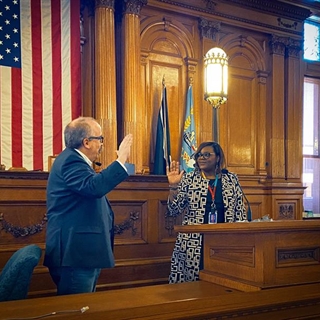 “I’ve learned that leadership in public health is certainly about vision, but it’s also about accountability and protecting the integrity of care every single day,” Brown said.
“There have been many moments when I’ve had to step in and advocate for things like patient safety, ethical practice, or upholding standards, even when it wasn’t the easy route,” Brown said. “There have also been situations where systems weren’t fully in place, or people made decisions that could have compromised care, and I had to lead through that directly and decisively.”
In her current role, Brown helps shape how clinical services are delivered across MHD health centers, with decisions that influence both staff and the broader community.
“People don’t always see the weight behind the work. Yes, I’m a nurse, but I’m also making decisions that impact programs, policies, and how care is delivered across Milwaukee,” Brown said. “There’s a constant responsibility to get it right, because the ripple effects are real.”
When asked why she loves serving Milwaukee, Brown considers the unique, and heartbreaking reality of the city’s history.
“Milwaukee is a city with strength and resilience, but at the same time, there are real disparities that require intentional work,” Brown said. “Being able to contribute to closing those gaps, building programs, and making sure services actually reach the people who need them most is what drives me.”
Public health nursing is where clinical care meets real life. It’s not confined to four walls. It’s in our homes, our neighborhoods, and our communities. MHD celebrates its nurses every day, but National Nurses Week offers a moment to recognize the impact and power they have across the city.
MHD Home Visiting Programs
Featured in This Post
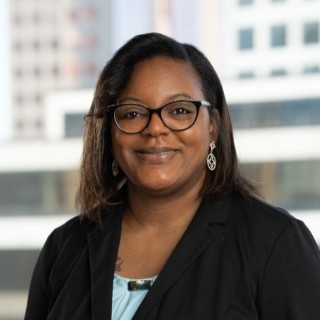
Jefflyn Brown, MSN-Ed RN
Deputy Commissioner of Clinical Services
Brandy Carbonell, BSN, RN
Public Health Nurse Coordinator
Erin Cronn, BSN, RN
Public Health Nursing Administrator