


One Year Later: How Milwaukee Responded to Lead Hazards in MPS Schools and What Comes Next
 In early 2025, the City of Milwaukee Health Department (MHD) confirmed that a Milwaukee Public Schools (MPS) student had been poisoned by lead paint hazards inside their school, Golda Meir Lower Campus. What began as an investigation into a single building quickly escalated into a district-wide public health emergency, launching a months-long, multi-agency response that reshaped how Milwaukee identifies, communicates about, and addresses lead hazards in schools.
One year later, that response is entering a new phase, reflecting both MHD’s continued work and MPS’s strengthened capacity. With support from the Centers for Disease Control and Prevention (CDC), MHD is preparing to launch expanded school-based lead screening across MPS, backed by federal funding and an upcoming CDC site visit to Milwaukee later this winter.
Golda Meir School (photo credit: Andrew Hope)
The first case
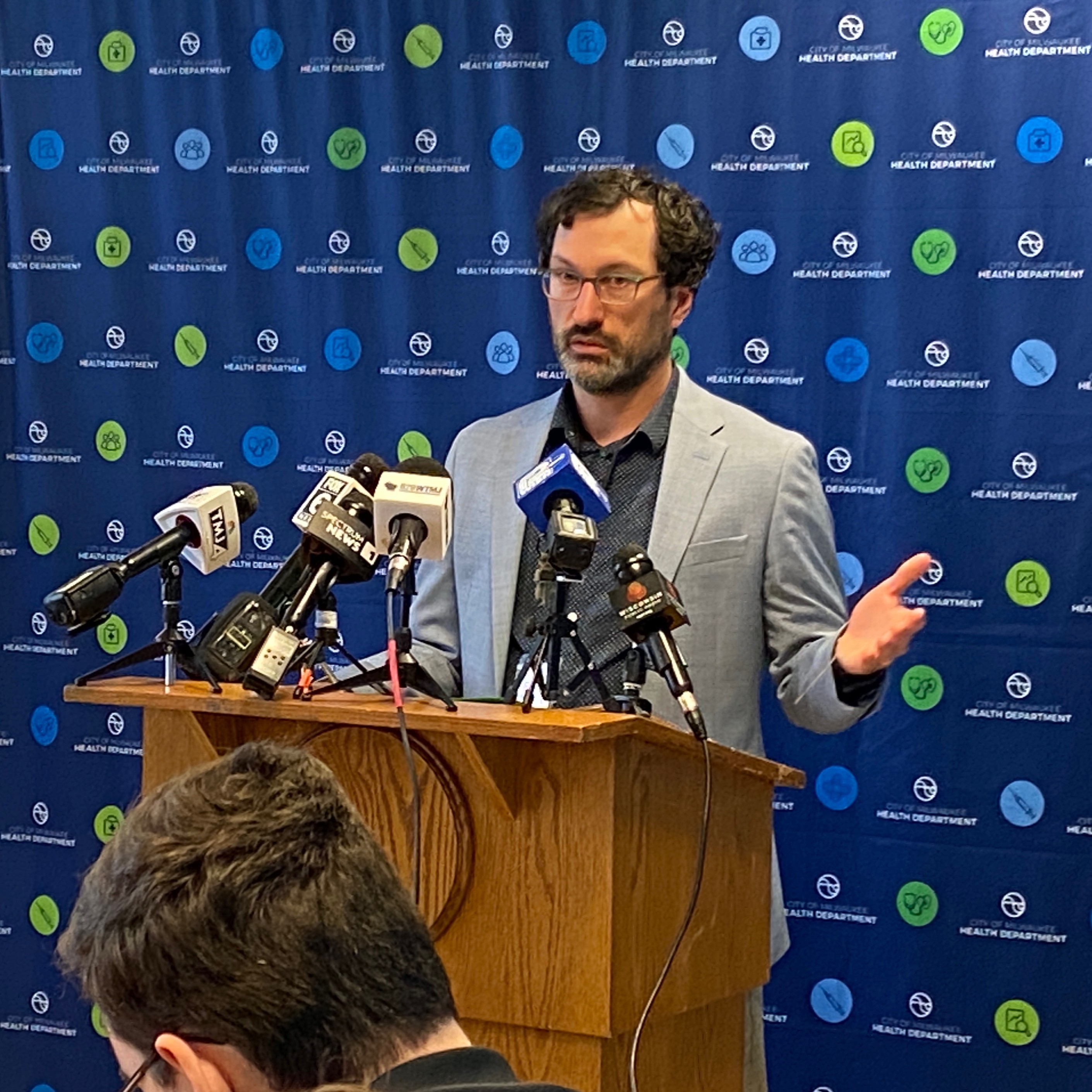 Tyler Weber, Deputy Commissioner of MHD’s Environmental Health Division, remembers learning about the first elevated blood lead level during a Home Environmental Health (HEH) team meeting.
“It took a moment to grasp the implications,” Weber said. “It was hard to understand what the scale could be, even for an individual school.”
Andre Mitchell, a manager in HEH, recalled early signs that the issue could be larger than initially assumed.
“We knew there was a problem,” Mitchell said. “But I don’t think we could have anticipated the full scale of the issue.”
In the months that followed, extensive inspections and testing identified a total of seven cases involving elevated blood lead levels. Of these, only one was linked definitively to a school, while the remaining cases involved elevated lead risks in children's home environments as well.
Deputy Commissioner Tyler Weber, MPH speaking about lead hazards (photo credit: MHD Archives)
Unlike residential lead cases, there was no clear roadmap for responding to lead hazards across large school buildings.
“We’re used to dealing with homes,” Mitchell said. “Not massive facilities with multiple floors and thousands of surfaces.”
Over the course of the year, the response to lead hazards in MPS schools ultimately led the district to rebuild its internal systems and maintenance practices, changing how lead risks are identified and addressed. Earlier in the response, however, the findings were sobering.
“We kept thinking maybe this is a handful of schools,” Weber said. “That it wasn’t a systematic decline in maintenance over decades that we were witnessing.”
The scale became impossible to ignore
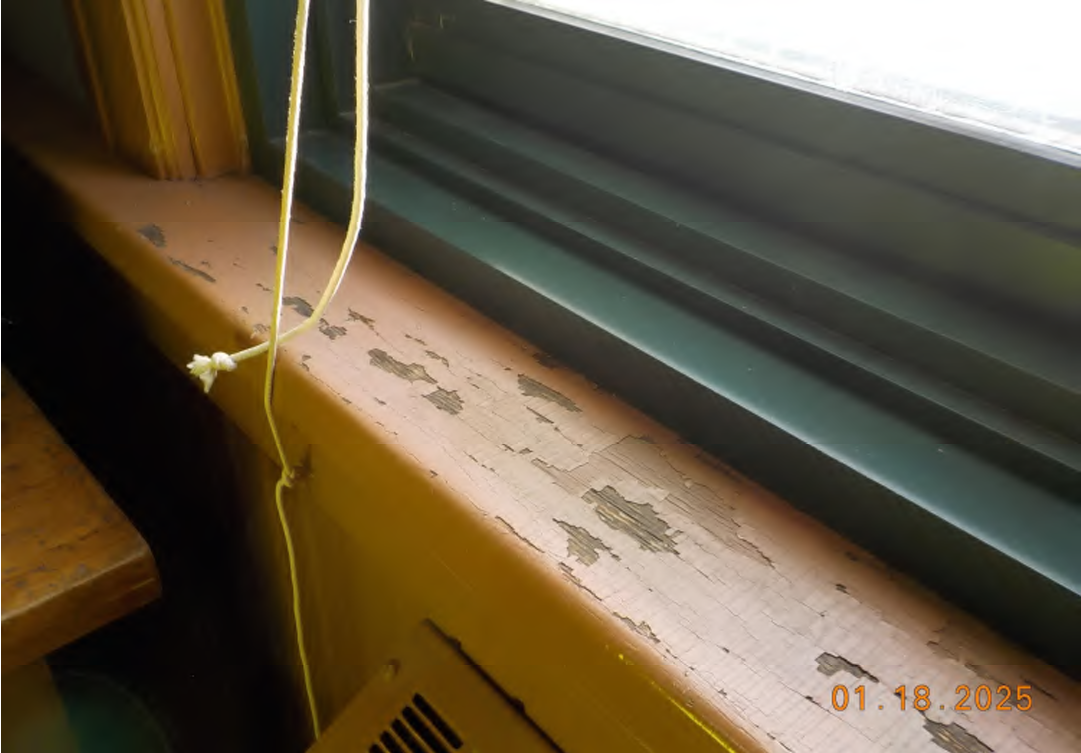 As inspections expanded, the results were alarming. Even after cleaning, missed surfaces revealed the extent of contamination.
“The dust wipe samples coming back were so high they could be considered an emergency,” Weber said. “One windowsill came back at 70,000 micrograms per square foot. The standard for the unacceptable level of lead dust on a residential windowsill is greater than, or equal to, 100 micrograms per square foot, so it was shocking how much dust was floating around in these schools.”
To put that number in context: one gram of lead, which is about the amount of sugar in a single sugar packet, contains one million micrograms. If that amount were spread evenly across an entire football field, the lead dust level would still exceed federal safety standards for floors.
Chipped paint on Golda Meir School window frame (photo credit: MHD Archives)
As results came in, MPS families learned in real time that their children may have been exposed, fueling fear, frustration, and urgent questions. MPS teams coordinated rapid school relocations, developed communication plans for families and reworked custodial schedules to support urgent cleaning and access for inspectors.
“We had to build the plane as we were flying it,” Mitchell said.
The crisis also forced HEH to reconsider where lead hazards exist.
“We now know that lead hazards can be more prevalent in spaces we never thought of as traditional sources,” said Michäèl Mannan, Director of MHD’s Home Environmental Health program. “Schools and other licensed spaces may have oversight, but that doesn’t always translate to effective maintenance or awareness of lead risks. Early on, MPS reflected those gaps, which the district has since worked to address and prioritize.”
 Complicating matters, the CDC’s lead team had been temporarily eliminated during federal staffing cuts, leaving HEH to make high-stakes decisions without national guidance. Few comparable cases existed nationwide, and none had taken a district-wide approach. MHD was truly in new territory.
“We erred on the side of safety,” Mannan said. “We were inspecting entire schools, multiple floors, large facilities, while also trying to figure out staffing, time, cost, and whether we should be doing more in areas like water and soil testing.”
To support MPS directly, HEH took an innovative approach by embedding Mannan within the district as a full-time consultant for several months. The move allowed Mannan to work the problem from the inside out, helping the district navigate unfamiliar and rapidly evolving expectations.
“One of my biggest takeaways was not to assume that people in an organization are deliberately trying to do the wrong thing,” Mannan said. “What I saw most often were daily questions from MPS staff asking, ‘What should we do? What’s allowed? Where do we start?’ They were eager to learn and asked for clearer protocols which ultimately led to retraining and new procedures.”
With more than 100 elementary schools, many with aging infrastructure, MPS faced a scale of work few districts had encountered.
“There was no clear guidance on what specifically needed to be done, or how to do it, while also balancing the cost of a massive renovation effort,” Mannan said. “They really needed assistance from both MHD and DHS to understand what was required, and as the work progressed, MPS began committing significant internal resources to address those gaps.”
Home Environmental Health Director Michäèl Mannan, BS, RS, CBO, HCO, FM (photo credit: MHD Archives)
The unseen operational response
 Behind the scenes, the response was intensive and relentless.
“Compared to our routine residential inspections, which usually involve two to three inspectors and take a couple of hours, the MPS buildings required significantly more time and staffing,” said Mitchell. “Every Saturday, nine to ten HEH inspectors conducted top-to-bottom assessments of each school. Each inspection lasted at least six hours and included dust sampling, water sampling, evaluation of painted surfaces, and detailed documentation.”
MPS building engineers, principals, and custodial staff provided building access, escorted inspection teams, mapped problem areas, and adjusted building schedules, all within a compressed timeline to address nearly 7 million square feet of space. Sampling was extensive, often requiring dozens of dust wipes per school. As closures and re-openings accelerated, inspections shifted to early-morning clearances to ensure buildings were safe before students returned.
Home Environmental Health Program Manager Andre Mitchell (photo credit: MHD Archives)
A department-wide effort
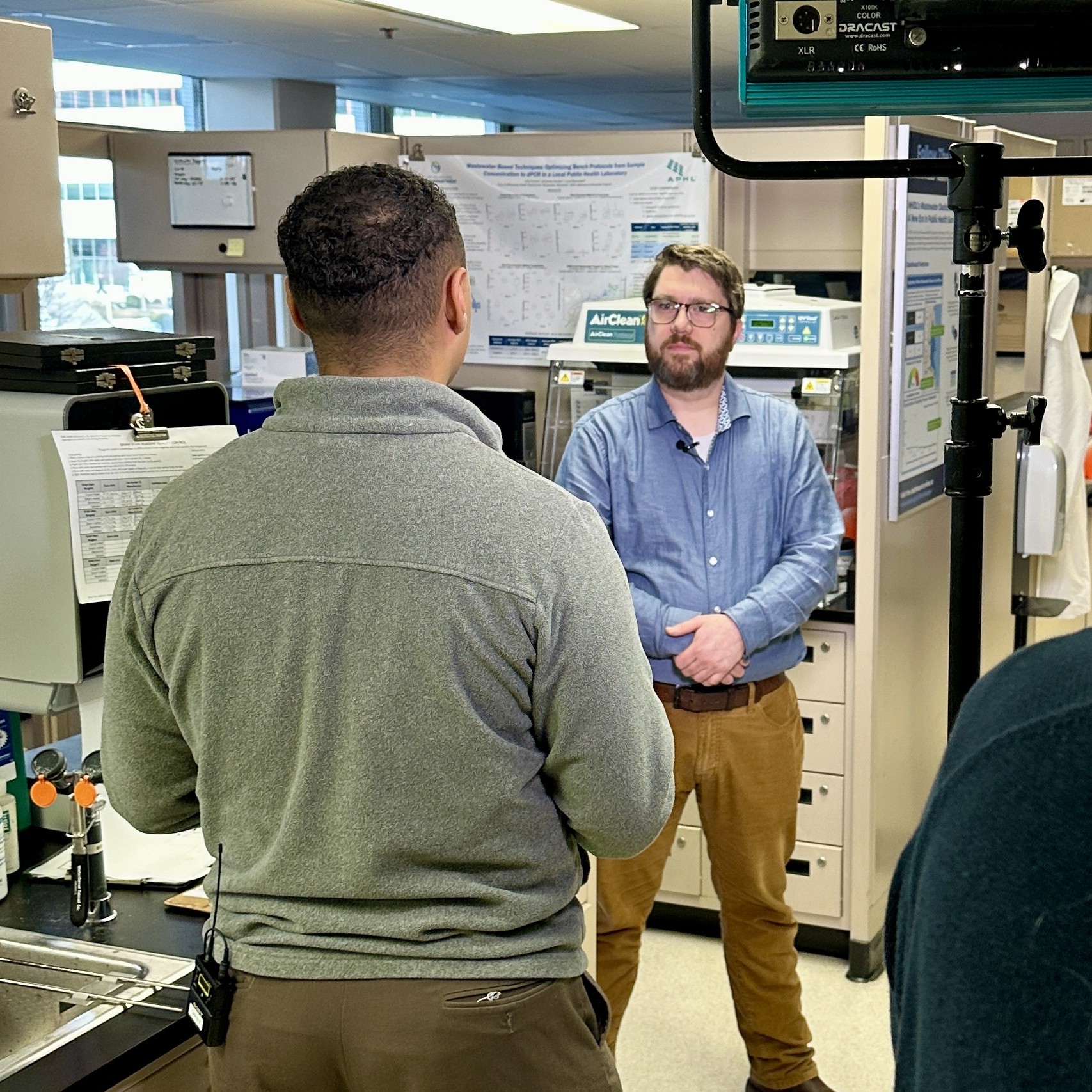 HEH wasn’t the only team tackling the response. MHD’s Emergency Preparedness and Environmental Health (EPEH) team coordinated logistics, supported field operations, and helped stand up school-based testing efforts alongside healthcare partners like Children’s Wisconsin and Sixteenth Street Health Centers.
In addition to HEH and EPEH’s work, the MHD Laboratory (MHDL) was also digging in. All of the collected school samples were sent to the lab for testing, each with a need for rapid turnaround. Speed was a critical factor; while commercial laboratories often take up to ten days to return results, MHDL returned results same-day or within 24 hours.
“To the average person, it’s easy to wonder why things take so long. There are home lead-testing kits that return results in minutes,” said Dr. David Payne, Director of MHDL. “What people don’t see is the precision required. That accuracy takes time and training, and it’s what allows schools to make informed decisions and reopen safely. Getting results back quickly was critical so schools could keep moving forward.”
Lab Director David Payne, PhD, PHLD(ABB) speaking about MHDL's role in lead hazard testing (photo credit: MHD Archives)
Coordination, communication, and trust
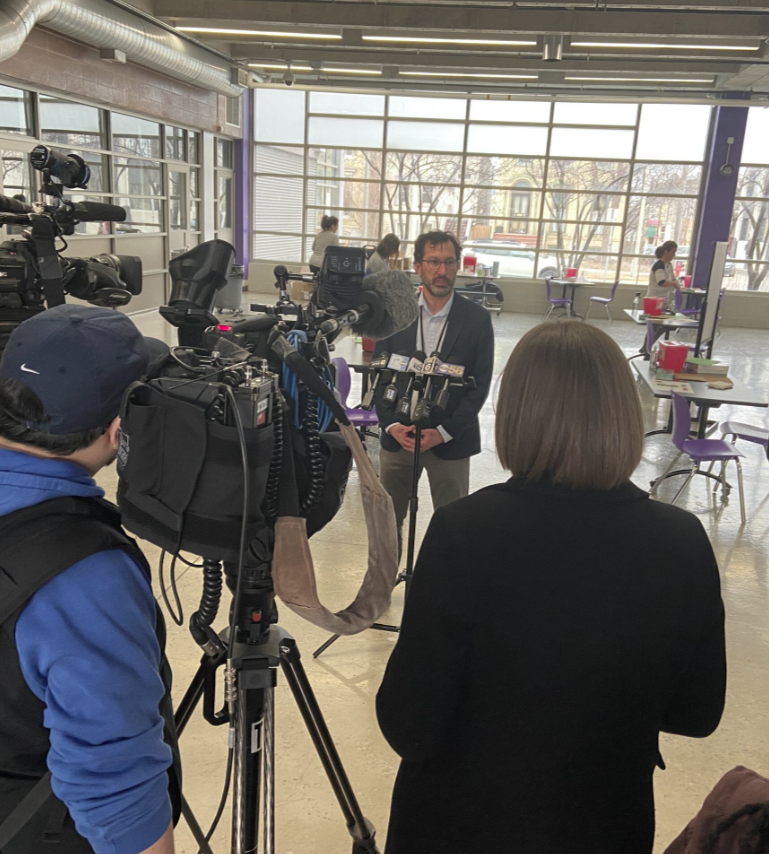 As conditions evolved, MHD teams coordinated simultaneously with MPS leadership, school staff, families, elected officials, internal City departments, DHS, and federal partners. In those communications, MHD shared what was known, clarified what was still under investigation, and corrected common misconceptions.
Weekly press briefings, publicly posted inspection findings, and regular updates became essential tools for transparency and education. Alongside MHD’s communications, MPS shared building-by-building updates and documentation to help families understand the work underway. Together, those efforts helped position MHD as a trusted source during an evolving situation, both locally and nationally.
Throughout the response, many families kept a close eye on the progress MHD and MPS were making, adding an important layer of ongoing feedback and dialogue. Among their concerns, some families and advocates asked whether existing lead standards are sufficiently protective, urging the state to adopt lower thresholds for what constitutes safe lead exposure. MPS attended community meetings, listened to concerns and adjusted procedures based on parent feedback. While MPS is currently required to follow Wisconsin’s established standards, those conversations have underscored broader questions about prevention, policy, and long-term accountability.
For HEH staff, the visibility underscored the weight of the work.
“When we touch something, we’re putting our stamp on it,” Mitchell said. “We’re signing off that it’s safe.”
Weber said that responsibility drove the team through long days and difficult decisions.
“Every child deserves a safe place to learn,” said Weber. “That stayed front and center throughout this work.”
Deputy Commissioner Tyler Weber, MPH providing lead hazard updates to news media (photo credit: MHD Archives)
Where things stand now: from emergency response to building capacity
 By the end of 2025, MPS stabilized lead paint in 99 schools serving elementary students, clearing 2,700 classrooms and shared common areas in a compressed timeline. The district has expanded its internal capacity to identify and respond to potential hazards by prioritizing maintenance budgets, elevating the urgency of paint-related work orders, retraining building services staff, purchasing specialized equipment to evaluate surfaces for lead, and implementing higher cleaning standards.
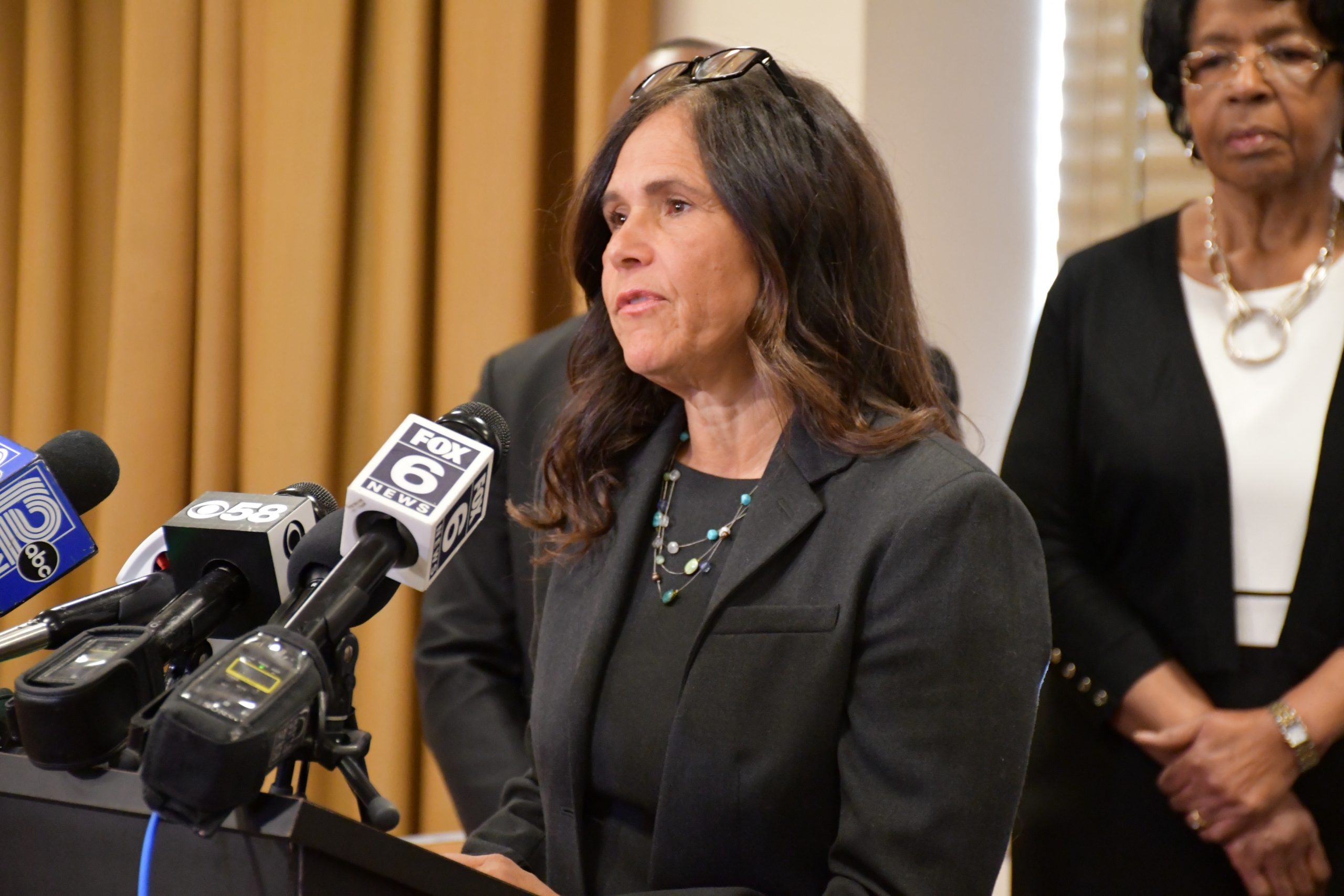
“We’ve added 39 new school-based custodial positions and four district operations managers who are in schools daily and report concerns immediately,” said MPS Superintendent Brenda Cassellius. “Lead safety is now embedded into our daily maintenance and facilities operations. This response showed us that prevention must be ongoing. Lead safety is not a one-time fix. It requires constant vigilance in buildings of this age.” Cassellius added the experience underscored the importance of coordination at every level. “We learned how critical strong leadership, logistics, and cross-agency collaboration are when facing a public health issue of this magnitude,” said Cassellius.
Milwaukee Public Schools Superintendent Brenda Cassellius,EdD providing lead hazard updates (photo credit: Urban Milwaukee)
 While MHD remains closely involved, its role has now shifted towards oversight and progress. HEH developed standardized assessment tools to guide third-party inspections, laying the groundwork for sustained improvement, and MPS has embedded those tools into its long-term facilities management plan, ensuring that monitoring is routine, rather than reactive.
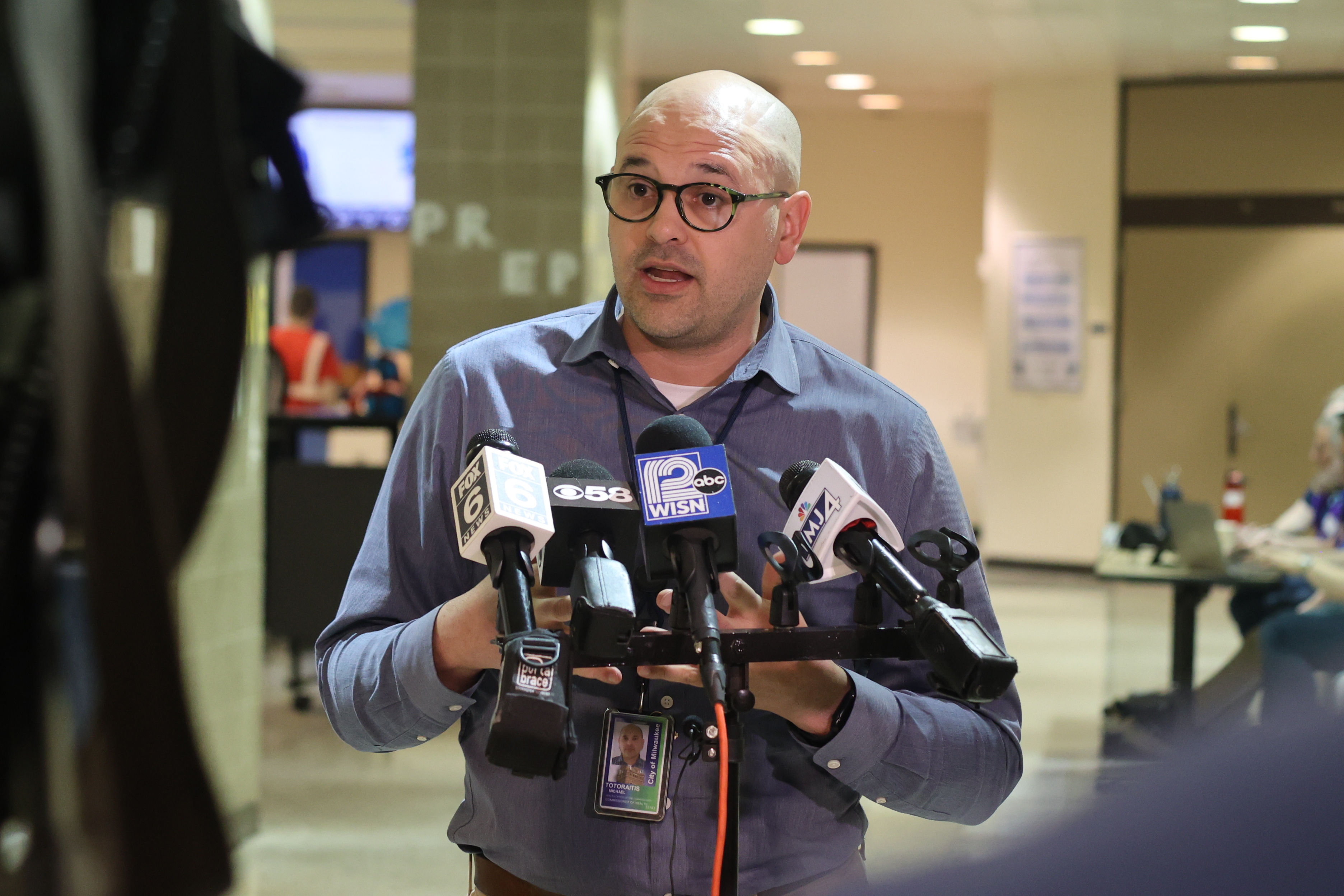
“This was one of the most complex public health challenges Milwaukee has faced. Our responsibility was to act quickly, be transparent, and stay grounded in protecting children,” said Commissioner Mike Totoraitis. “I’m incredibly proud of MHD staff who stepped up, adapted in real time, and worked alongside our partners to do this right. This experience reinforced that public health is about trust, collaboration, and a long-term commitment to prevention."
"I’m also grateful for Superintendent Cassellius’s leadership and transparency" Totoraitis added. "She was hired while we were in the middle of crisis mode, and she jumped in right away to tackle this problem with MHD.”
Commissioner of Health Mike Totoraitis, PhD providing updates at lead screening clinic (photo credit: MHD Archives)
A national partnership, one year later
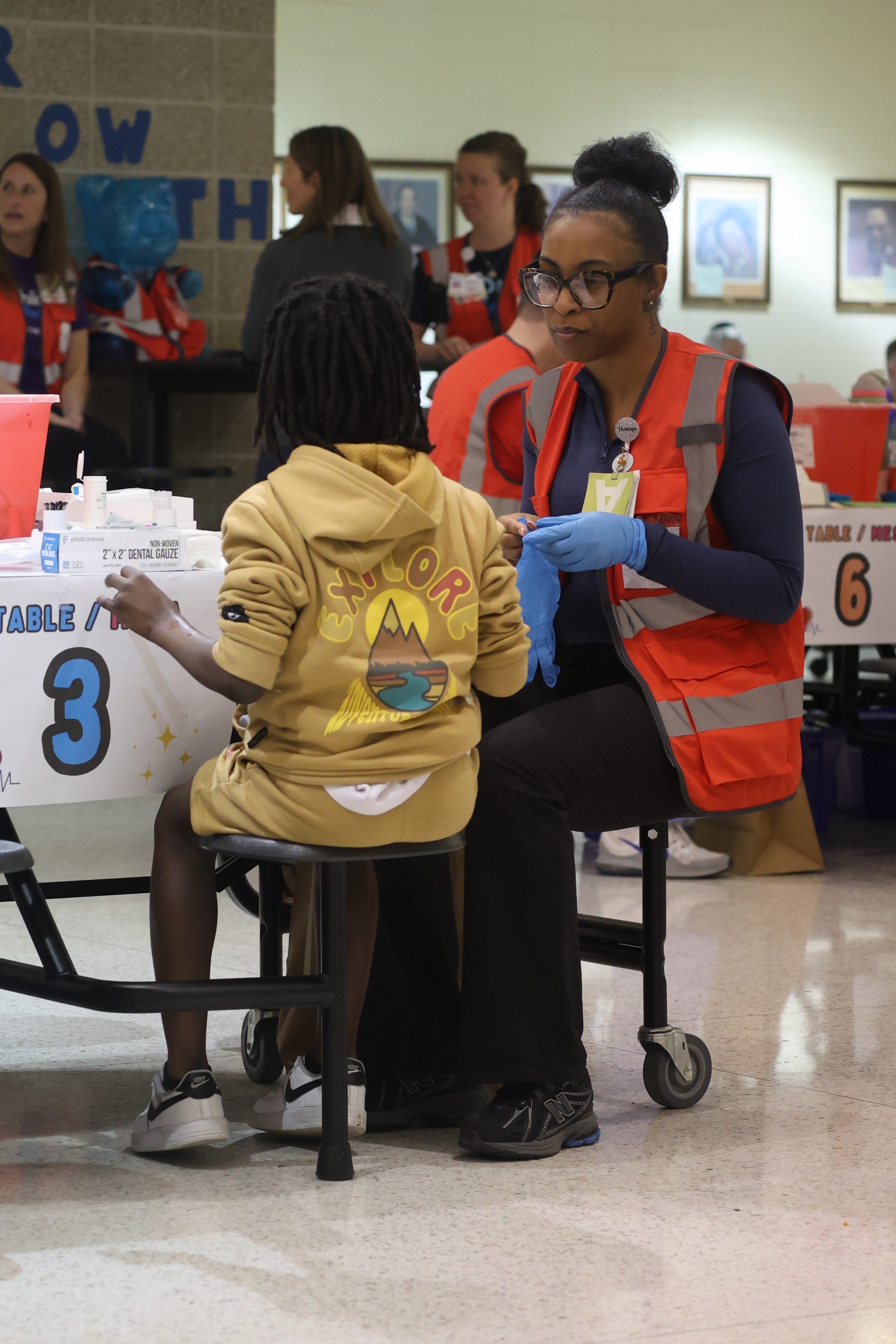 With support from the CDC, MHD and MPS are launching expanded school-based lead screening focused on early identification. While most lead exposure occurs in older housing, schools in a district as large as MPS provide an important access point for screening, with MPS coordinating consent, scheduling, and on-site logistics for families. A nearly $400,000 CDC grant will support screening for up to 8,000 MPS students across dozens of schools, with outreach assistance from the Coalition on Lead Emergency (COLE). The CDC is expected to visit Milwaukee in February to review the effort.
The CDC’s visit will be a full-circle moment for many involved, as it is the same federal lead team that was briefly eliminated during nationwide staffing cuts earlier in the response. At the time, MHD leadership publicly criticized the firings, emphasizing that federal technical support was essential for navigating complex, large-scale lead hazards. Weeks later, the CDC reinstated the lead team, which has since resumed its work supporting state and local partners.
Milwaukee Health Department nurse testing a student's blood lead level (photo credit: MHD Archives)
Looking ahead: screening, prevention, and accountability
One year after the first case at Golda Meir School’s Lower Campus, Milwaukee’s response has reshaped how lead hazards are identified and prevented.
“We now have a more focused priority on maintenance in both homes and schools,” Mannan said. “We can educate tenants on maintenance responsibilities, provide access to HEPA vacuums for safe lead dust removal, and work with nonprofits and enforcement partners to compel owners and landlords to take more responsibility.”
Weber and Cassellius emphasized that progress depends on collaboration.
“MPS will continue partnering with families, the City, and health organizations to maintain safe learning environments and support children’s health both in school and beyond,” Cassellius said.
“We’re continuing the fight to reduce childhood lead poisoning in Milwaukee,” said Weber. “And we’re committed to the community we serve.”
Learn more and get involved
While the response to lead hazards in MPS schools has evolved over the past year, the work to prevent childhood lead exposure in Milwaukee is ongoing. Families, caregivers, educators, and community members can learn more, stay informed, and engage in policy discussions through the following resources:
-
Advocating for change:
For those interested in engaging in policy discussions around lead prevention and housing safety, MHD has compiled Tips for Effective Advocacy