Flood Recovery FAQs
Milwaukee continues on the road to recovery following August's devastating flooding. Over 46,000 households were impacted, with $76 million in estimated damages. Since the disaster, relief and recovery assistance has become available from a variety of non-profit, local, state, and federal partners.
Below you will find the most up-to-date information on resources that are currently available.
Financial Support
FEMA Disaster Assistance
The FEMA application deadline closed on November 12, 2025.
If an extenuating circumstance prevented you from applying by the deadline, you can still submit a late application. Extenuating circumstances may include:
- You or a member of your family had a serious illness or injury.
- A member of your household passed away.
- Getting married or going through a divorce.
- Having a child (including adoption and foster care placement).
- You were travelling (personal or business reasons) and weren't in the area during the full application period.
- You or your household experienced domestic violence or human trafficking.
- Disaster-specific issues, like losing electricity, communication equipment, etc.
To submit a late application, visit DisasterAssistance.gov or call the FEMA Helpline at (800) 621-3362 as soon as possible.
FEMA Denials and Appeals
If FEMA denied your application, you can appeal the decision within 60 days of the date on your decision letter.
Click here for information and tips on the appeal process.
If you have already applied to FEMA and your situation has changed or you still need help (for example, more housing help), you can ask FEMA for more assistance at any time, even after the 60-day appeal window.
For additional information, call the FEMA Helpline at (800) 621-3362.
Disaster Loans
U.S. Small Business Administration (SBA) Loans
SBA Disaster Loans are available to homeowners and small businesses through January 11th, 2026 including:
- Physical Damage Loans
- Mitigation Assistance Loans
- Economic Injury Disaster Loans
Click here for the SBA disaster loan website, click on "Apply for Disaster Loans," and provide information about your flood-related damage and expenses.
City of Milwaukee Compliance Loan Program
The City of Milwaukee Department of Neighborhood Services offers 0% interest, deferred-payment loans to help homeowners make repairs needed to correct code violations.
Click here for information and to apply to the compliance loan program.
Mold and Home Repairs
Hiring Contractors for Flood Repairs
Before hiring a contractor:
- Get written details about costs, timelines, payment schedules, warranties, and rebates.
- Look for contractors with experience in flood-related repairs.
- Make sure they know local building codes.
- Obtain more than one estimate before making a decision.
- Check online reviews (such as Google or Yelp), ask for referrals, and check for complaints at:
Permits and Fee Waivers
Plumbing and HVAC work in Milwaukee requires permits from the Permit and Development Center. Permit fee waivers for flood-damaged homes are available until December 31, 2025.
For questions, residents or contractors may call the Department of Neighborhood Services at (414) 286-2543.
Water Heater Repairs or Replacement
Hire a plumber who has:
- A State of Wisconsin (DSPS) plumbing license
- A City of Milwaukee plumbing license
- Proof of insurance
Additional tips:
- Research whether a tank, tankless, or hybrid system works best for your home
- Note that some HVAC companies also offer plumbing services
Furnace Repairs or Replacement
Hire a qualified HVAC technician with:
- North American Technician Excellence (NATE) certification
- HVAC Excellence certification
- EPA 608 certification
- *This is only required for systems with refrigerants which include some combined HVAC (furnace/air conditioning) systems
Mold Cleanup and Remediation
Hire a qualified mold remediation specialist:
- Do not use the same company for both mold testing* and cleanup (to avoid conflicts of interest).
- Ask for a written inspection report showing the work was completed.
Important to Know:
- No building can be 100% "mold-free".
- Fix water leaks first (prior to remediation) or mold will come back.
*The Milwaukee Health Department does not recommend testing for mold. If you can see or smell mold, it should be cleaned.
Ongoing Mold Problems
Mold grows when there is too much moisture. To prevent mold:
- Fix leaks
- Use a dehumidifer
- Dry wet areas completely
If sewage was present, a diluted bleach solution (between 1% and 5% chlorine mixed with water) may be needed.
*Bleach Safety:
- Bleach can irritate skin, eyes, and clothing.
- Wear gloves, eye protection, and a mask when cleaning.
- Never mix bleach with other hosuehold cleaners, especially those containing ammonia.
- Mixing bleach with ammonia can release a toxic gas and cause serious injury or death.
Additional Mold Cleanup Resources:
Structural Damage
Untreated mold and prolonged moisture can damage structural components such as beams, studs, and joints.
Warning signs may include:
- Water stains or discoloration on walls (especially corners and edges) and ceilings
- Cracks or shifting in foundations or support beams
- Damp areas or hidden mold, especially in corners or enclosed areas
Absorbent materials such as drywall, lumber, furniture, and carpet with significant water damage should be removed to prevent mold growth.
If you are worried about structural damage, call the City of Milwaukee Department of Neighborhood Services at (414) 286-2268.
Water Heater Replacement
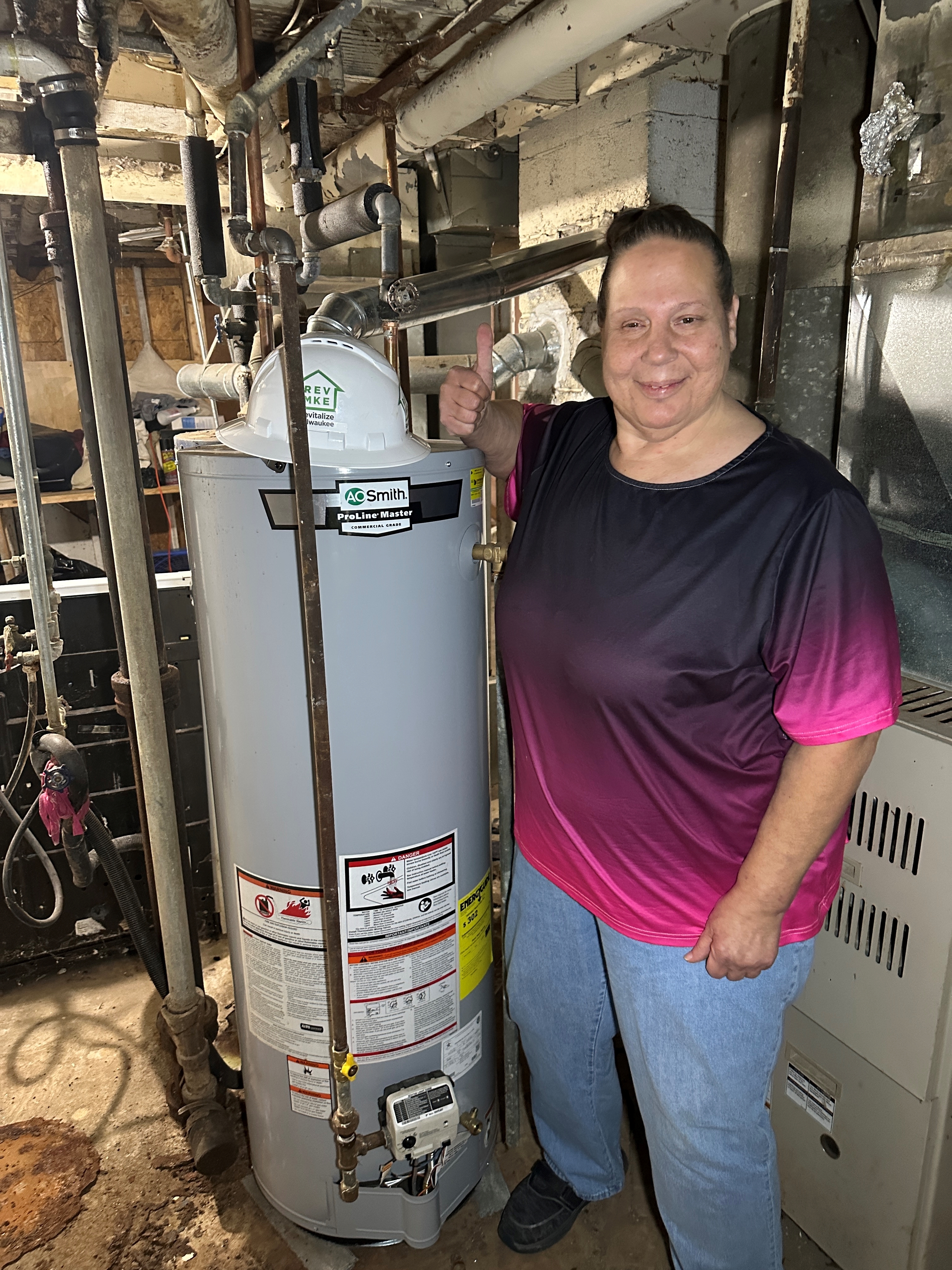
Revitalize Milwaukee is offering a limited number of donated new water heaters, available on a first come, first served basis to homeowners in Milwaukee and Waukesha Counties who were impacted by the August 2025 flood.
This assistance is available to homeowners who:
- Experienced flood-related water damage
- Are currently in need of a new water heater
- Meet required damage assessment criteria to verify eligibility
Due to limited availability, eligible applications will be processed in the order received.
To apply or learn more, please call Revitalize at (414) 312-7531.
Tenant Support
Help for Renters
If your landlord is not making needed repairs:
- Call the Department of Neighborhood Services at (414) 286-2268 to ask about rent withholding (due to housing code violations)
- Click here to contact Community Advocates, a non-profit organization supporting tenants
- Click here to file a consumer complaint with the Wisconsin Department of Agriculture, Trade, and Consumer Protection (DATCP)
Help with Unmet Needs
For help with unmet needs related to flooding, such as:
- Appliance repair or replacement
- Winter clothing
- Household essentials
Call 2-1-1 or visit the 211 Wisconsin website for referrals to community organizations.
Additional Resources
Mental Health Support
The Disaster Distress Helpline offers free, confidential disaster crisis counseling and emotional support in multiple languages. Call or text 1-800-985-5990 (24 hours a day).
The Salvation Army also provides emotional and spiritual care. Email Major Carol at [email protected] for help.
Emergency Food Assistance
If you or someone you know needs emergency food assistance:
- Text MKEfood to 898-211
- Call 2-1-1
- Click here for a map of pantries, meal sites, and food distribution centers from Hunger Task Force
Insurance and Tax Resources
For insurance problems:
- Call the State of Wisconsin Commissioner of Insurance at 1 (800) 236-8517
- Email [email protected]
- Visit oci.wi.gov/complaints
If you had an extension on 2024 taxes and were affected by the August flooding, you may be eligible for another extension through February 2, 2026. Click here for information on IRS tax extensions for Wisconsin disaster victims.
Get Involved in Long-Term Recovery
Residents and organizations are encouraged to participate in a Long-Term Recovery Group coordinated by Southeast Wisconsin Community Organizations Active in Disasters (COAD).
Preparing for Future Emergencies
Being prepared can reduce stress and harm during future disasters. Start by:
- Making an emergency kit
- Talking with family and friends about emergency plans
Click here for a template for creating your disaster preparedness plan and kit.
Helpful resources: