


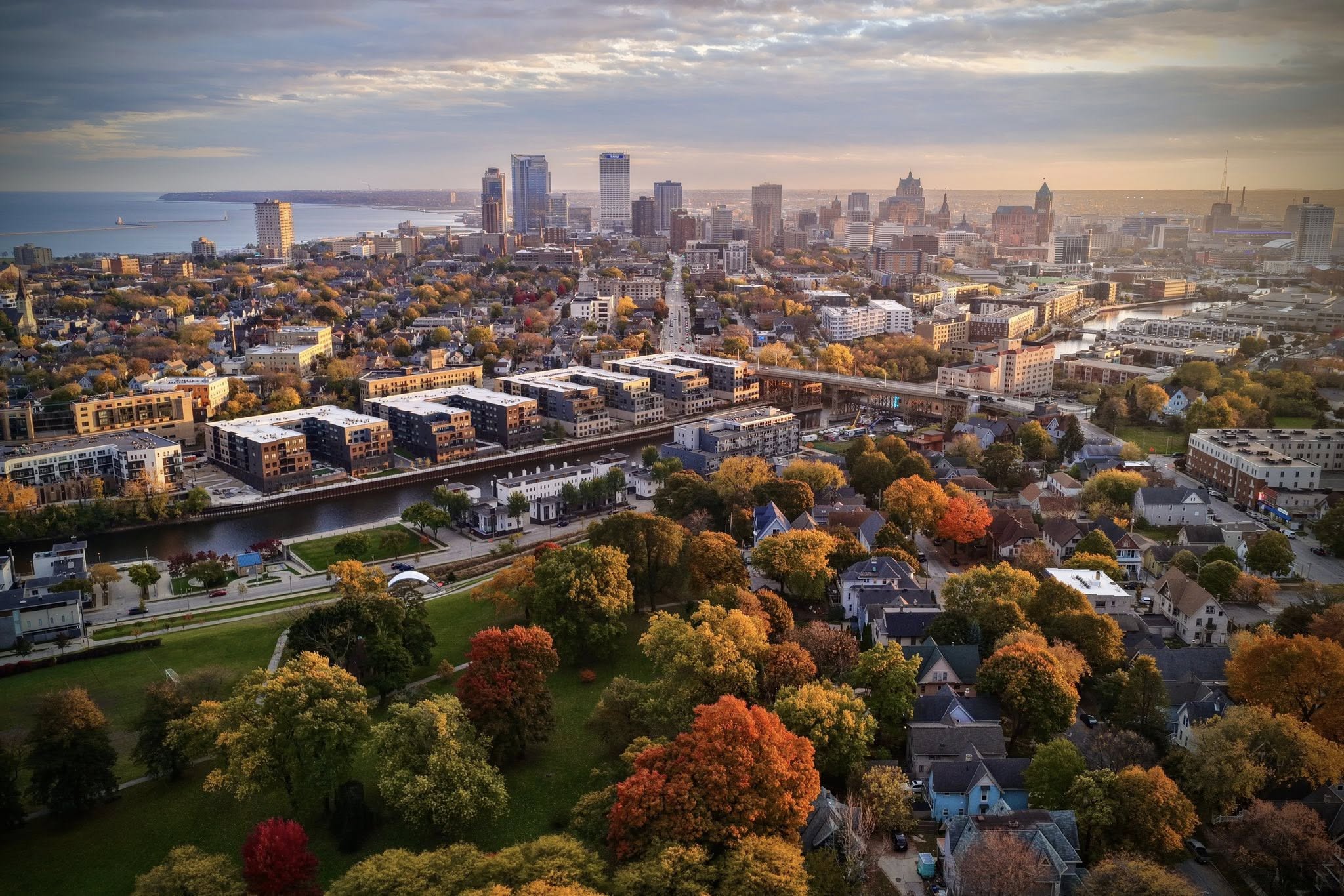
2026 State of the City Address, Milwaukee Mayor Cavalier Johnson
Monday, March 30, 2026, at Dr. Howard Fuller Collegiate Academy High School
In this Year of Housing, I am reinforcing a simple fact: everything begins at home. I know that personally. As I was growing up, my mom was instrumental in fostering my resilience and my perseverance. And, with my wife, we have built a home for our children that is supportive, encouraging, and loving.
A good home is a first classroom for a child. It’s a place of safety and caring. It’s an environment where people grow – blossoming into full individuals.
Homes can offer stability to a family, to a block, a neighborhood and, yes, an entire city.
I welcome you all this evening as I present my 2026 State of the City address. I am pleased we have been joined by so many dignitaries and elected officials – and by so many who live here in Milwaukee, work here in Milwaukee, and enjoy all our great city has to offer.
Our host is the Howard Fuller Collegiate Academy and its high school campus. I greatly appreciate their willingness to invite us all into this building. And it is great to have Howard Fuller here this evening. I join in celebrating what takes place within these walls as students grow and thrive. This school has a foundational belief that all students have potential and all students can be empowered to achieve academic success. The record of achievement here is impressive.
I chose this location, here in Milele Coggs’ aldermanic district, for an additional reason, the proximity to so many homes – new homes, added with public support. Around this neighborhood, the city has had a role in the development of a number of these residences.
Above America’s Black Holocaust Museum, The Griot has about forty units in the building. Just to the south, Historic Garfield Apartments transformed a former Milwaukee Public School building constructed in the 1800’s into thirty homes. Developers Melissa Allen and Josh Jeffers deserve credit for this work. And Tia Richardson’s mural on the Garfield Apartments, “Rebirthing of the Earth Mother” is a local landmark.
The Residences at Thrive On King are just to the south with ninety units. Again, the city was a partner with developer Kevin Newell and Royal Capital Group.
At each of these developments, neighbors were engaged in planning at an early stage. Halyard Park, Harambee, and Bronzeville residents voiced their views in a process that made these projects better.
The city tools deployed in this neighborhood include tax incremental financing and land acquisition. In this neighborhood, city support for housing projects amounts to millions of dollars. My plan is to continue employing these tools, and, at the same time, finding additional ways to assist housing developments as they move forward.
I am motivated in this year of housing by three fundamental factors, housing affordability, housing availability and housing quality.
Just about every renter, every home buyer, and anyone else who tracks the costs of residential real estate knows the cost of housing – the affordability of housing – is a big challenge for many. We have seen prices rise. We have seen competition intensify for housing. As a result, too many people are stuck in a disappointing living situation and squeezed financially.
Everyone who currently lives in Milwaukee, and those who want to, should have access to an affordable, safe home that meets their needs. That is what we are striving for in the Year of Housing.
There are signs of progress. According to Realtor-dot-com, the Milwaukee rental market has changed dramatically. In 2024, our city was considered a landlord-friendly market as vacancy rates stood at less than five-percent. A year later, in 2025, the situation had changed as thousands of new apartments were built. That same survey now calls Milwaukee a renter-friendly market.
I am optimistic the building trend will continue because more units and more vacancies reduce the likelihood rents will rise. I am working to add even more homes with the straightforward goal of making housing in Milwaukee more affordable.
The Department of City Development has reviewed longstanding policies regarding how and when we put city resources into new housing developments. In the past, Milwaukee offered just two types of tax incremental support to housing projects. Either it targeted low-income tenants, or the city focused its support on public infrastructure. What my administration has changed is that we now support more middle-market new developments including what’s called workforce housing. It’s a change that that has spawned significant interest.
Just within the last few days, I gave final approval to two more tax incremental financing arrangements that assist new apartment buildings to be built in Alderman Jose Perez’s twelfth aldermanic district. In both, we have made it clear, the goal is to keep Walker’s Point – and neighborhoods all across Milwaukee – affordable.
In this year of housing, the ongoing success will be sustained by multiple partnerships we have developed. Great organizations all across Milwaukee are promoting homeownership and increasing the availability and quality of rental housing. Habitat for Humanity, the Community Development Alliance, and Acts Housing are just a few of the solid organizations that are making a difference. I particularly like working with these groups because they are delivering results – for the city and for the residents of Milwaukee they serve.
And, the scale of their work is remarkable. Acts Housing just reached its goal of raising more than $25-million in its Opening Doors Campaign, including direct city support. In addition to its mortgage lending, that money will support the organization’s acquisition fund which, so far, has purchased and rehabbed more than one hundred homes.
The Community Development Alliance, working with Emem Group and Habitat for Humanity, is undertaking another large project, this time in the Amani neighborhood. With tax incremental financing, my administration is supporting this work to build one hundred affordable single-family homes.
City government is stepping up in the Year of Housing with the Milwaukee Home Down Payment Assistance Program. We anticipate helping more than two hundred families realize their dream of homeownership with down payment assistance.
We are continuing our efforts to get city-owned tax-foreclosed properties into the hands of homeowners and responsible landlords. Last year fifty-seven of these residential properties were sold. With additional marketing strategies, we will seek to top that number in 2026.
We are also supporting existing homeowners with the Department of Neighborhood Services’ code compliance loan program and the Department of City Development’s Strong Homes loan program. In 2025, ninety-four homeowners received loans for emergency and essential home repairs. In some cases, this assistance kept them from possibly losing their properties.
With our Homes MKE efforts, we are promoting homeownership and helping families achieve long-term financial stability. So far, more than seventy houses have been fully renovated and most of those are already sold to homeowners. A dozen homes are either in a rent-to-own program or available for homeowner purchase in the Homes MKE program.
Our Raze and Revive work is taking down buildings that are beyond repair and adding newly constructed residences in their place. The goal this year is to add dozens of new homes through the revive efforts, adding investment and stability into some of the city’s most economically challenged neighborhoods. Look for Revive homes to be built in a number of city locations including in Alderwoman JoCasta Zamarripa’s district, constructed with the city’s partner Via CDC.
Revive can include new duplexes and townhomes, types of housing that can be far more affordable for young families. We’re ready to support new homeowners with up to $100-thousand subsidies to meet this vital need. We’re helping to fill a gap in housing construction to the benefit of Milwaukee residents.
The Revive work will tap into the skills and experience of a handful of local developers. These are the organizations that will build our housing vision for the Revive program. I expect we will announce the names of those developers are in the coming weeks.
Adding new homes does not always require city financial investments. Our Milwaukee Housing Element recommends zoning updates so that there are more housing choices in the city. More housing types can make renting or ownership more affordable.
The city has an important role in protecting the quality and livability of housing in Milwaukee. No family should be forced to live in unsafe or neglected homes. Our inspectors wrote nearly thirty-thousand orders last year to make sure safety issues are resolved.
Some were minor matters, and some addressed very significant safety issues. Now, most property owners promptly complied with the DNS directives, but some landlords delay or ignore, leaving tenants in unacceptable living situations. Our City Attorney, Evan Goyke, shares my impatience, and he is taking action with my full support.
In both housing and commercial development, I prioritize getting things done. Regulation and permitting should be straightforward. In a report from the Wisconsin Policy Forum earlier this month, the City of Milwaukee topped the five other regional communities examined with the speediest building permit approval. The report says Milwaukee’s process “stands out as the most streamlined.”
I’ve directed the Department of Neighborhood Services to be more competitive and simplify permitting. Now, the city is the regional leader in permitting and predictability. Look at the numbers. Over the past two years, the average permit issuance time is thirty-three percent faster. Our customer satisfaction numbers are up, while, at the same time, the volume of permits handled is notably higher.
Opportunity abounds here. Take Granville Station; that’s the old Northridge Mall site. After decades of lawsuits, neglect, and life-threatening danger, it is now the largest contiguous development site in the city. This past year my administration led the effort to complete demolition of the old mall on time and on budget. The demolition included dozens of companies. Twenty-one of those companies are based in Milwaukee and seventeen were certified disadvantaged businesses.
We’re are working with Alderwoman Larresa Taylor and with neighbors, planning for Granville Station’s future. Residents have shown remarkable patience as the blight and the hazard lingered for years. They deserve a great development at this location. The site will be listed for sale this year, and we’re looking for a catalytic anchor to help redefine what’s possible.
All across Milwaukee, small businesses are benefitting from commercial revitalization grants to boost local commercial districts. These businesses are adding to neighborhood life, employing our residents, and attaining the dreams of business owners.
Last year, eighty-nine grants were awarded, totaling about $860-thousand. And, so far this year, another thirty-five grants have been approved. In all, over the last fifteen months, more than $1-million in city grants have leveraged $10-million in project investments. These are grants for signage, storefront activation, or investments in retail locations. Most often, local small businesses are the beneficiaries of the city grants. They are creating jobs and building Milwaukee’s economic future.
At Port Milwaukee, the city department that’s an economic link to markets around the world, cargo volume grew in just about every category. That occurred even though unpredictable tariffs roiled international trade. Of particular note is rapidly expanding agricultural exports. Farm exports left Milwaukee headed to the U.K., Ireland, Spain, Portugal, Turkey, and Morocco. Ships carried two hundred percent more agricultural exports year over year.
This trend benefits more than the farmers in the region. When ships come here to pick up ag exports, they can arrive loaded with imported cargo. That means more business for our docks, and greater efficiency for the importers that use Port Milwaukee.
The ships carrying salt to our port are saving taxpayers’ money all across the state and keeping our roads safer throughout a snowy winter.
New Port Director Benji Timm and his team will also welcome a record number of cruise ships in 2026. We expect twenty-thousand passenger visits aboard dozens of cruise ships. Think what this means for our local economy. That’s thousands of restaurant visits and hotel stays. And passengers spending money here means jobs and an economic boost for Milwaukee’s businesses and hospitality workers.
Good jobs have always fueled Milwaukee’s economic strength. Good jobs benefit families and neighborhoods. Good jobs, particularly union jobs, are always welcome in my city.
Milwaukee has a long and historically positive relationship with the federal government. During the administration of President Joe Biden and Vice President Kamala Harris, Milwaukee directly benefitted from the American Rescue Plan Act and Bipartisan Infrastructure Law. That partnership made a big difference right here and continued a longstanding relationship that spanned multiple administrations and different party ideology.
But things have changed and, under the current administration, ties between the local and the federal governments have broken. Yes, elections have consequences, but it’s far from clear that voters wanted a cruel defunding of federal programs. And, no one voted for the militaristic adventurism in South America, the Middle East, and even Greenland. No one asked for the weaponization of America’s criminal justice system. And even the President’s strongest supporters did not ask for skyrocketing gas prices.
The deadly and malicious immigration policy of President Donald Trump’s administration is particularly egregious. I will be direct: immigrants make Milwaukee stronger, safer, and richer. They always have. Immigrants add to our economy and our culture. Immigrants who have positively contributed to our city should earn a path to citizenship.
Of course, undocumented individuals who commit serious or violent crimes should be deported. But, under the President’s direction, we have seen heartless roundups of hardworking immigrants. We’ve seen families broken apart. We’ve seen our neighbors terrorized by brutal enforcement actions. We’ve seen protestors shot dead by federal agents.
The rights and dignity of every individual must be respected, and, in this democracy, we have the power to set that direction. It starts at the ballot box. I ask everyone who is eligible to head to the polls this year for elections on April 7th, on August 11th, and on November 3rd.
We are motivated voters. Remember in the last Presidential election, Milwaukee had the highest voter turnout of the fifty largest cities in the United States.
We are a resilient city. And that resilience is occasionally tested by the weather. On August ninth, Milwaukee was slammed with a storm that dumped an enormous amount of rain – unpredicted amounts that spawned flash flooding.
Whether it was luck or divine intervention, lives were spared. The Milwaukee Fire Department was the first city agency called into action. Firefighters and paramedics answered hundreds of flood-related calls. They performed dozens of water rescues. They earned our deep appreciation.
Across the city cars were submerged and basements flooded. Torrents of water cut new channels through neighborhoods taking out basement walls. It was, by any measure, a disaster.
At my direction, city departments quickly mobilized. By far, our Public Works department had the heaviest lift – literally. Waiving fees, crews collected mountains of flood-damaged debris and extended hours at our self-help centers. City workers were redeployed from their usual duties and assigned to flood cleanup.
They were not alone in the response. Inspectors from the Department of Neighborhood Services evaluated damaged properties. Health Department officials worked to make sure flooding victims were safe from contamination and conditions that foster mold.
The city’s Office of Emergency Management teamed with other levels of government to obtain federal aid. With a Presidential disaster declaration, individuals who suffered flood damage in Wisconsin received nearly $200-million to compensate for their losses. That was the nation’s largest disaster compensation for victims in all of 2025.
However, it was illogical and neglectful that the President did not allow for public assistance to local governments. As a result, costly infrastructure repairs were left to local taxpayers.
I saw the flooding damage up close. My relatives were directly affected. And I understand the devastation so many of our residents endured. It is much more than the loss of property; it’s the shock and suffering this catastrophe brought.
I also saw the extraordinary work city employees accomplished, often helping their neighbors before tending to their own flooding damage. Please join me in a round of applause, celebrating our city workers’ actions during the flood.
City government is making inroads against illegal dumping. The lazy and selfish people who dump piles of garbage in alleys and vacant lots have been surprised by our new enforcement efforts.
The Department of Neighborhood Services has deployed hidden cameras, and that’s catching dumpers in the act in a number of city neighborhoods. In recent weeks, DNS and the Milwaukee Police Department identified these criminals in both the Borchert Field neighborhood and in the Amani neighborhood. The fines assessed in these dumping cases total $15-thousand, adding to the tens-of-thousands of dollars in fines we have already levied over the past twelve months. My plan is to expand the hidden camera efforts to catch even more illegal dumpers.
Milwaukee is committed to improving public safety. And, Milwaukee is a safer city. I track crime numbers closely, openly sharing those numbers on a quarterly schedule. In 2025, serious crime, what the FBI calls “Part 1” crime was down seventeen percent over the previous year, continuing a trend over the past several years. Violent crime totals were down even more – twenty-two percent lower than 2024.
Robbery, assault, and auto theft numbers are all down. The one anomaly last year was homicides which were up. Perplexingly, at the same time, non-fatal shootings were substantially down.
There are still too many guns in the hands of people who should not have them. And there is still no meaningful legislative action in Madison or Washington to address gun violence. Let’s improve red flag laws, background checks, and closing gun sale loopholes with the goal of reducing both homicides in Milwaukee and suicides statewide.
The Milwaukee Police Department is doing great work. So is the Department of Community Wellness and Safety. And all of city government is committed to reducing crime even more.
Reckless driving reduction has been a top priority for me since day one in office. It is another area of public safety where we are making life-saving progress. Traffic deaths declined nineteen percent last year when compared to 2024.
You have seen the work in neighborhoods all across Milwaukee. Traffic is calmed with bump outs, protected bike lanes, and narrower streets. Overall, these projects have reduced crashes and slowed speeders. When traffic calming is in place, speeding is down by thirty-two percent.
Yes, 35th Street in Alderman DiAndre Jackson’s district experienced a forty-two percent decrease in crashes following the traffic calming work between Townsend and Congress Streets. On West Galena Street in Alderman Russell Stamper’s district speeding declined significantly after roadway changes. And on North Avenue in Alderman Alex Brower’s district about half the cars were speeding before a protected bike lane was added; afterwards, eighty-four percent of drivers were obeying the speed limit.
I attribute that success to the coordinated work we’re doing to make physical improvements to our streets, and this year sixty traffic calming and street construction projects are moving forward. We will continue to enforce traffic laws, to improve emergency medical response, and to educate. It’s all part of Milwaukee’s commitment to Vision Zero and our goal of eliminating traffic fatalities by 2037. County Executive David Crowley is amplifying these efforts with Milwaukee County’s Vision Zero work. Thank you, County Executive.
City government is building a safer city. Replacing lead service lines is part of that. Those pipes carry drinking water from the mains in the street into homes. When they were installed decades ago, the potential danger was not fully appreciated.
Less than a year ago we marked the ten-thousandth service line replacement. My administration accelerated that work and now the number is over thirteen-thousand. And in 2026, as the work continues, we aim to replace about five-thousand lead service lines.
The legacy of lead paint in Milwaukee homes continues a decades-long danger for kids in the city. This year, Milwaukee is on pace to abate lead hazards in two-hundred-fifty homes, more than we have ever previously completed.
Early last year, beginning with a single, unexplained case of childhood lead poisoning, the Milwaukee Health Department identified a lead paint exposure risk at a school located just six blocks south of where we are now. Maintenance at this Milwaukee Public School had fallen behind – so much so that students were in the immediate vicinity of dangerous levels of lead dust.
It turns out that this first school was the tip of the iceberg. Nearly one hundred other schools had lead paint that was insufficiently maintained. The scale – and the cost of remediation – were enormous. The Health Department stepped in with expertise and countless hours of inspection. Our role was much more than regulatory. My administration worked hand-in-hand with the schools to arrange and execute the corrective plan. I approved the months-long transfer of our top lead remediation expert to MPS, and there was no question they had our full support.
Under the leadership of Superintendent Brenda Cassellius, MPS promptly and thoroughly remediated the problem. That was challenging because students had to be relocated, staff worked extra hours, and the remediation had to be done with precision.
I am particularly impressed with the work undertaken by the city’s health department. In the end, our schools are in better repair, the partnership between MPS and city government is stronger, and our children, now and into the future, are better protected from the danger of lead poisoning.
The work to protect our kids from lead continues. In partnership with MPS, we have instituted an expanded school-based lead screening effort. That is supported by a grant from the Centers for Disease Control and Prevention of nearly $400-thousand to screen thousands of students at dozens of schools.
I can confidently say the relationship between Milwaukee city government and Milwaukee Public Schools is stronger than at any time in decades. Superintendent Cassillius joins my cabinet meetings. My administration is coordinating child-focused efforts through a Kids Cabinet panel I organized last year. One product of that is a partnership between city departments and a number of schools where our employees volunteer academic support for MPS students. And, the spirit of collaboration and trust has grown. We have built a partnership that truly benefits our children. It is good for Milwaukee, and I pledge to continue the productive partnership with Superintendent Cassillius.
Every year Milwaukee sees ambitious projects advance. The Milwaukee Public Museum will soon have a new home at the Nature & Culture Museum of Wisconsin at 6th and McKinley. Plans are advancing for the Bronzeville Center for the Arts just a short distance from where we are this evening. Across the city infrastructure is being renewed – some three-hundred projects above and below ground this year. We are adding public spaces, and Milwaukee is changing to improve the lives of our residents.
The Year of Housing is part of that change. My administration is investing in change so that housing is more affordable for Milwaukee families. Yes, everything begins at home.
Some things don’t change. Great people live in Milwaukee. We are economically strong, culturally alive, and optimistic about what’s ahead.
It was one-hundred-eighty years ago that Walker’s Point, Kilbourntown and Juneautown formally incorporated as Milwaukee. At the time, fewer than ten-thousand people lived here – a small fraction of today’s population. In the intervening years, Milwaukee was steadily changing, evolving into the city we know today.
Yes, homes were built. Immigrants arrived. And Milwaukee grew.
It is valuable to look back at our history, to understand the challenges we have overcome, know the people who have built Milwaukee, and fully appreciate the sacrifices our predecessors made.
At the same time, we look forward – planning, directing, and shaping the future for our residents. We have assets and advantages no other city can match. We will build on those to improve the lives of Milwaukeeans.
Most of all, Milwaukee is a city of great people – hardworking, innovative, and caring people. They give me the confidence to say Milwaukee’s future is very bright and the state of the city is strong.