


Fetal and Infant Mortality Review (FIMR)
The City of Milwaukee Health Department's primary infant mortality and stillbirth prevention program
Program Highlights
The 2025 FIMR Report is now available. This report shares key findings about stillbirths and infant deaths in Milwaukee. It highlights what contributes to these losses and outlines steps the community can take to prevent them and reduce racial gaps in birth outcomes.
 Understanding Milwaukee's Birth Outcomes
Milwaukee has higher rates of poor birth outcomes than the rest of Wisconsin. From 2019 to 2022, the city accounted for about 14% of the state’s births, but made up more than 22% of infant deaths and nearly 17% of stillbirths. These numbers show why improving maternal and infant health in Milwaukee is important.
Use this webpage to:
• See key data on infant mortality and stillbirths.
• Learn about MHD’s main initiative to address infant loss.
• Explore recommendations to help prevent future losses and improve maternal and infant health.
What is Infant Mortality and How Does it Impact Families?
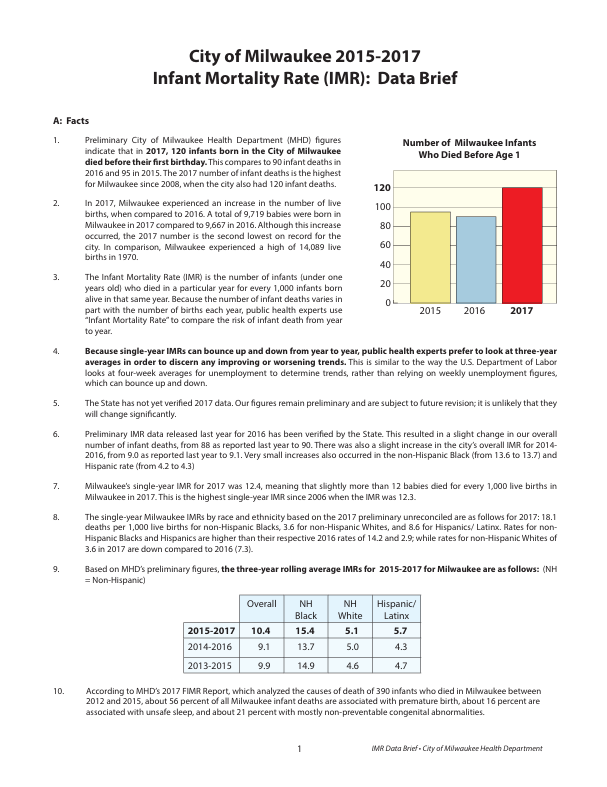
Infant mortality is the death of an infant before their first birthday. It is often displayed as a rate, shown as the number of deaths per 1,000 live births. Between 2019-2022, Milwaukee’s overall infant mortality rate was 9.2 deaths per 1,000 live 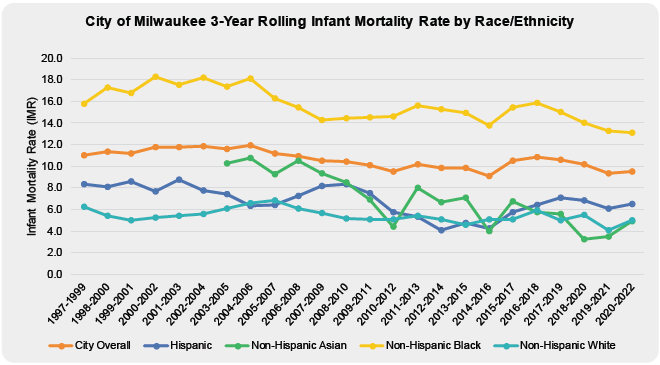 births.
Infant mortality is often used as a measure of the wellbeing of communities. The loss of an infant can pose substantial health, emotional, mental, and even financial stress for families.
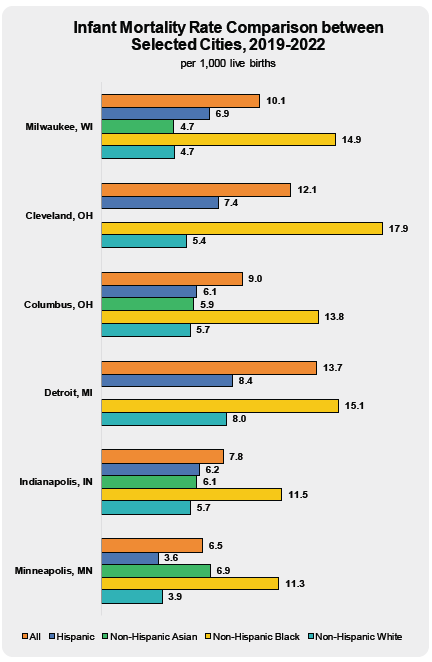
Infant mortality in Milwaukee has slowly improved over the years, but some communities are still affected more than others. Non‑Hispanic Black infants are 2.5 times more likely to die than non‑Hispanic Asian and White infants, and twice as likely as Hispanic infants. These differences show why focused action is needed to improve birth outcomes for all families.
The Big Cities Health Coalition ranks third out six in highest rates of infant mortality. In the graph below, the orange bar in each cluster shows the overall infant mortality rate for each city. The other colors represent different racial and ethnic populations.
Causes of Infant Death
Between 2019-2022, the top three causes of infant death were:
- Complications of prematurity
- SIDS/SUID/accidental suffocation (includes sleep-related deaths)
- Congenital anomalies
Additional causes of infant death included complications of labor and delivery, infections, and external causes of death (such as car accidents, drowning, and homicides).
Prematurity as a Cause of Infant Death
Premature birth (also called preterm birth) is any birth that occurs before the pregnancy reaches 37 weeks' gestation. It is associated with numerous complications since the baby is born before the lungs, heart, and brain have a chance to reach full development. The health complications caused by prematurity are the leading cause of infant mortality in Milwaukee and have been for over a decade.
-
60% of deliveries that occur at or before 20 weeks of pregnancy resulted in a stillbirth or infant death.
-
Just over 10% of deliveries that occur between 24 and 27 weeks of pregnancy led to infant death.
-
By 32 weeks of pregnancy, almost all deliveries result in an infant living beyond their first birthday.
Half of all infant deaths occur in the infant’s first week of life, with many of those being very premature infants with significant complications, or who are just born too soon.
Several factors contribute to a higher likelihood of premature birth, including (but not limited to):
-
Maternal behaviors like smoking, substance use, and drinking alcohol
-
Health conditions like sexually transmitted infections (STIs)
-
Starting prenatal care very late or not having enough prenatal care visits
-
Having a previous premature birth are all associated with this outcome.
Stress is also a contributing factor, including living with systemic stressors like poverty, unstable housing, or racism.
 Disproportionate Impacts
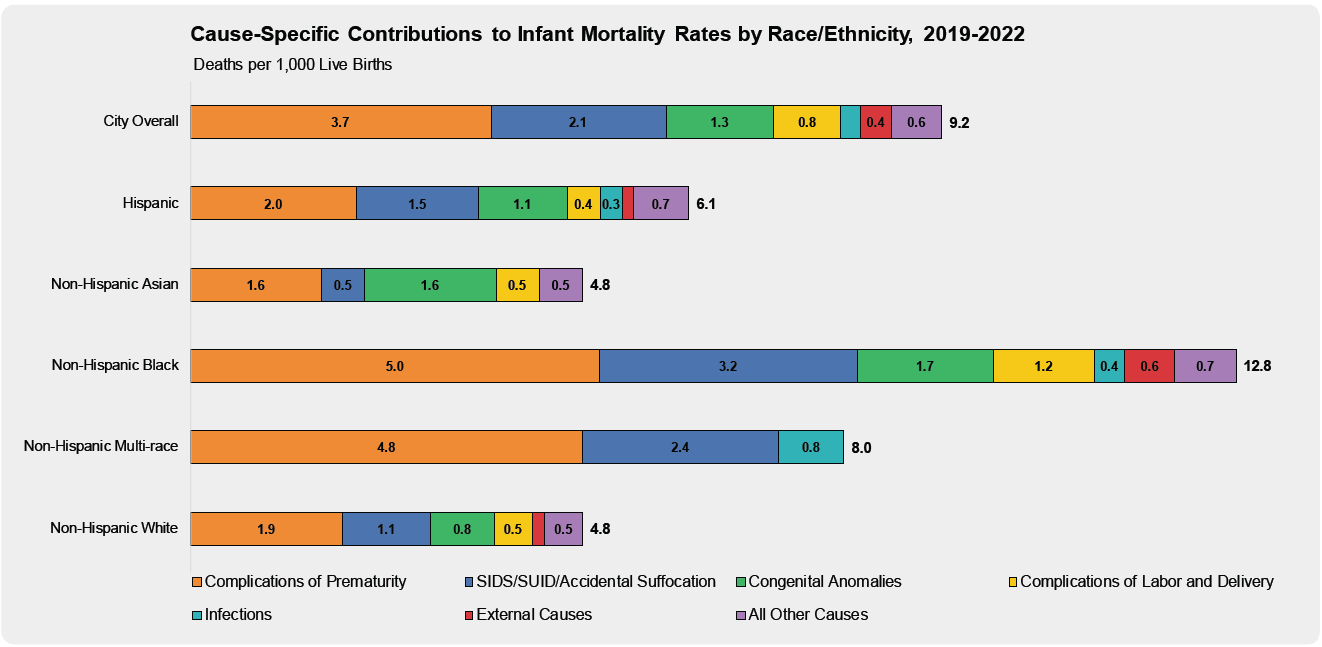
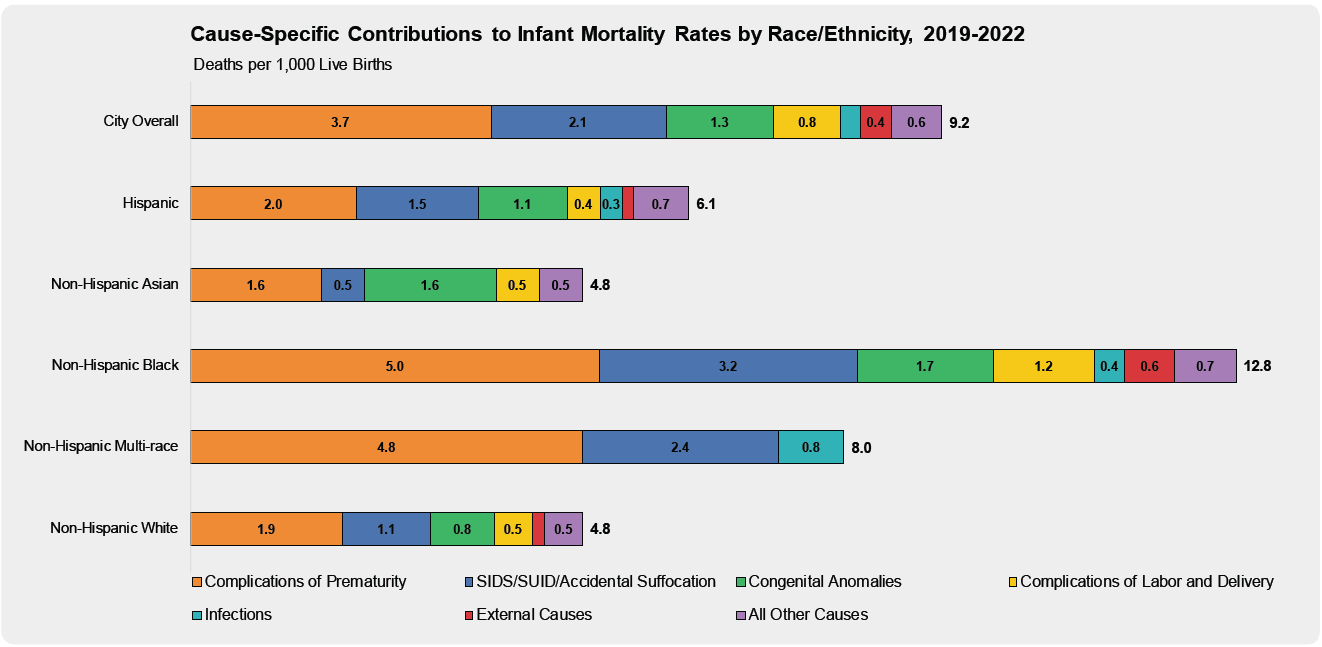
The graph on the left shows how infant mortality rates differ for Milwaukee overall, and for each racial and ethnic group. The color-coded bar shows how different causes of death contribute to each group’s rate. This helps the FIMR Team identify important patterns affecting infant health. The patterns include:
-
The top three leading causes of infant death (as shown by the orange, dark blue, and green sections) are also the leading causes across all racial/ethnic populations.
-
Non-Hispanic Black infants experience the highest risk of loss due to premature birth, SUID/SIDS/accidental suffocation, complications of labor and delivery and external causes.
-
Non-Hispanic multiracial infants also experience high risk of loss due to premature birth and SUID-related losses.
-
Congenital anomalies account for a larger portion of deaths among non-Hispanic Asian infants compared with all other racial/ethnic groups.
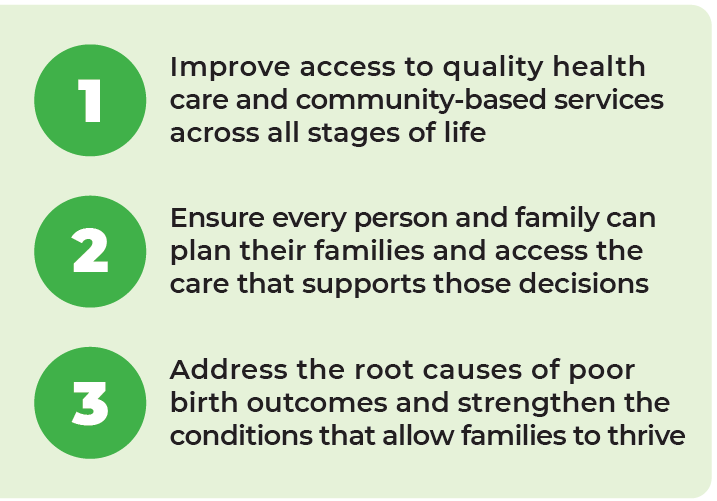 The 2025 FIMR Report includes a chapter dedicated to specific strategies to prevent stillbirths and infant losses, but the top three recommendations are:
 Resources
Family and Community Health
Prematurity: The Leading Cause of Infant Death
Empowering Families of Milwaukee
Livebirth and Infant Mortality Data
Previous Fetal Infant Mortality Review Reports
- 2010 FIMR Report (2005-2008 Stillbirths and Infant Deaths)
- 2013 FIMR Report (2009-2011 Stillbirths and Infant Deaths)
- 2017 FIMR Report (2012-2015 Stillbirths and Infant Deaths)
- 2021 FIMR Report (2016-2018 Stillbirths and Infant Deaths)
Frequently Asked Questions
Is infant mortality getting better or worse in Milwaukee?
Infant mortality rates have slowly improved over the past few decades, but the gaps between racial and ethnic groups have stayed the same.
Can anything be done about infant mortality and stillbirths?
Yes, there are multiple things that can be done. Improving these issues requires improving prenatal healthcare for individual patients, providing coordinated care across the many systems that care for pregnant people and families, and investing in the conditions of neighborhoods most impacted by infant loss and stillbirth.
The FIMR Report contains a chapter with a variety of recommendations that can be implemented in each one of these areas.
Why does the FIMR Report only come out every 3-4 years?
The FIMR report is released every 3–4 years so data can be grouped over time. Looking at several years together provides more cases to study and helps make the findings stronger and more reliable.
If I want to get involved, is there a way to participate in MHD’s work?
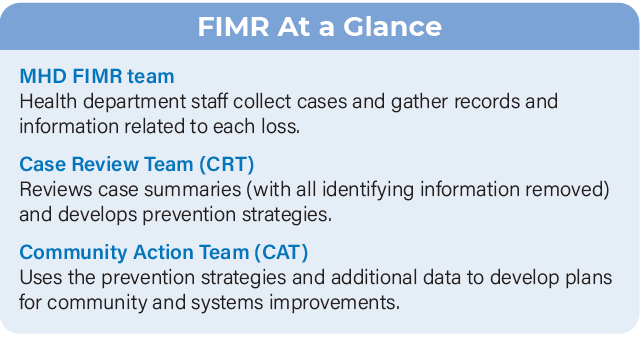
Yes, there is! FIMR has two teams: the Case Review Team and the Community Action Team.
Both teams meet regularly throughout the year, and are open to new members. Please reach out to [email protected] to learn more about each team and identify the right fit for you.
Stay in Touch with the Fetal and Infant Mortality Team
Get Involved
If you want to learn more about these topics or get involved in Milwaukee’s work to address infant and maternal mortality outcomes, email [email protected].

Melissa Seidl, MPH
Public Health Strategist

Kristie Anderson, MPH
FIMR Coordinator

414-286-5990
Zeidler Municipal Building, 841 N. Broadway, 3rd Floor, Milwaukee, WI 53202
