


When Naloxone Is Within Reach, Lives Can Be Saved
A recent overdose reversal at a Milwaukee meal site shows how harm reduction, preparation, and community partnerships can save lives.
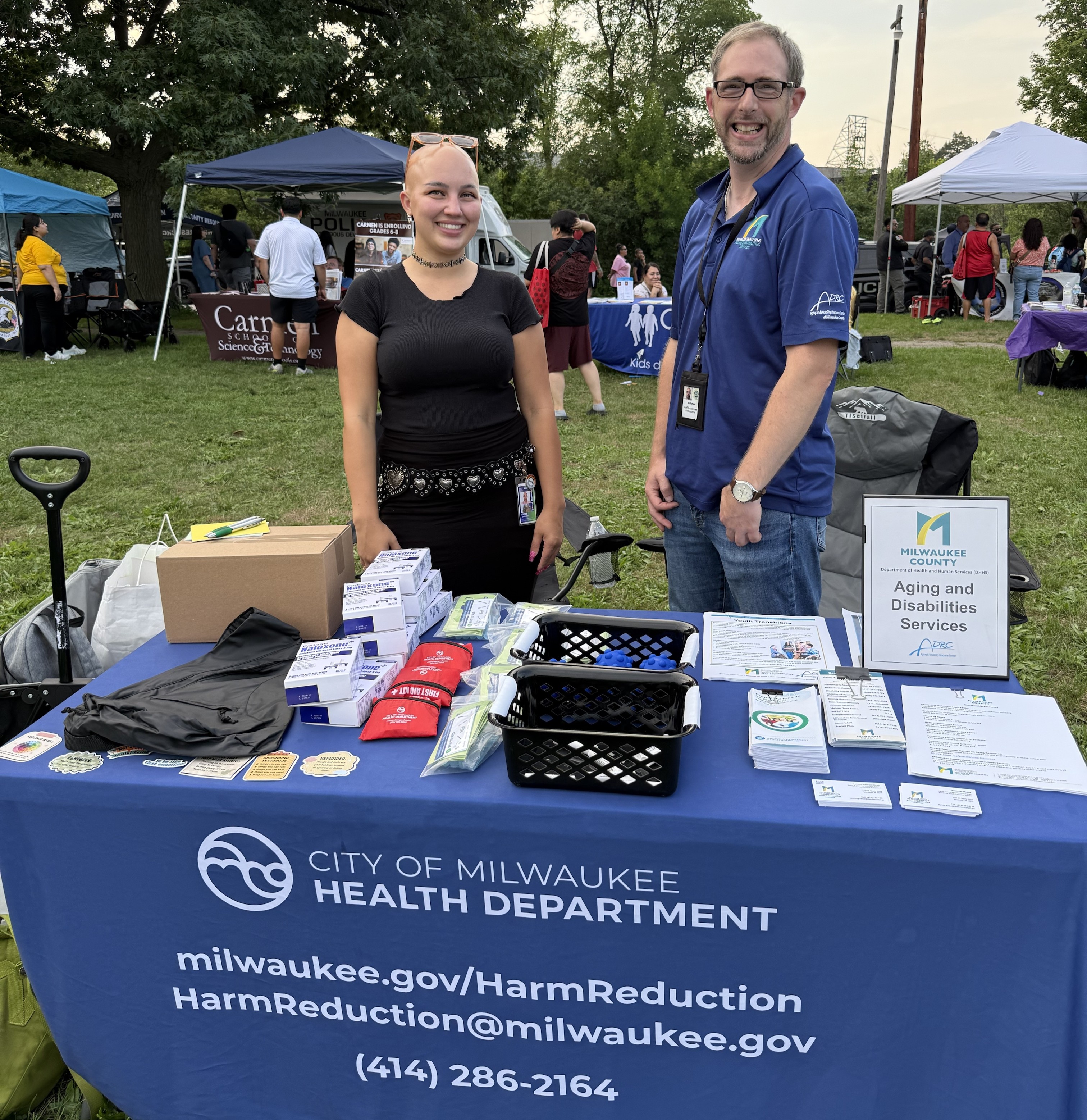
Pictured: MHD staff member Cassandra Torres-Adams and Milwaukee County staff member Nicholas at a community outreach event.
At the City of Milwaukee Health Department (MHD), a small, dedicated team of harm reduction staff and public health nurses work to get a lifesaving medication into the hands of people who may need it most: naloxone.
“This is a group effort. It’s the impact of the collective. When people have the tools, training and resources they need, they can be ready to save a life.”
Cassandra Torres-Adams, MHD Community Outreach Specialist
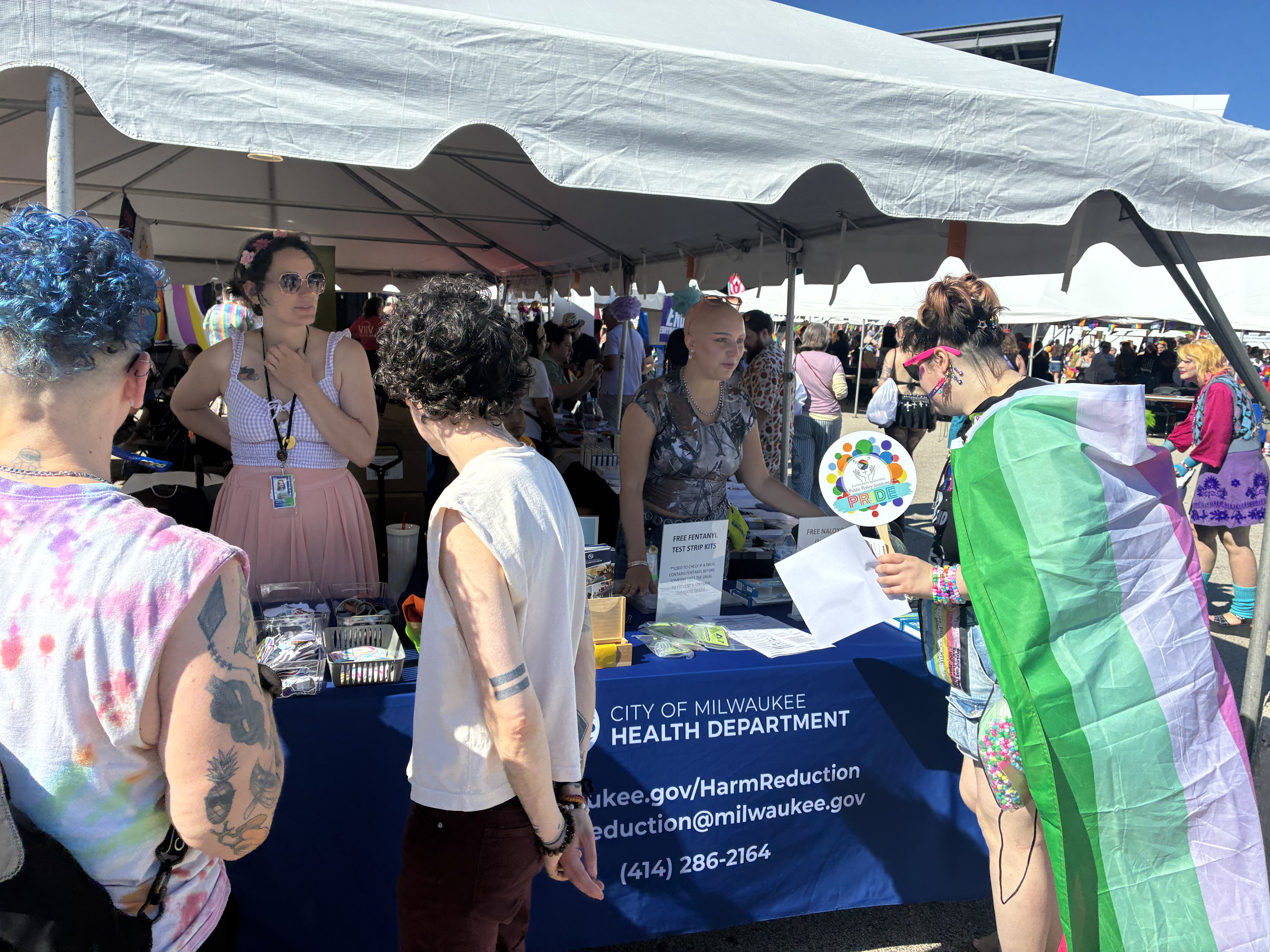 Pictured: MHD Community outreach specialists at a community event.
Twice a week, MHD staff join the Milwaukee Community Collective, a network of local harm reduction partners that meets people where they are, to distribute naloxone and other resources at gathering places and events throughout Milwaukee.
The goal is simple: prevent fatal overdoses.
Each organization reaches different people and places in Milwaukee," said Anna Narvey, MHD's Senior Public Health Strategist. "The Collective brings those efforts together so lifesaving resources can reach further into the community."
Recently, MHD got a powerful reminder of what that work can mean.
During a recent outreach visit to a St. Vincent de Paul Society of Milwaukee meal site, MHD Harm Reduction Community Outreach Specialist Cassandra Torres-Adams learned that staff had used naloxone supplied by MHD to reverse an overdose, which saved the person's life.
The story of what happened that night shows why naloxone access matters, how Milwaukee's harm reduction partners are working together to prevent overdose deaths, and why International Overdose Awareness Day is a reminder that the work is far from over.
A Life Saved
Pictured: Cruz Luciano, St. Vincent de Paul staff
St. Vincent staffers Reina De la Garza and Cruz Luciano were working at a meal site when they learned a guest was unresponsive in the bathroom.
“I didn’t know exactly what was wrong, but I knew it had to be an overdose,” De la Garza said. “The first thing we knew we needed was Narcan.”
"It was scary, but it also happened so fast. There was no time to think. We didn’t know how far they were into the overdose already. We just knew: get the Narcan up their nose."
Cruz Luciano, St. Vincent de Paul Society of Milwaukee staff member
Both staff members knew they needed to move quickly. De la Garza and Luciano administered naloxone and waited for the person to respond.
“It was definitely a chaotic moment, and one that will forever stick with me,” De la Garza said.
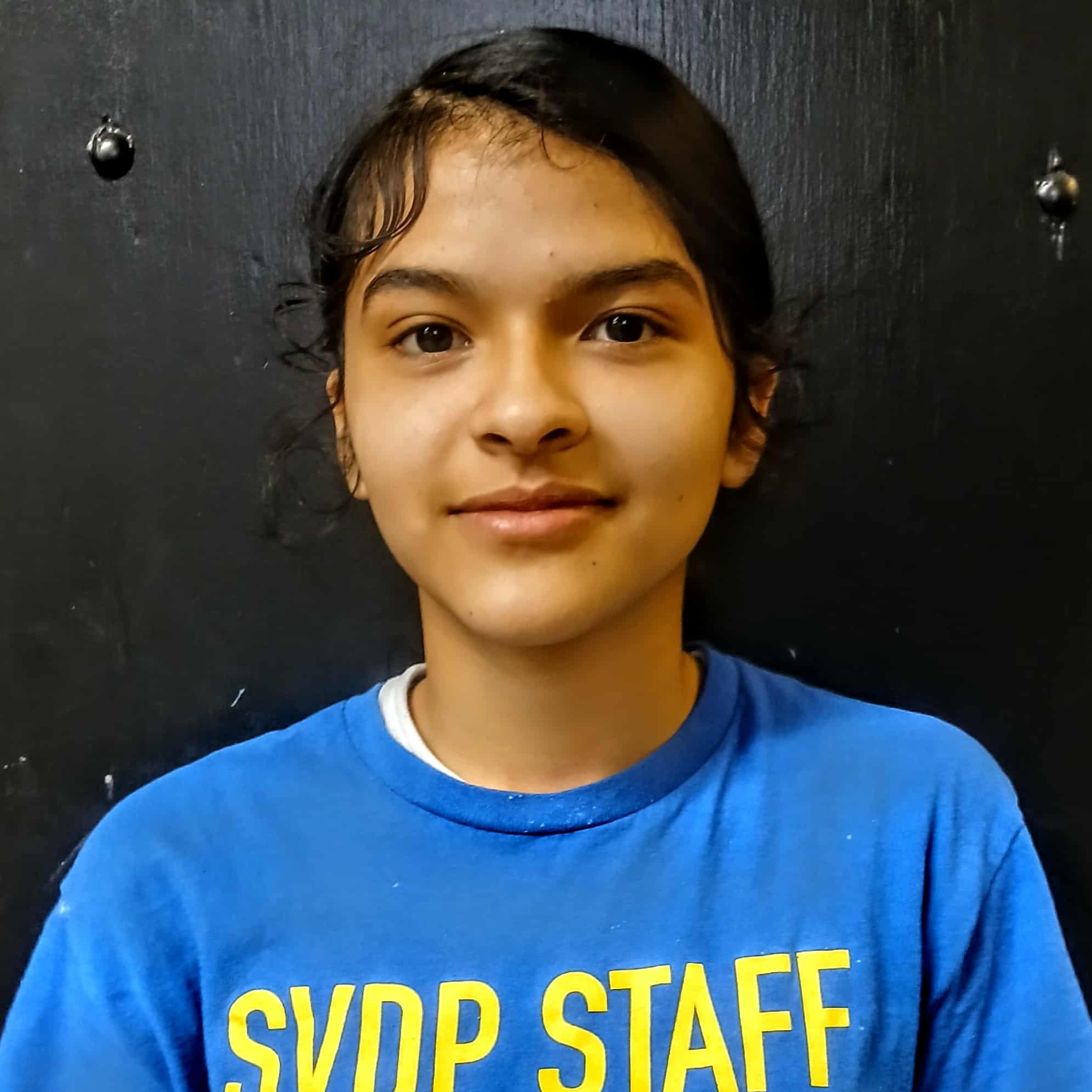
Pictured: Reina De la Garza, St. Vincent de Paul staff
Eventually, De la Garza saw the person take a breath.
"The whole time, I’m like, ‘Come on. Come on. You’re so young," De la Garza recalled. "And when I seen them take that breath, because they gasped for air, I was like, ‘Let’s go!’ It just felt great to know that we actually brought them back. A tear or two came out just because of the happiness, the relief that somebody could have died in front of us."
De la Garza is 16 years old.
Neither De la Garza nor Luciano had ever personally responded to an overdose before. Their training helped them recognize what was happening, find the naloxone, and act quickly.
Being Prepared Before an Overdose Happens
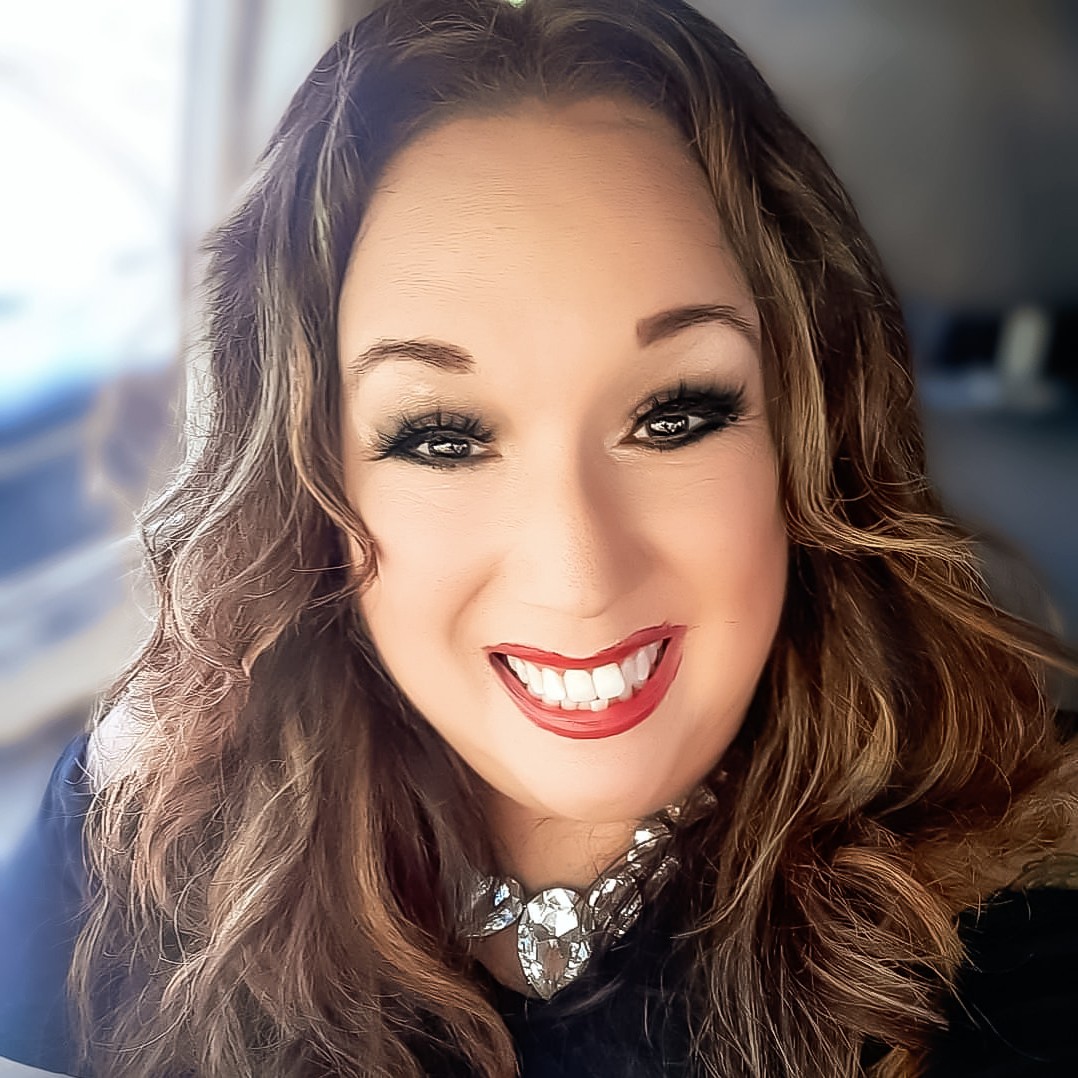 Pictured: Peggy West, St. Vincent de Paul staff
St. Vincent de Paul staff regularly talk about naloxone and overdose response.
“At staff meetings, we talk about where in the building Narcan is, and I’ve shown them how to administer it,” said Peggy West, Meal Program Manager for St. Vincent de Paul Society of Milwaukee. “The Milwaukee Fire Department has been super good about making sure we’re prepared, and now Cassandra’s super, super good at making sure that we always have Narcan.”
"We train people to administer one dose and, if needed, another dose about three minutes later. Folks often say those three minutes of waiting seem like three hours."
Anna Narvey, MHD Senior Public Health Strategist
MHD encourages people who carry naloxone to know how to use it before an emergency happens. That includes knowing what to expect after administering it.
MHD and St. Vincent de Paul's relationship is one example of a much larger network working to reduce the harms associated with substance use in Milwaukee. MHD participates in the Milwaukee Community Collective alongside members like:

The department also works with organizations and coalitions throughout Milwaukee, including RISE Drug Free MKE, to expand access to resources, education and overdose prevention.
Expanding harm reduction throughout Milwaukee is one of the goals of MKE Elevate, the City's 2023-2028 Community Health Improvement Plan. The plan calls for MHD and community partners to work together to improve health and safety across the city.
“The health department’s really doing a great job. As a Milwaukee resident, it makes me proud to know we don’t have a city that’s turning a blind eye,” West said. “They’re very aware and making sure that people who need access to Narcan are getting it.”
 For MHD, that means putting naloxone where an overdose is most likely to happen.
"Our naloxone saturation strategy is getting it to the people and places where it’s most likely to be needed," Narvey said. "We’re most focused on getting it to people who use drugs and their immediate social networks, or places where they congregate."
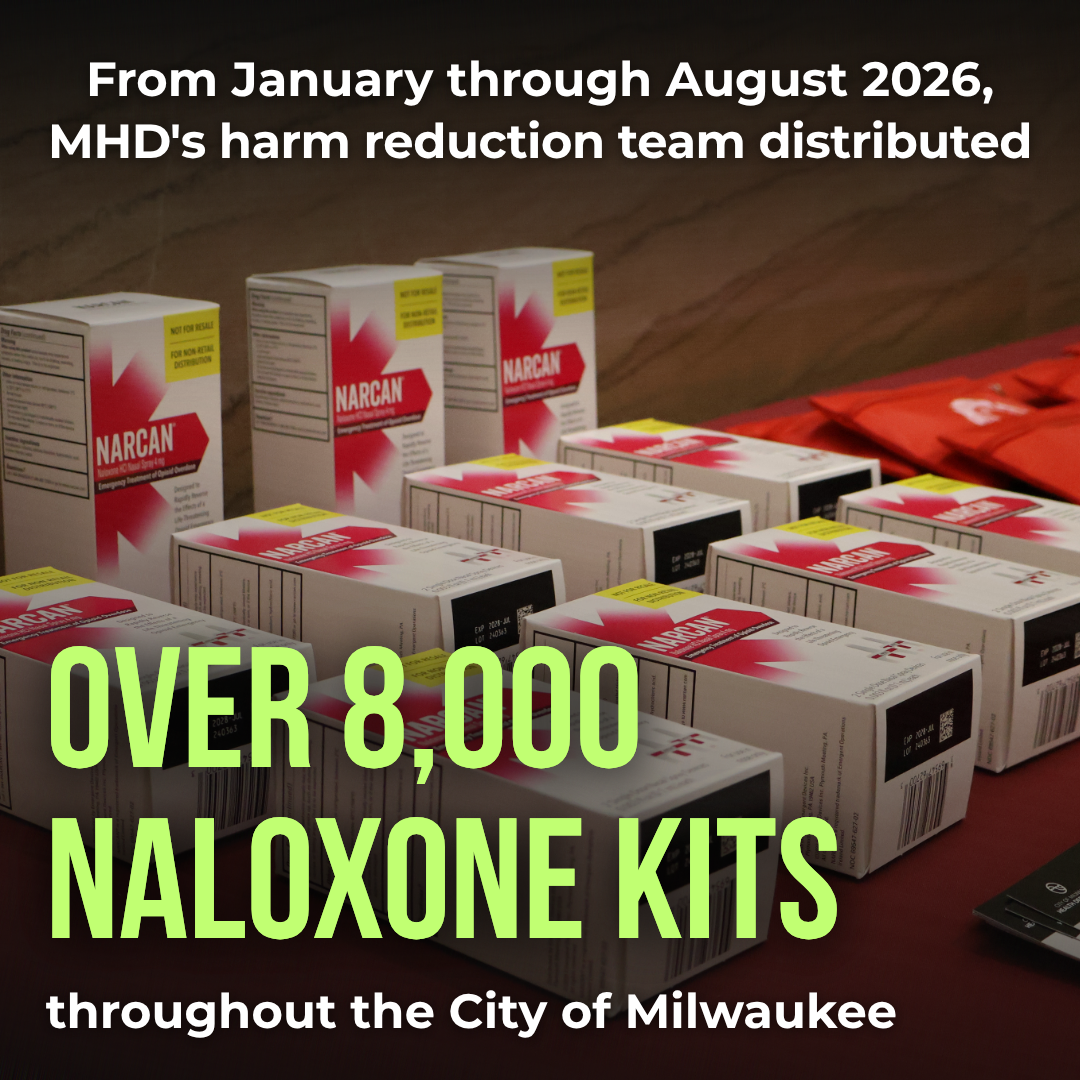
From January through August 2026, MHD's harm reduction team distributed over 8,000 naloxone kits throughout Milwaukee.
"It’s an evidence-based strategy that’s all about activating bystanders to hopefully intervene if there is an overdose."
Anna Narvey, MHD Senior Public Health Strategist
The Work is Working, but You Are Still Needed
This year's local theme, You Are Still Needed, acknowledges the progress Milwaukee has made while reminding the community that overdose continues to take lives.
Data from the Centers for Disease Control and Prevention shows overdose deaths in Milwaukee County have declined 48% over the past three years. While the trend is encouraging, hundreds of lives are still lost to overdose each year.
“This is a group effort,” Torres-Adams said. “It’s the impact of the collective. When people have the tools, training and resources they need, they can be ready to save a life."
This year's IOAD theme carries a call to action beyond the people who work in harm reduction every day. The theme highlights that friends, family members, coworkers and bystanders all play a role in preventing fatal overdoses, by carrying naloxone and knowing how to use it.
“We talk to our volunteers who come from outlying areas, and they’ll say they won’t need it, but we tell them to take the Narcan anyway,” West said. “Put it in your purse. Keep it in your car. Put it in your house. You don’t know whether you’re going to need it, so you should always have access to it.”
For West, the lesson from what happened at St. Vincent de Paul is simple.
"Everybody should have Narcan. Everybody should be trained, especially since Narcan is so readily available."
Peggy West, Meal Program Manager for St. Vincent de Paul Society of Milwaukee.
International Overdose Awareness Day and Free Resources
RISE Drug Free MKE will host International Overdose Awareness Day events on Monday, August 31, including a 10 a.m. press conference at Milwaukee City Hall and evening activities at Veterans Park.
International Overdose Awareness Day
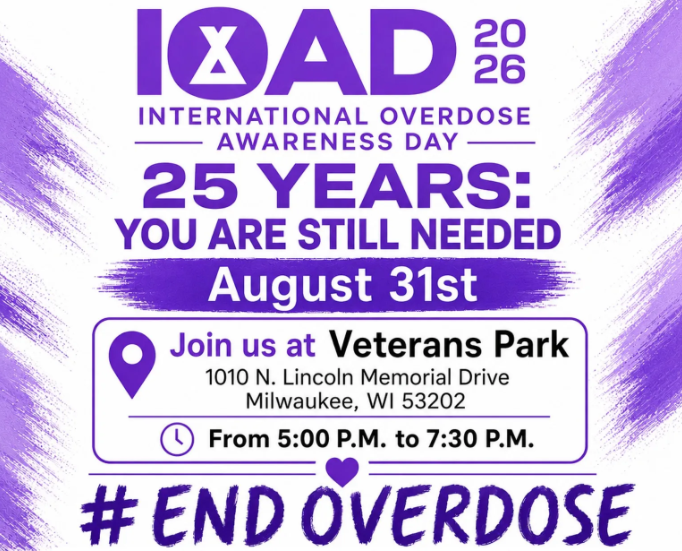
Monday, August 31 2026, 5:00 - 8:00 pm
Veterans Park, 1010 N Lincoln Memorial Dr.

MHD Staff Featured in This Post
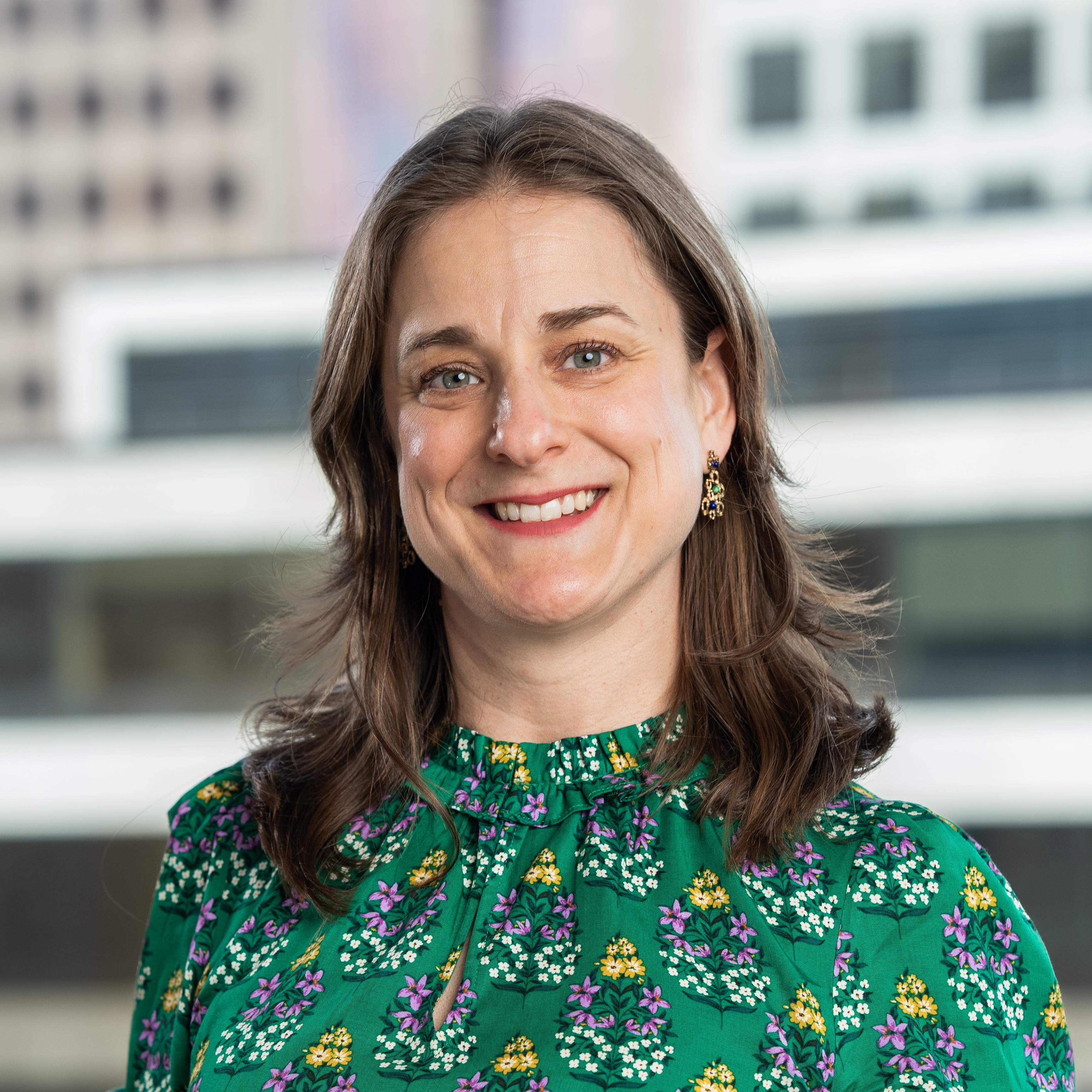
Anna Narvey, MSPH
Senior Public Health Strategist
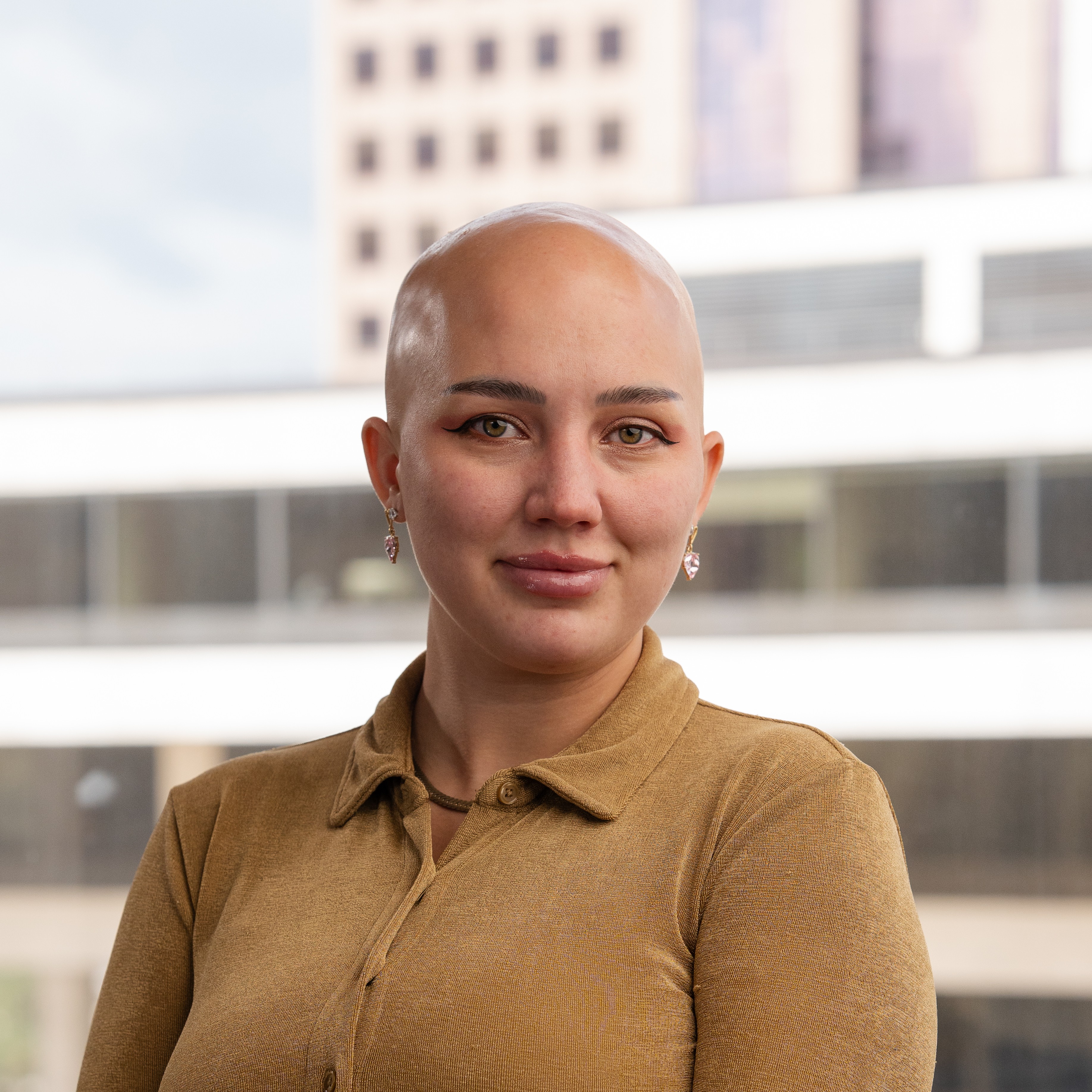
Cassandra Torres-Adams
Harm Reduction Community Outreach Specialist