Administration & Budget
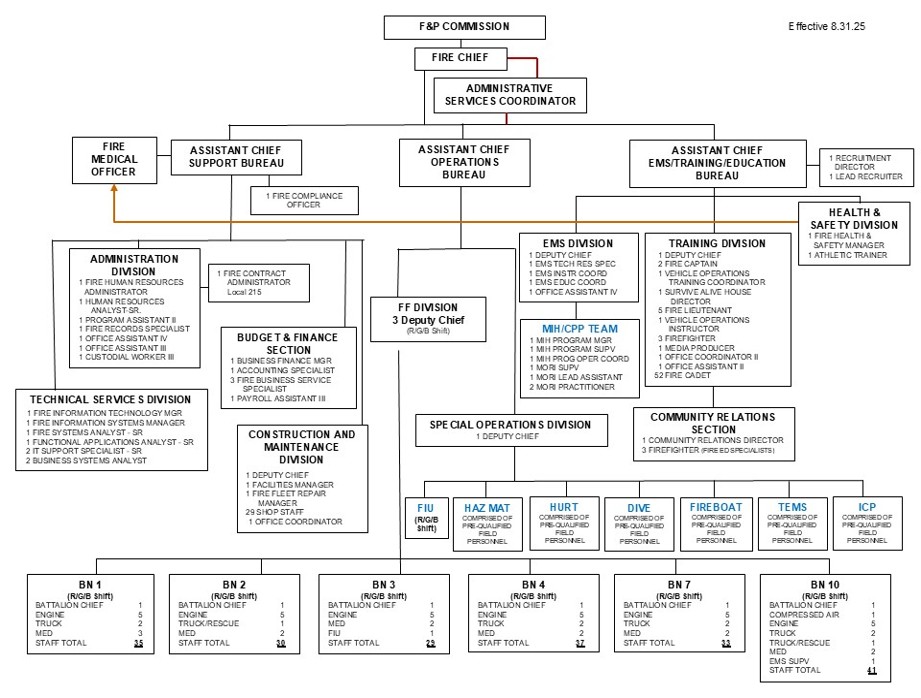
The ADMINISTRATION DIVISION, along with the BUDGET and FINANCE SECTION are located at 711 West Wells Street on the third floor of Fire Station #2. This small, yet efficient and dependable staff, handles the human resources functions for all department members, handles budgeting and financial aspects of the department as a whole, and provides fire and emergency medical services reports to requesters. The offices of the Chief and Assistant Chiefs are also at this location, and all directives from them originate from Administration.
The MFD is a service organization, and although most of the business functions of this staff are routine in nature, processes are continuously refined to maintain outstanding efficiency. These professionals continue to meet the challenges of an ever-changing environment while adjusting to new technology and policies, and updated government laws.
| YEAR 2025 Total Positions Authorized = 940 | |
| Salaries & Wages | $129,136,511 |
| Operating Expenditures | $12,023,108 |
| Equipment | $1,392,689 |
| Special Funds | $7,879,606 |
| TOTAL OPERATING BUDGET | $150,431,914 |
| Capital Improvement Expenditures | $1,341,056 |
| Revenues | $10,655,695 |
Construction & Maintenance
The MFD CONSTRUCTION and MAINTENANCE DIVISION, located at 118 West Virginia Street, provides unwavering and exemplary service to the citizens of Milwaukee, as well as firefighters This is done by designing, purchasing, and maintaining a fleet of 200 vehicles at-the-ready to respond.
This staff of 28 maintains 40 fire stations and service buildings, as well as all equipment such as self-contained breathing apparatus, extrication equipment, and emergency medical equipment used at lifesaving incidents. In addition to the vital day-to-day tasks of building, fleet, and equipment upkeep, this division supports other City departments, state and federal agencies, nearby protective services departments, participates in community relations / training programs, and spearheads the cancer prevention / firefighter safety initiative.
2025 Construction and Maintenance Highlights below:
2025 was a pivotal year for the Construction and Maintenance Division as we finalized the transition of vehicle repairs to the leased Fiebrantz Avenue facility. This transition was crucial in providing the necessary space for technicians to perform timely repairs in a more efficient manner. The expanded space, coupled with the diligence of the MFD’s vehicle technicians, allowed the MFD’s fleet to remain serviceable against great odds.
The Division procured three new fire engines. This investment will help the MFD to reduce the age of its fleet, thereby providing greater reliability for responses throughout the city.
The floors at Stations 6, 26, and 27 were repaired so that the heavy apparatus of today could continue operating from these stations, providing much needed coverage to those areas of the city. Challenges will likely continue to arise as much like these stations, others on the department are aged and were not built with the structural needs of future fire apparatus, the apparatus we utilize today.
Return to TopTraining Academy
The MFD TRAINING ACADEMY, located at 6680 North Teutonia Avenue, is shared with the Milwaukee Police Department. The Training Academy is led by a Deputy Chief with a dedicated staff of 19 including Community Relations, and the Survive Alive House.
The Training Academy is responsible for training and educating every sworn MFD employee. It offers numerous programs including all-encompassing fire recruit instruction, a two-year cadet program, and department-wide in-service training. In addition, they also provide State of Wisconsin Technical College System Fire Service Training Certification Programs. The Training Academy provides its facility to other City of Milwaukee agencies upon request.
Review 2025 Training Academy Highlights
Review 2025 EMS Education Highlights
Return to Top
Health & Safety
The MFD HEALTH AND SAFETY DIVISION, consists of a health and safety manager, fire medical officer, athletic trainer, peer fitness team, peer support team, and chaplains. Each of these components plays a vital role in the overall health and wellness of our members. The MFD continues to maintain strong partnerships with outside organizations to ensure our programming is industry-leading, finding additional resources that are meaningful to our members to keep them Well at Work, Well at Home, and Well into Retirement.
Review 2025 Health and Safety Highlights
Return to Top
Battalion 1
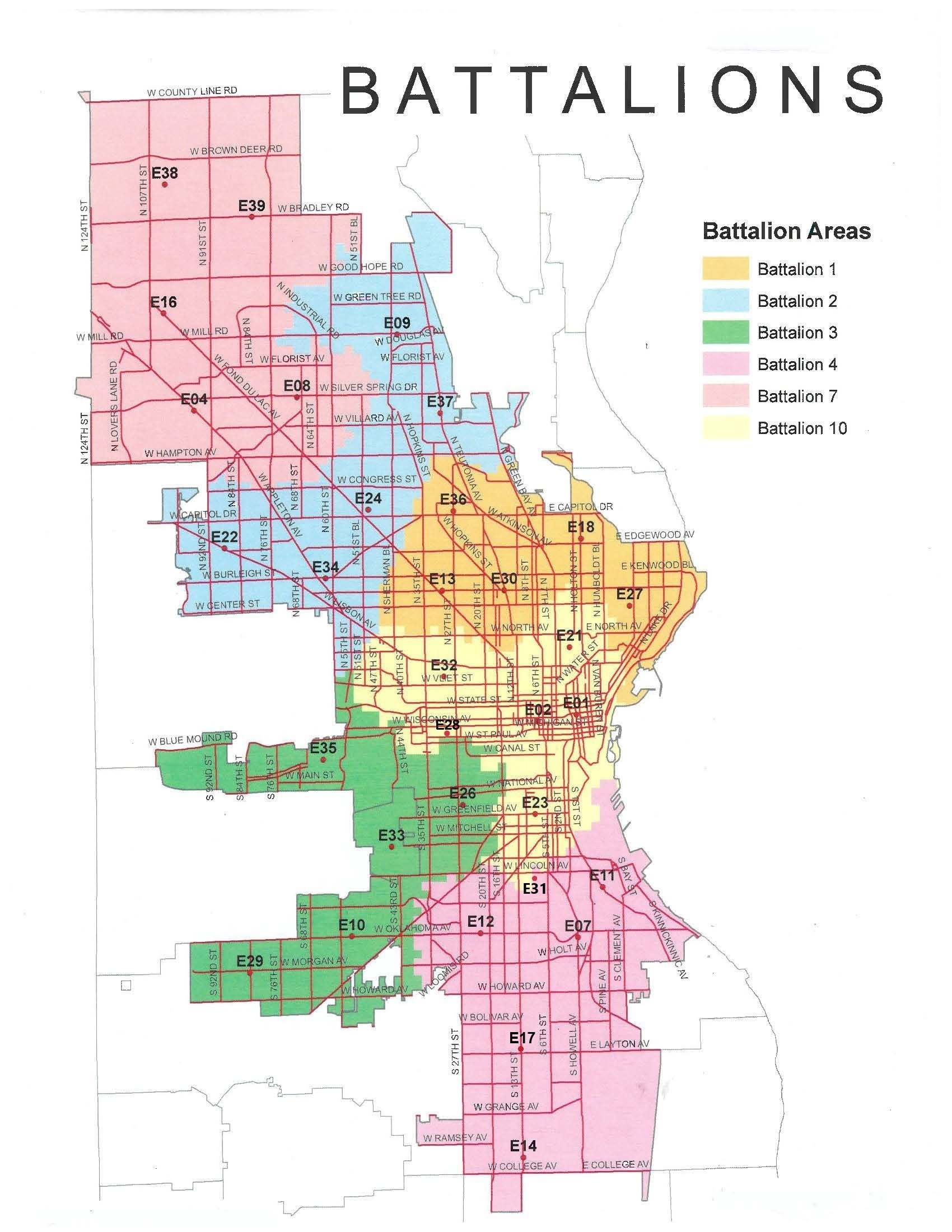
Battalion 1, located at 3628 North Holton Street, is comprised of five fire stations, led by a Battalion Chief with the following emergency response companies:
Engines 13, 18, 27, 30, and 36, Ladder Trucks 5 and 12, and
MEDs 2, 5 and 7
The 1st Battalion encompasses the northern portion of the east side of Milwaukee stretching west from Lake Michigan to 27th Street. Among the most notable of large campuses to protect is the University of Wisconsin-Milwaukee, Master Lock, theaters and historic landmarks, along with a multitude of high-rise residences and businesses. The geography and structures provide unique challenges as well as opportunities to train and perfect the ever-changing craft of firefighting.
Return to Top
Battalion 2
Battalion 2, located at 4927 West Fiebrantz Avenue, is comprised of five fire stations, led by a Battalion Chief with the following emergency response companies:
Engines 9, 22, 24, 34, and 37, Rescue 2, MEDs 4 and 13
The 2nd Battalion covers a portion of the northwest side of the city to include the neighborhoods of Hampton Heights, Grasslyn Manor, Mount Mary, Old North Milwaukee, Franklin Heights, Sunset Heights, Sherman Park, Havenwoods, Washington Heights, and Dineen Park.
Return to Top
Battalion 3
Battalion 3, located at 4515 West Burnham Street, is comprised of five fire stations, led by a Battalion Chief with the following emergency response companies:
Engines 10, 26, 28, 29, and 33, MEDs 3 and 14, the Fire Investigation Unit, and Tier 1 HazMat (along with Engine 55 staffed by Wauwatosa Fire Department)
The 3rd Battalion shares a border with the cities of Greendale, Greenfield, Wauwatosa, West Allis, and West Milwaukee, creating an ideal use of the highly collaborative Shared Services Program, rendering aid between communities. Within the City of Milwaukee, it covers the southwest side of the city, in an area ranging from I-94 to the city’s southern border along Forest Home and Howard Avenues, as far east as 16th Street, and out to the city’s western border. Since 1991, there has been an intergovernmental agreement in which the Milwaukee Fire Department wholly protects the Village of West Milwaukee. In addition to residential, commercial and industrial facilities, firefighters protect iconic Milwaukee venues such as the Milwaukee County Zoo, Mitchell Park Domes, and American Family Field.
Return to Top
Battalion 4
Battalion 4, located at 3174 South Chase Avenue, is comprised of four fire stations, led by a Battalion Chief with the following emergency response companies:
Engines 7, 11, 12, 14, 17 and 31, Ladder Trucks 1 and 8, and MEDs 15 and 17, and the Incident Command Post and drone operations
Battalion 4, known as the "Beacon of the Southeast," encompasses the area from Becher Street to the north, 27th Street to the west, Lake Michigan to the east, & city limits to the south. Major hazards in Battalion 4’s area include two major hospitals, St. Francis and St. Lukes. Milwaukee Mitchell International Airport, the Port of Milwaukee, a major interstate with I-94/43, I-794, & I-894, major rail line, and numerous residential, commercial, and industrial tracts are also in its jurisdiction. Battalion 4 companies regularly respond to and work with their neighbors to the south and west (St. Francis, Cudahy, South Milwaukee, Oak Creek, Franklin, Greendale, Hales Corners, & Greenfield).
Return to Top
Battalion 7
Battalion 7, located at 10320 West Fond du Lac Avenue, is comprised of five fire stations, led by a Battalion Chief with the following emergency response companies:
Engines 4, 8, 16, 38 and 39, Ladder Trucks 3 and 7, and
MEDs 16 and 19
Additionally, 2 MFD firehouses (4 and 16) house private ambulance companies, one Bell Ambulance and one Curtis Ambulance
The 7th Battalion, which is the largest of the battalions, geographically, covers approximately 22 square miles in the northwest corner of Milwaukee, serving Aldermanic Districts 1, 2, 5, 7, and 9. The area of this battalion is unique to the city because it hosts a large mix of single family homes, condominium complexes, apartment buildings, manufacturing business parks, some high-rise structures, and of notable hazards, a fuel storage tank farm. Not only does the 7th have this mix of building occupancies, it also serves incidents on Interstate 41 as well as state highways 145, 100, and 175.
Return to Top
Battalion 10
Battalion 10, located at 755 North James Lovell Street, is comprised of five fire stations, led by a Battalion Chief with the following emergency response companies:
Engines 1, 2, 21, 23, and 32, Ladder Trucks 2 and 9, Rescues 1 & 4 (HURT), MEDs 6 and 18, and the Dive and Boat Teams
In addition, MED 22, an all-terrain response vehicle capable of carrying up to four MFD responders along with a patient cot, provides the means to access injured people in dense pedestrian areas not easily accessible with traditional emergency response vehicles. MED 22 is used at events such as the Polar Plunge, Milwaukee Marathon, various other lakefront events/festivals, and the Fight For Air Stair Climb.
Being in the heart of the city, the 10th Battalion encompasses all of downtown Milwaukee as well as the nearby surrounding areas, proudly serving from Lake Michigan on the east, 35th Street on the West, Greenfield Avenue on the south and North Avenue on the north. This area encompasses all of downtown Milwaukee, the Menomonee Valley, most of the Lower East Side, and all of the Historic Third Ward. The downtown area and surrounding neighborhoods host many events including festivals, concerts, conventions and sporting competitions in venues such as the Fiserv Forum, Summerfest, Potawatomi Casino, the Wisconsin Center, and the lakefront.
Major transportation hubs include the Hop MKE/Streetcar, Amtrak train station, Interstate 43/94, 794, and local bus terminals. Major waterways include the Inner Harbor, Kinnickinnic River, Menomonee River, and Milwaukee River.
These rich and diverse neighborhoods range from single family dwellings to multi-story million-dollar high-rise residential structures. Battalion 10 also serves the commercial and industrial zone of the Menomonee Valley and Port of Milwaukee. Also, home to Battalion 10 are the educational institutions of Marquette University, Milwaukee Area Technical College (M.A.T.C.) Downtown campus, Milwaukee Institute of Art & Design (M.I.A.D.), and the Milwaukee School of Engineering (M.S.O.E.). Art and entertainment found in Battalion 10 include the Betty Brinn Children’s Museum, Discovery World, Fiserv Forum, Henry Maier Festival Park, Milwaukee Art Museum, Milwaukee Public Museum, Potawatomi Bingo & Casino, and Wisconsin Center District (Baird Center, Miller High Life Theater, & UW-Milwaukee Panther Arena).
Return to Top

Shared Services
The Milwaukee Fire Department (MFD) has been a partner in the Milwaukee County Shared Services Initiative since its inception in 2013. The premise of the initiative is to dispatch the closest most appropriate resources for fires and emergency incidents, regardless of municipal borders. The initiative has since developed beyond its initial scope to include sharing and maintenance of emergency vehicles and equipment, training, and transfer of emergency vehicles into empty fire stations during fires and emergency incidents.
2025 Shared Services Highlights
Return to Top
Mobile Integrated Healthcare
The MFD Mobile Integrated Healthcare (MIH) Program, located at 1900 West Fiebrantz Avenue, provides integral support to the populations of Milwaukee and the mission of the MFD. This non-emergent response program is an essential part of the long-term plan to reduce call volume and improve the overall health in the city; the program has been recognized as a nationwide leader in the field. The MFD’s community paramedics work tirelessly to connect their patients with the most appropriate resources, striving to provide equitable access and education to underserved populations in Milwaukee regarding medical, behavioral health and substance use disorder needs.
Return to Top
Boat & Dive Teams
The MFD Boat Team, located at Station 1, 784 North Broadway, has been proudly and dutifully serving the citizens and visitors of the City of Milwaukee for over 120 years. They provide fire, EMS, and rescue services for many waterways and shorelines, extending 40 nautical miles east into Lake Michigan, as well as servicing off-shore areas.
The Milwaukee Fire Department Boat Team is the oldest of all the MFD specialized teams, taking delivery of the first boat in 1889. The current fireboat, Trident, is the 11th edition in a long line of capable vessels; a model of technology with twin 570 hp Cummins diesel engines supplying power to jet propelled drives capable of pushing the 39-foot Metalcraft Marine Boat over 35 knots. It has the capability of flowing 3400 gpms for fighting near-shore or off-shore fires, can transport up to three critically injured victims with advanced life support care, and perform off-shore search and rescue with state-of-the-art radar, forward looking infrared cameras, radio direction finder, and sonar searches beneath the water’s surface.
The MFD Dive Team, located at Station 2, 755 North James Lovell Street, was founded in 1961 by a group of dedicated firefighters who volunteered to go through a Navy training program after they recognized the need for water rescue capabilities. They train monthly to maintain their skills in a multitude of disciplines including deep diving, night diving, river rescue, swift water rescue, submerged auto rescue, thin ice rescue, and ice diving.
Cross-training between these two teams is integral to their successful operations.
Return to Top
HazMat Team
The MFD Hazardous Materials (HazMat) Team, located at Station 33, 4515 West Burnham Street in West Milwaukee, began in 1982 as a remedy to small-scale fuel spills and other similar situations. Members serve as HazMat technicians, and some serve in instruction and outreach roles, locally, throughout the state, and around the nation. The team has relationships with entities such as the Federal Bureau of Investigation, Drug Enforcement Administration, Homeland Security, State Lab of Hygiene, 54th Civil Support Team, Wisconsin Emergency Management, the City of Milwaukee Health Department, and surrounding fire departments.
As the world changes, so too has the HazMat Team. Along with the typical fuel spills, household chemical mishaps, and industrial chemical leaks, the team specializes in weapons of mass destruction, illicit labs, terror threats, and radiological events. As one of only two Tier 1 teams in the state, it is tasked with responding to high-profile situations anywhere in the southern half of Wisconsin. Along with responding in person to events, team members serve in an advisory role via phone for hazmat incidents, which allows MFD physical assets to remain available.
Return to Top
Heavy Urban Rescue Team
The MFD Heavy Urban Rescue Team (HURT) was established in 1995 as a consolidation of the Rope Rescue Team and the Deep Tunnel Team. Since this merger, the HURT’s capabilities have grown to include confined space rescue, trench rescue, structural collapse rescue, high and low angle rope rescue, advanced auto extrication, heavy vehicle lifting and stabilization, man-in-machine rescue, firefighter survival, and others. The HURT also handled deep tunnel rescue for several years in the early 2000’s. The HURT has improved its complement of rigs and equipment each year to meet the technical rescue needs of the City of Milwaukee and its Shared Services partners.
Two fully staffed heavy rescue companies were established in January of 2012. The addition of the rescue units resulted in the team being split into two separate station houses. Rescue 1 is housed at 1400 South 9th Street along with Engine 23 and Rescue 4 (trench and structural collapse rescue rig), and Rescue 2 is housed at 4927 West Fiebrantz Avenue along with Engine 24. These two locations provide the city with enhanced technical rescue coverage as well as additional training opportunities. The HURT partners with public and private organizations to gain realistic training and experience in rescue situations.
Return to Top
Tactical Emergency Medical Services
The MFD Tactical Emergency Medical Services (TEMS) Team running out of Station 9, 4141 West Mill Road, consists of highly trained paramedics with additional education and practical training in tactical combat casualty care. These individuals provide medical care and support for both law enforcement and civilians during high-risk law enforcement incidents such as hostage and stand-off situations, warrant services, active shooter events, and civil unrest. TEMS-specific heavy apparatus, staffed daily with four paramedics, allows the department the ability to take the heavy apparatus out-of-service and surge two additional advanced-life-support (ALS) units, MED 20 and MED 21 when frontline ALS resources are exhausted. This pivoting capability helps to provide the City of Milwaukee with unwavering ALS service coverage. When surge capabilities are indicated, the heavy apparatus asset is placed out of service and MED 20 and MED 21 are placed in-service.
Return to Top
Fire Investigation Unit
The Fire Investigation Unit (FIU) founded in 2009, is a branch of the MFD Special Operations Division. The FIU is comprised of specially trained members, currently 48, with one 24-hour investigator on duty at all times. All members are required to complete 48 hours tested training bi-annually to maintain professional certifications and demonstrate competencies with the detailed Job Performance Requirements listed in NFPA-1033, Standard for Professional Qualifications for Fire Investigators (2022) and NFPA-1321, Standard for Fire Investigation Units (2025). FIU Officers must have over five year of fire investigation experience and have achieved professional certifications of IAA-Certified Fire Investigator (IAAI-CFI), IAAI – Fire Investigation Technician (IAAI-FIT), IAAI-Evidence Collection technician (IAAI-ECT), and NAFI-Certified Fire and Explosion Investigators (NAFI-CFEI).
The FIU is mandated by state laws and municipal ordinance to determine the cause and origin of fires within the City of Milwaukee. The FIU is dispatched to scenes with damages over $10,000, fire fatalities, fire injuries, and suspicious, incendiary, or trend-fires, as well a explosion-related incidents. They respond with a vehicle that is outfitted with tools and equipment needed to support on-scene fire investigations. The FIU reports annually on fire-related incidents using NFPA 921's four general classifications: incendiary, accidental, natural, and undetermined.
The FIU has a rich tradition of investigating fire incidents and violent crime using fire through a collaboration between the Milwaukee Police (MPD), DCI-State Fire Marshall, and the DOJ-ATF, sharing intelligence and investigation efforts as a means to achieve successful prosecution with the State of Wisconsin – Milwaukee County District Attorney’s Office and the United States Attorney’s Office (USAO) – Eastern Judicial District of Wisconsin.
In addition to those agencies, the FIU serves s a liaison for the Red Cross which provides services to victims of fire. It serves in the capacity of investigating officer, assigned to the fire investigation division/group within the overall Incident Command System during fire suppression operations, and then serves as the fire lead investigator. The team completes site safety assessments of properties and building systems damaged by fire, including posting Vacant Hazard Placards the provide essential notification of potential hazards and increased risk to life-safety.
It is the responsibility of the FIU team to audit and measure benchmarks against performance outcomes, trends that correspond, and the effectiveness of the MFD’s proactive Community Risk Reduction (CRR) Program. Statistics will also allow decision-makers from all partnering agencies to identify specific strategies and develop best practices to communicate the 5-E’s of a Proactive CRR Program (Education, Engineering, Economics, Enforcement, and Emergency response).
| o Education – Identifies vulnerable neighborhoods (by zip code) for specific fire prevention information of “risky” practices and how to prevent/mitigate them. |
| o Engineering – Provides specific fire response data and fire incident particulars that identify addresses and owners with multi responses with the goal of reducing future calls and reduction of “risky” practices. |
| o Economic Incentive – Referrals to property owners, businesses, and individuals to make choices that reduce fire risk and improve building safety. |
| o Enforcement –Identifying any potential fire risks or areas of non-compliance, while providing property owners the importance of fire and building codes. |
| o Emergency Response – Evidence-based study for efficiency and effectiveness of responses, while reducing the negative impact of responses to preventable incidents. |
Return to Top
Incident Command Post
The MFD Incident Command Post Team, located at Station 12, 2130 West Oklahoma Avenue, was officially founded as an MFD special team on January 1, 2012. Crews respond with a state-of-the-art communications RV that has internet, phone, fax, lighting, and recording capabilities. Team members specialize in providing support to the command staff at major incidents, improving the safety of the public, as well as department members.
Examples of responding incident types include large-scale emergencies such as second alarm and greater fires, high-rise fires, hazardous materials and dive incidents, and active-shooter situations. The ICP staff in conjunction with event staff and the Department of Communications deploy resources to specific locations such as scheduled large events around the city including marathons and charity runs, along with the Milwaukee Air & Water Show. This team is also available to surrounding communities through the Shared Services initiative.
The team incorporates unmanned aerial system (UAS/drone) technology at incidents as requested which provides a high resolution view of the entire emergency scene. Thermal imaging capabilities are attached to the drone which helps to locate hotspots in a building fire, as well as to aide in search and rescue missions, and structural collapses.
2025 Incident Command Post Highlights
Return to Top
Recruitment
Recruitment and related projects occur within the EMS/Training/Education Bureau of the MFD to include pre-employment orientations, practice testing, and candidate fit-camps.
Highlighted below are main recruitment year-round responsibilities:
| General Population | Fire Cadet Paid Apprenticeship | Lateral Paramedic |
| Collaborate with FPC to provide messaging and resources to candidates | Collaborate with FPC to provide messaging and resources to candidates | Collaborate with FPC to provide messaging and resources to candidates |
| Help candidates navigate the online application process | Collaborate with FPC to provide messaging and resources to local high schools | Help candidates navigate the online application process |
| Schedule and staff community events during open application periods | Help candidates navigate the online application process | Conduct pre-employment orientations |
| Conduct pre-employment orientations | Schedule and staff community events during open application periods | Conduct pre-employment practice testing |
| Conduct pre-employment practice testing | Schedule and staff year-round local high school events | Conduct pre-employment candidate fit-camps |
| Conduct pre-employment candidate fit-camps | Conduct pre-employment orientations | Facilitate (CPAT) Candidate Physical Ability Test |
| Facilitate (CPAT) Candidate Physical Ability Test | Conduct pre-employment practice testing | |
| Conduct pre-employment candidate fit-camps | ||
| Facilitate Fire Cadet (PAT) Physical Ability Test |
The recruitment scope is wide and varied providing above and beyond standard recruitment:
- Working with the MFD Training Academy instructing Fire Cadets and Fire Recruits including hands-on training and EMT classes.
- Fostering academic affiliations with the UWM Nursing Program to include providing an off-campus classroom site, utilizing the students to conduct 9-1-1- callbacks for data processing, and offering them MFD ride-alongs to fulfill their patient-contact quota.
- Holding community resource events which highlight career opportunities, employment partnerships, educational pathways, certifications, scholarships, and youth programs with HR data filtered through the Fire and Police Commission towards MFD employment.
- Partnering with the Red Cross to provide and assist with CPR and Babysitter Certification classes.
Station 5, 1313 W. Reservoir Av., the recruitment team's homebase, also serves as the cornerstone of the MFD Peer Fitness Program where department fitness assessments are conducted and Peer Fitness Trainer in-services are held. In addition, the Community Agriculture Growing Experience (C.A.G.E.), conceptualized by Andre' Lee Ellis and Company Inc. as a community garden, in which created a year-round youth mentoring program employing inner city youth to grow and prosper as individuals learning responsibility, teamwork, and leadership skills was born.
Refer to the below link for other youth programs and internships provided through the expertise of the MFD Recruitment Team! We are proud of our exceptional youth engagement.
Return to Top
Fire Cadets & Recruits
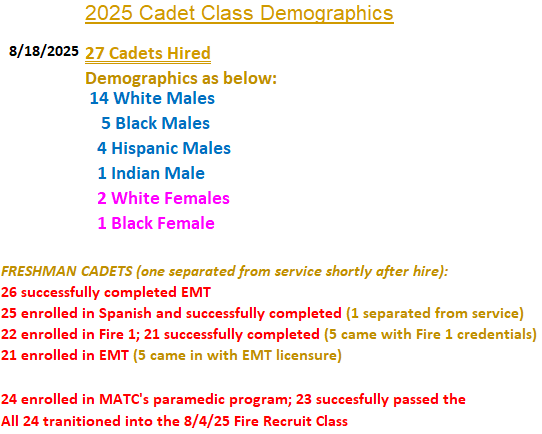
The MFD FIRE CADET PROGRAM continues to be a successful avenue to give tremendous opportunity to high school graduates seeking a career in the fire service, while positively impacting the diversity of the firefighting workforce.
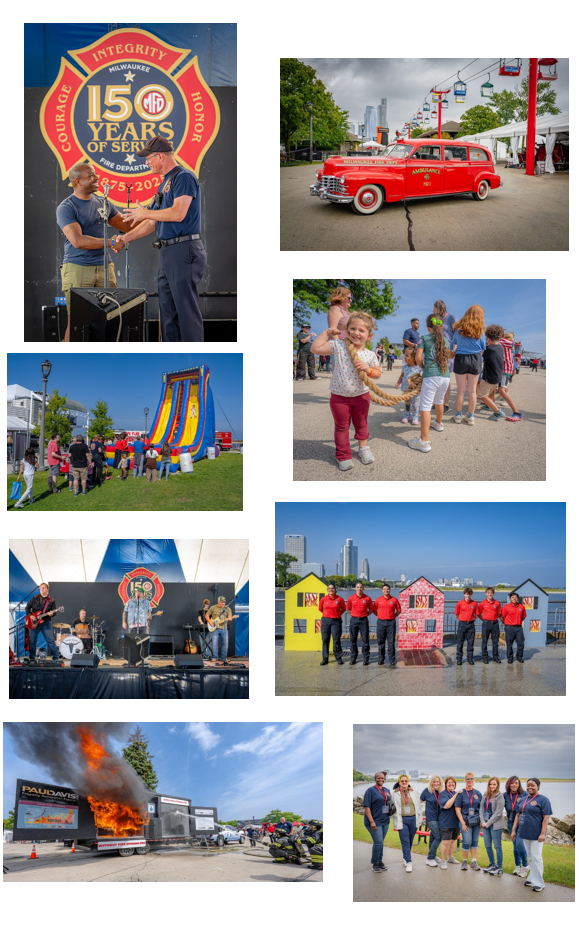
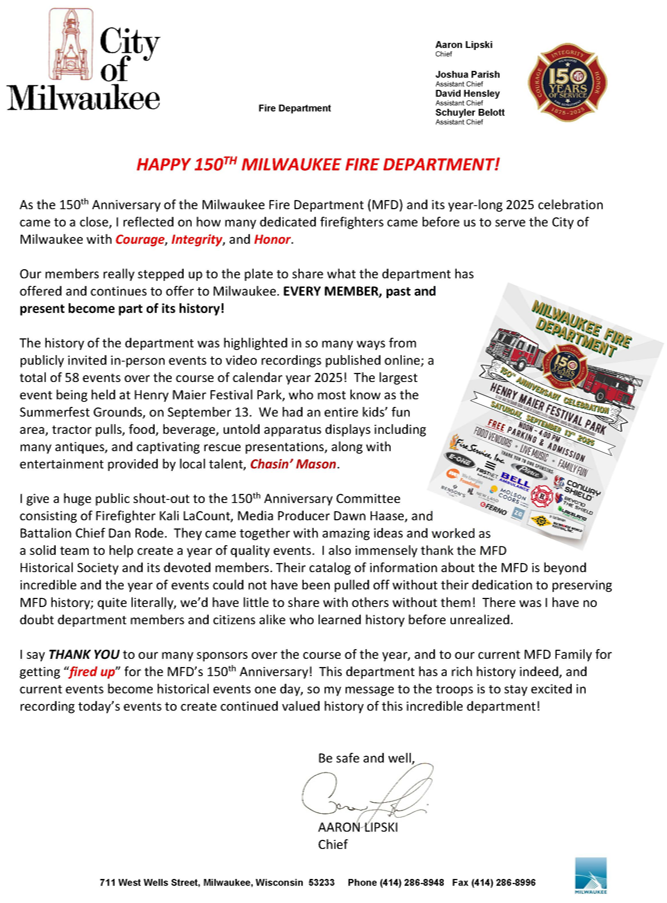
Cadets participated in Big Brothers Big Sisters of America, Red Cross Sound the Alarm, Habitat for Humanity, St Patty’s Day Parade, Turkey Drive, Toy Drive, Haunted Academy, and many150th MFD Anniversary events.
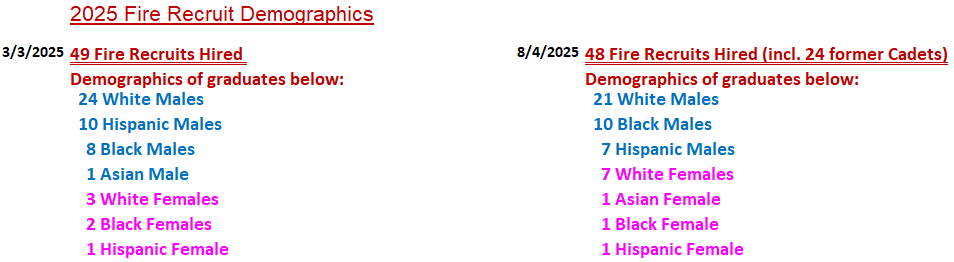
The MFD FIRE RECRUITS are challenged both physically and mentally throughout
their 16 weeks of preparation at the MFD Training Academy. They graduate with the tremendous privilege and responsibility of being professional firefighters, ready to serve.
Community Relations
MFD COMMUNITY RELATIONS is comprised of a dedicated staff which reaches out to the public to teach various fire and health safety programs. Instruction on properly functioning smoke alarms, evacuation planning and preparedness, fire extinguisher use, emergency medical services, elder care, and the career of firefighting are just a sampling of the programs offered. The section is led by a fire lieutenant, serving as the director, and is rounded out by three dedicated firefighters serving as fire education specialists. Together, they spearhead the education of the citizens of Milwaukee on matters pertaining to fire and healthy safety.
| 2025 Statistical Information | |
| Public Fire Safety Education Contacts | 626,091 |
| Smoke Alarms Distributed | 11,721 |
| Community Risk Reduction Contacts | 12,900 |
| Public Education/Fire Prevention Events Attended (Community Request-initiated) | 1,580 |
| Public Education/Fire Prevention Events Attended (MFD-initiated) | 409 |
Some significant increases were due to the 150th Anniversary Celebrations throughout 2025.
Return to Top
Survive Alive House
In the fall of 1987, a series of house fires devastated Milwaukee by claiming the lives of 31 people including 18 children. In response to this tragic loss of life, a Fire Prevention Task Force was appointed to explore ways in which the Milwaukee community could prevent future fire fatalities from occurring. The concept of a Fire Safety Education Center was proposed to the Fire Prevention Task Force for consideration.
It was felt that a fire safety and prevention program introduced at an early age would be an effective way of teaching children to escape from a fire. The Task Force approved the proposal in December of 1987 and a committee consisting of individuals from throughout the community was formed to begin planning and development of the program.
THE SURVIVE ALIVE HOUSE IS REALIZED
The Milwaukee Fire Education Center’s Survive Alive House, located at 2059 South 20th Street, officially opened its doors in February 1992. The Milwaukee Public Schools’ Division of Recreation and Community Services and the Milwaukee Fire Department operate the House jointly. The house is available to public and private schools located in the City of Milwaukee. Over 13,000 Milwaukee children visit each year to learn to survive in the event of an actual fire in the home. MFD members along with MPS Recreation staff and community volunteers assist during the program’s operation. Funding for capital improvements and certain operating expenses is provided by the nonprofit Foundation for the Milwaukee Fire Education Center.
In 2019, a new mobile version of the Survive Alive House was realized due to a grant from Pieper Power Foundation and efforts via a fundraising gala held in 2018. The Traction Factory custom-designed shrink wrap to complete the project.


2025 SURVIVE ALIVE HIGHLIGHTS for the 2024-2025 School Year:
- In August, the theatrical lighting in the house was upgraded.
- In September, 120 people toured the Survive Alive House during Doors Open Milwaukee, an annual city-wide event to tour buildings around the city.
- In October, at the kick-off to Fire Prevention week, the Milwaukee Bucks President presented $2,500 to the MFD for smoke alarms.
- Staff provided safety programs to 3,633 fifth grade and 3,916 second grade MPS students, and to 595 private school students.
- Staff provided Summer Adventure and Summer Safety programs to 218 children of daycares, summer schools, and summer camps.
Honor Guard
The Milwaukee Firefighters Honor Guard (MFHG) was founded on January 1, 1996 by Fire Lieutenant Randy Leach. Fire Lieutenant Leach identified a need for the Milwaukee Fire Department (MFD) to have its own honor guard, so with the help of a handful of other active MFD members, the MFHG was established! Since its inception, the MFHG has continued to grow in order to meet the demands for services.
The MFHG has been proudly standing by its mission to honor all MFD members and care for their families. Their primary responsibility is to stand casket guard at funerals of both active and retired members. Other services are provided such as pallbearer duties, posting/retrieving of colors, folding of the flag and presenting it to families of the fallen, marching colors in parades, and presenting colors for sports venues. In the last several years, the MFHG has been requested, and has stood side-by-side, with the Milwaukee Police Honor Guard. Just as firefighters train to keep their skills honed, the MFHG trains to keep sharp.
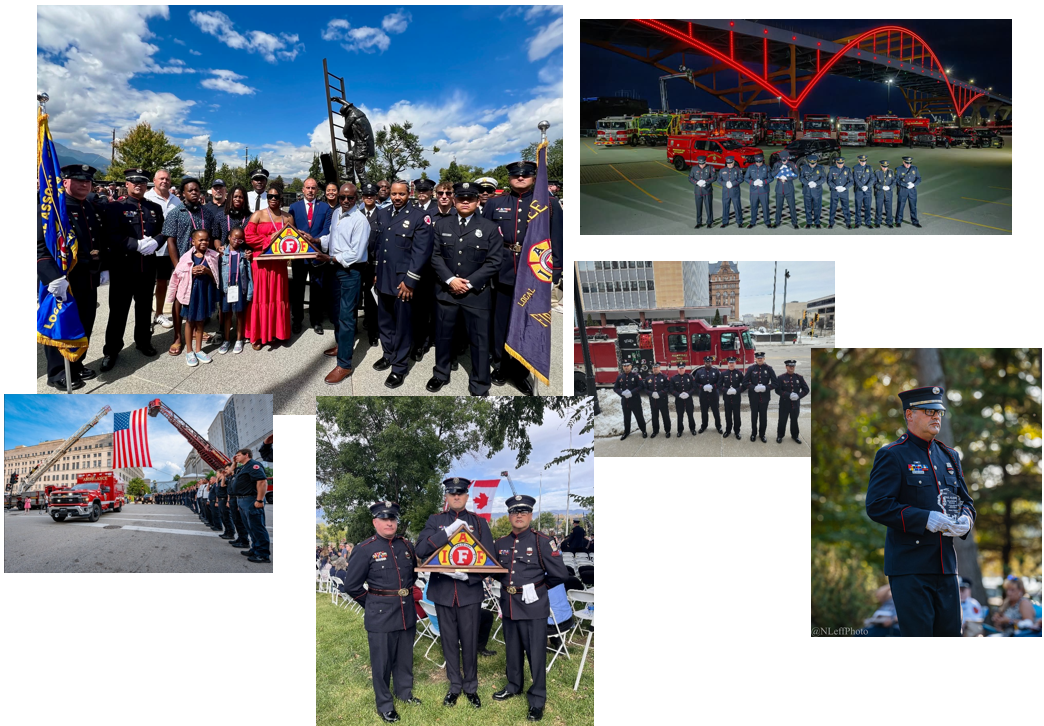
Currently the team is commanded by Fire Lieutenant Matthew Bryant and is comprised of 20 Milwaukee firefighters, either active or retired, who volunteer their time to provide services for the Milwaukee community, as well as statewide, and nationally. All funding for the team comes from private donations. In 2025, the MFHG was asked to attend 84 events, and of those, at least one member of the MFHG was in attendance at 76 of them.
Junior Fire Institute
The Milwaukee Fire Department has a rich history of serving the youth of the community and has been working with local students for over twenty years.
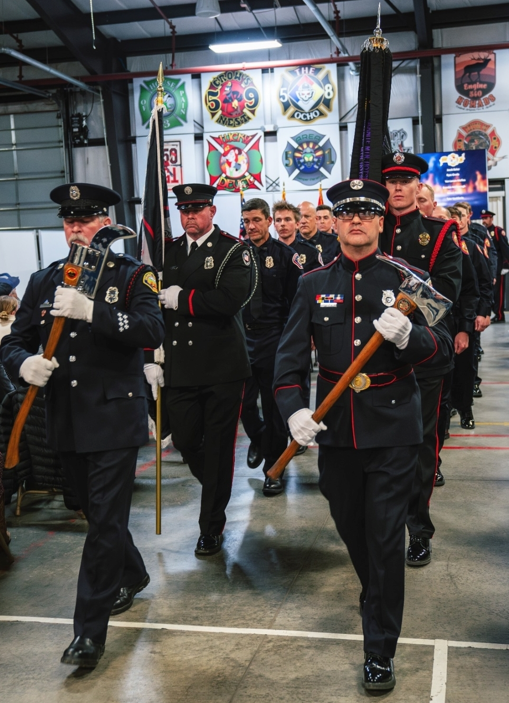
The MFD JUNIOR FIRE INSTITUTE (JFI) is a non-profit mentoring organization which provides a fun, safe, and rewarding program to all its students at absolutely no charge which helps to ensure accessibility to all members of the community. The program is designed for students 14 – 20 years old who have expressed an interest in the fire service. Students may join the program at any time. They are given a monthly opportunity to experience basic firefighting, first aid skills, and leadership opportunities, with a focus on courage, integrity, and honor. These opportunities serve to help students decide if firefighting and emergency medical technician careers are ones they would like to pursue.
The JFI has grown in numerous ways over the past year. Attendance has climbed up to 40-50 students each month. Instructor attendance has improved with newer MFD members helping out. Summer Camp remains the largest event with 50 spots that fill up every year; camp incudes putting out car fires, SCBA search and rescue in smoke, and repelling from 5th floor of the fire training tower.
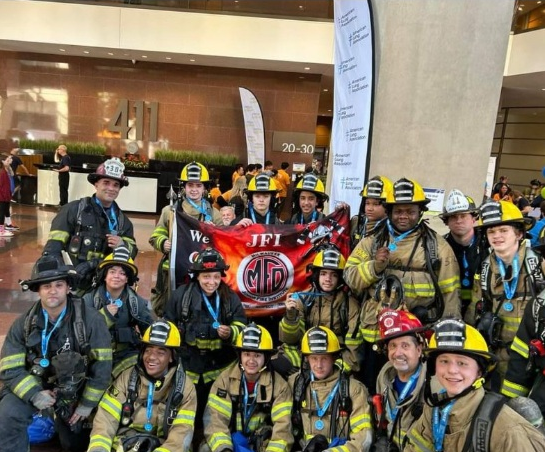
Almost each month we have a community outreach event for JFI students to attend, such as bell ringing for the annual Salvation Army fundraising, placing flags on Memorial Day, and actively participating in the American Lung Association's Fight for Air Climb event to bring money and awareness to lung diseases.