MFD Bureaus

Bureau of Administration and Support
The Milwaukee Fire Department Support Bureau is headed by Assistant Chief Joshua E. Parish |
|
![]() |
The Support Bureau manages the Technical Services Division (TSD) and the Construction and Maintenance Division. The responsibilities of the bureau include maintaining records of alarms, fire losses, personnel and costs, as well as accountability for payroll, budget requests and expenditures. Additionally, this bureau is responsible for the automation and data processing of technical services in the department such as Computer Aided Dispatch (CAD) and other computerization requirements for the MFD. TSD also manages MFD's dispatch function which is the vital link between the public and the firefighting division. MFD dispatchers receive and handle close to 100,000 9-1-1 calls other emergency and administrative calls each year and dispatch all emergency units. TSD is responsible for maintaining the computer and communication networks and equipment that the MFD relies on as well as several data-keeping responsibilities. The Construction and Maintenance Division serves as the central logistical point for the department, facilitating the maintenance, repair, purchase and distribution of all equipment. |
The Milwaukee Fire Department Construction and Maintenance Division is headed by Deputy Chief Darin T. Peterburs |
|
|
|
This Construction and Maintenance Division is responsible for repairing and maintaining all MFD equipment, including dozens of firefighting apparatus, buildings countless specialized tools and furnishing the firefighting division with all firefighting and EMS equipment and supplies. This division also remains the primary ordering point for the department. All specifications for new emergency vehicles are developed by this division and, before entering service with the MFD, all vehicles and equipment must be formally inspected and accepted for vehicle delivery by the Construction & Maintenance Division. |
Bureau of EMS, Training and Education
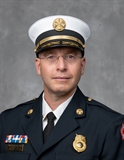
The Milwaukee Fire Department EMS, Training and Education Bureau is headed by Assistant Chief David J. Hensley |
|
|
|
The Bureau of EMS, Training and Education (BETE) manages the Emergency Medical Services (EMS) Division, the Training Division and the department’s Health & Safety Office. The management of the EMS Division includes the research, origination and development of EMS procedures, training and continuous quality improvement. The Health & Safety office is responsible for research, recommending new procedures and adjusting current ones to alleviate recurring, preventable injuries. The Training Division also manages the community relations functions of the MFD, in addition to the professional development training of all sworn MFD members at all ranks. |
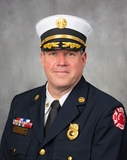
The Milwaukee Fire Department Training Division is headed by Deputy Chief James H. Ziech Sr. |
|
|
|
The Training Division is responsible for the proper instruction and training of all members of the Milwaukee Fire Department, including all new fire cadet and firefighter training. Additionally, this division is responsible for the Survive Alive House, FOCUS (Firefighters Out Creating Urban Safety) and the MFD Community Relations Section which oversees the coordination of the department’s public relations and community education programs. The Training Division also handles vehicle operation instruction, inventory control for personal protective equipment, audiovisual support and the research and development in the science of firefighting techniques. |
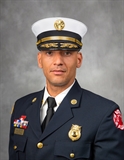
The Milwaukee Fire Department EMS Division is headed by Deputy Chief Michael J. Cieciwa
|
|
Emergency Medical Services (EMS) constitute for over 80% of the emergency responses by the Milwaukee Fire Department and close to 95% of all the 911 calls handled by Milwaukee Fire Equipment Dispatchers. The EMS Division writes and updates the MFD’s EMS Standard Operating Guidelines and monitors quality assurance of patient care and transportation by the department’s EMS personnel, as well as private providers working under the MFD to provide Basic Life Support (BLS) transport for the city’s 911 callers. The EMS Division coordinates licensing and training for the firefighters of the MFD which includes more than 600 Emergency Medical Technicians (EMTs) and over 200 Advanced Life Support (ALS)-trained paramedics. The EMS Division recruits and interviews prospective paramedics from within the department and is responsible for assigning the department’s paramedics to their individual companies which include ALS ambulances, fire engines, truck and special operation units. Additionally, the EMS Deputy Chief writes the Metropolitan Medical Response System (MMRS) Grant application and coordinates the distribution of the funds when awarded while monitoring adherence to the grant guidelines. Several of the MFD's EMS projects under the MMRS Grant guidance include the Tactical EMS (TEMS) program (which provides paramedic support for regional law enforcement tactical teams), stocking Surge ambulances for regional Mass Casualty Incidents (MCI) and pioneering patient-tracking equipment and procedures for large-scale incidents. |
Bureau of Operations
The Milwaukee Fire Department Operations Bureau is headed by Assistant Chief Schuyler L. Belott |
|
|
|
The function of this Bureau is to oversee the Firefighting Division (which includes hundreds of sworn field-assigned personnel spread across five battalions), the Incident Safety Office (ISO), the Fire Investigation Unit (FIU), the Special Operations Division and the coordination of Homeland Security activities within the Milwaukee Fire Department. The Operations Bureau originates, writes and reviews all MFD operating procedures. |
The Milwaukee Fire Department Special Operations Division is headed by Deputy Chief Joseph F. Hegeman, Jr. |
|
![]() |
The Milwaukee Fire Department Special Operations Division has the responsibility for recruiting, training and maintaining the skills of over 200 Special Team members. These Special Team units exercise expertise in three major disciplines: The Hazardous Materials Response Team (HAZMAT), the Heavy Urban Rescue Team (H.U.R.T.) and the Marine Unit. The Deputy Chief of Special Operations responds to all Special Team assignments as well as all third alarm fires as the Rapid Intervention Team (R.I.T.)/Safety Chief. The Heavy Urban Rescue Team has over 90 members and they operate in 4 disciplines: Rope Rescue, Confined Space Rescue, Trench Rescue and Structural Collapse Rescue. They are also dispatched on all third alarm fires as Rapid Intervention Team. The H.U.R.T team operates out of Station 23 (Kinnickinnic River Parkway and Oklahoma) and Station 24 (located at 50th and Fiebrantz). The Hazardous Materials Team (HAZMAT) has over 75 members and operates as a regional response team. The HAZMAT team operates out of the quarters of Engine 33 (located at 45th & Burnham). The Marine Unit has over 60 members and is further divided to include the specially-trained units; Boat Pilots of the MFD Trident fireboat and the Dive Rescue Team. The Dive Rescue Team and the Trident Pilots operate out of the quarters of Engine 2 (located at James Lovell and Wells). |
Firefighting Division
MFD Firefighting Division
The Milwaukee Fire Department Firefighting Division is headed by three Deputy Chiefs:
Deputy Chief Travis L. JonesRED SHIFT |
Deputy Chief Robert A. HartungGREEN SHIFT |
Deputy Chief Ronald L. FirnrohrBLUE SHIFT |
![]() |
![]() |
Emergency Medical Services
MFD Emergency Medical Services

Currently, the Milwaukee Fire Department provides basic and advanced life support with around 700 Emergency Medical Technicians-Basic (EMT-B), and over 200 EMT-Paramedics. These EMT-Bs and paramedics staff the department’s 29 Engine Companies, 8 Ladder Companies and 12 Mobile Emergency Department (MED) Units that respond to Emergency Medical Services (EMS) incidents for the City of Milwaukee. Over 80% of all MFD responses are now EMS-related.
The EMS system is established in the City of Milwaukee to safeguard against the loss of life, disability and unnecessary pain and suffering. The MFD EMS system provides special event standby for over 25 events annually within the City. An integral part of the MFD special event coverage is the Paramedic Bicycle Response (PBR) program. The PBR program provides rapid response to crowd-congested events as well as public relations and education to event attendees.
The MFD, in conjunction with the Milwaukee Police Department, supports a Tactical Emergency Medical Services (TEMS) program to enhance response capabilities to incidents involving special weapons and tactics operations. This program will provide EMS support within the perimeter of tactical situations for victims, as well as law enforcement officers.
In 2003, USA Today placed Milwaukee in the top three EMS systems in the country. This can be attributed to the MFD response times, resuscitation of cardiac arrest patients, and international recognition for participation in pre-hospital studies.
Click on the document image below to download and print the Milwaukee Fire Department Emergency Medical Services Notice of Privacy Practices
This link is for the Medical College of Wisconsin's Resuscitation Research Center which provides required vital information about medical studies that the MFD is involved with to make it public knowledge.
https://www.mcw.edu/departments/emergency-medicine/research/resuscitation-research-center
Opt Out Informational Link
http://www.mcw.edu/Emergency-Medicine/Research/Opt-Out-Bracelets.htm
Special Teams
Special Operations Division
The MFD Special Operations Division operates as the “specialized rescue” component of the department. The division includes seven teams, each with specialized training and equipment that allows them to effectively manage emergent situations within their respective field of expertise. The division is led by a Deputy Chief who oversees the ten directors and twenty assistant directors who supervise the teams. Each sworn special teams member engages in countless hours of specialized training to remain well-equipped to meet the dynamic hazards and challenges associated with specialized rescues. This specialized training is in addition to the hours spent performing their customary firefighting and emergency medical service duties.
Beyond specialized crisis rescues, the Special Operations Division also provides emergency event planning and standby services for many of its public and private partners. The division plays an integral role in providing citizens with the highest level of public safety during Milwaukee’s busy festival season, and during the numerous social events that occur along the lakefront each year.
The Deputy Chief of Special Operations plays an important role in creating and fostering relationships between local, state, and federal officials. This collaboration between the agencies ensures that open lines of communication exist so that homeland security issues can be quickly identified and resolved. Not surprising, preparing emergency support for dignitary visits falls under the jurisdiction of this division as well.
Dive Rescue Team
The MFD Dive Rescue Team was founded in 1961 by a group of dedicated firefighters who volunteered to go through a Navy training program after they recognized the need for water rescue capabilities. The team is stationed at Fire Station 2 and consists of roughly 50 dedicated members that train monthly to maintain their skills in a multitude of disciplines. Those disciplines include, but are not limited to, deep diving, night diving, river rescue, swift water rescue, submerged auto rescue, thin ice rescue, and ice diving.
The recent revitalization of Milwaukee’s downtown and Third Ward areas have increased the need for this team, which averages a higher amount of dive runs per year. Population in these areas have increased, as have the number of planned events held in these areas. The Dive Team stands by and provides protection at events throughout the year, including the Polar Plunge on New Year’s Day, a Polar Plunge for Special Olympics, the Air and Water Show, and the Triathlon. Additionally, the Dive Team is prepared for water-related emergencies at summer festivals at Henry Maier Festival Park, Milwaukee’s beaches, or in one of Milwaukee’s busy river ways. On Lake Michigan, the Dive Team works in concert with the MFD Boat Team, Milwaukee Police Department Dive Team, and the US Coast Guard.
Boat Team
The MFD Boat Team has been proudly and dutifully serving the citizens of, and visitors to, the City of Milwaukee for over 120 years. They provide fire, EMS, and rescue services for the many waterways, shorelines, and off-shore areas extending 40 nautical miles east into Lake Michigan. The team operates from Station 1 which also houses Engine 1.
The MFD Boat Team is the oldest of all the specialized teams; existing since delivery of the first boat in 1889. The current fireboat, the Trident, is the 11th edition in a long line of capable vessels. The Trident is a model of technology with twin 570 hp Cummins diesel engines supplying power to jet propelled drives capable of pushing the 39 foot Metalcraft Marine Boat over 35knots. It has the capability of flowing 3400gpm for fighting nearshore or offshore fires, can transport up to three critically injured victims with advanced life support care, and can perform offshore search and rescue with state of the art radar, forward-looking infrared cameras, radio direction finder, and sonar searches beneath the water’s surface.
Team members train diligently to remain proficient and ready to respond to any incident in all types of weather. They spend over 100 hours per year on and off the water keeping skills sharp to provide the best possible service. Many of members possess nationally recognized certifications in search and rescue boat operations, and the team continues to strive to gain more knowledge and experience every year.
In recent years, the team has worked more closely within the MFD Marine Division which comprises the Boat and Dive Teams; there is continual cross-training to provide support for diving operations with the 17’ Zodiac inflatable boat. This craft is utilized extensively allowing the divers to focus on the extremely dangerous job they must do. They annually train with partners, the Milwaukee Police Department Boat Team, the Wisconsin Department of Natural Resources, and the United States Coast Guard. These inter-agency trainings prepare all entities to function efficiently and seamlessly should the need arise during a major incident on the waterways.
The MFD Boat Team is an important part of the service the City of Milwaukee is obligated to provide for its citizens. The City of Milwaukee is fortunate to have such beautiful natural resources as lakes and rivers, and the people utilizing these natural resources can rest safely knowing the well-trained and equipped men and women of the MFD Boat Team are there should they be needed.
Hazardous Materials Team (HAZMAT)

The MFD Hazardous Materials (HAZMAT) Team began in 1982 as a remedy to small-scale fuel spills and other similar situations. Today, the team is roughly 80 members strong. The team's headquarters is located at 4515 West Burnham Street which is home to Engine 33, MED 14, HAZMAT 1 and HAZMAT 2.
As the world changes, so too has the HAZMAT Team. Along with the typical fuel spills, household chemical mishaps, and industrial chemical leaks, the team specializes in weapons of mass destruction, illicit labs, terror threats, and radiological events. As one of only two Tier 1 Teams in the state, the team is tasked with responding to high-profile situations anywhere in the southern half of Wisconsin. Along with responding in person to events, team members serve in an advisory role via telephone for ongoing hazmat events which allows MFD physical assets to remain available for other situations.
The team has ongoing relationships with entities such as the FBI, Drug Enforcement Administration, Homeland Security, State Lab of Hygiene, Civil Support Team, Wisconsin Emergency Management, and the City of Milwaukee Health Department. In addition to all of the members being HAZMAT technicians, many have served on both the state and national levels in terms of instructing and/or presenting on various topics relating to hazardous materials response.
Heavy Urban Rescue Team (HURT)
The MFD Heavy Urban Rescue Team (HURT) was established in 1995 as a consolidation of the Rope Rescue Team and the Deep Tunnel Team. Since this merger, the HURT’s capabilities have grown to include confined space rescue, trench rescue, structural collapse rescue, high and low angle rope rescue, advanced auto extrication, heavy vehicle lifting and stabilization, man-in-machine rescue, firefighter survival, and others. The HURT also handled deep tunnel rescue for several years in the early 2000’s. The HURT was originally housed at Station 12 located at 1400 South 9th Street on Milwaukee’s near south side. The HURT has improved its compliment of rigs and equipment each year to meet the technical rescue needs of the City of Milwaukee and its shared services partners.
Two fully staffed heavy rescue companies were established in January of 2012. The addition of the rescue units resulted in the team being split into two separate station houses. Rescue 1 is housed at 1400 South 9th Street along with Engine 23 and Rescue 4 (trench and structural collapse rescue rig), and Rescue 2 is housed at 4927 West Fiebrantz Avenue along with Engine 24. These two locations provide the city with enhanced technical rescue coverage as well as additional training opportunities. The HURT has partnered with several public and private organizations to gain realistic training and experience in a variety of rescue situations.
Incident Command Post (ICP)
The MFD Incident Command Post Team was officially founded as an MFD special team on January 1, 2012. Crews respond with a state-of-the-art communications R/V that has internet, phone, fax, lighting, and recording capabilities. The team is currently stationed at the quarters of Engine 12 and Truck 1, located at 2130 West Oklahoma Avenue. Today, the team consists of over 60 members who specialize in providing support to the command staff at major incidents, improving the safety of the public as well as department members. Examples of responding incident types include third alarm and above fires, high-rise fires, hazardous materials incidents, and active shooter situations. This team is available to surrounding communities through the shared services initiative. The team also stages as large events around the city such as 3rd of July Fireworks, Lakefront Marathon, Rock ‘n Sole, and ALS Run.
The Incident Command Post Team incorporates unmanned aerial system (UAS/drone) technology at incidents which provides a high resolution view of the whole scene. Thermal imaging capabilities are attached to the drone which helps to locate hotspots in a building fire, as well as aide in search and rescue of missing persons.
Tactical Emergency Medical Services (TEMS)
MFD Tactical Emergency Medical Services (TEMS) was implemented in 2005 as a way to incorporate instantaneous emergency medical services with scheduled or emergent tactical situations involving local law enforcement. The mission of the TEMS Team, who are paramedic firefighters, is to stand by at a safe distance until law enforcement officials deem the scenes of active shooters, hostage/barricaded subjects, or high risk warrant services safe for medical first responders to move in. Having TEMS already on scene for these events, in which every second counts, is essential to rendering medical services quickly to law enforcement officials, suspects, and even bystanders. Today, TEMS is roughly 40 members strong. It's headquarters is at Station 9 which also houses Engine 9 and MED 4.
In addition to working and training with the Milwaukee Police Department, MFD TEMS has trained with the Milwaukee County Sheriff’s office, and the State of Wisconsin Department of Corrections.
Fire Investigation Unit (FIU)
The Milwaukee Fire Investigation Unit (FIU), founded in 2009, is a branch of the Special Operations Division. The FIU has roughly 30 members, all of which are assigned to the standard firefighting work shift. The primary function of the FIU is cause determination of fires. Working with multiple agencies such as the Milwaukee Police Department, the Federal Bureau of Alcohol, Tobacco, and Firearms, and the State Fire Marshal, determinations of how fires started are achieved, and then if criminal charges need to be perused, the FIU works with state and federal prosecutors to educate and support criminal charges. The FIU's headquarters are at Station 28.
If you would like to anonymously report an arson fire tip, please call the Wisconsin Arson Insurance Council (WAIC) Wisconsin Arson Hotline at 800-362-3005. If your tip leads to an arrest/conviction of an arsonist, you are eligible for a cash reward. WAIC has awarded over $45,000 to tipsters. To learn more, please visit their web site.
Firehouse Locations
Finding the Firehouse Closest to You
Below is a list of all of the Milwaukee Fire Department's firehouses. You can use the My Milwaukee Home program to enter your address and locate the firehouse nearest to your address.
Station 1784 N. Broadway, 53202 Station 1 is located in the Tenth Battalion. This station houses Engine 1 and our Boat Team. Station 2755 N. James Lovell Street, 53233
Station 2 is located in the Tenth Battalion. This station houses Engine 2, Ladder 2, MED 18, Dive Team (Dive 2 & Rescue 3), Firefighting Deputy Chief, and Battalion Chief 10. Station 2 is also the MFD Bureau of Administration. Station 3100 W. Virginia Street, 53204
Station 3 houses MFD's Community Relations Section. Station 49511 W. Appleton Avenue, 53225
Station 4 is located in the Seventh Battalion. This station houses Engine 4 and Ladder 3. Station 51313 W. Reservoir Avenue, 53205
Station 5 houses MFD's Recruitment, Health & Safety Division. Station 61693 N. Franklin Place, 53202
Station 6 is currently closed. Station 73174 S. Chase Avenue, 53207
Station 7 is located in the Fourth Battalion. This station houses Engine 7 and Battalion Chief 4. Station 85585 N. 69th Street, 53218 Station 8 is Located in the Seventh Battalion. This station houses Engine 8 and MED 16. Station 94141 W. Mill Road, 53209
Station 9 is located in the Second Battalion. This station houses Engine 9, Tactical EMS (TEMS) and Surge (MED 20 and MED 21). Station 105600 W. Oklahoma Avenue, 53219
Station 10 is located in the Third Battalion. This station houses Engine 10 and MED 14. Station 112526 S. Kinnickinnic Avenue, 53207
Station 11 is located in the Fourth Battalion. This station houses Engine 11. Station 122130 W. Oklahoma Avenue, 53215
Station 12 is located in the Fourth Battalion. This station houses Engine 12, Ladder 1 and the Incident Command Post (ICP). Station 132901 N. 30th Street, 53210
Station 13 is located in the First Battalion. This station houses Engine 13 and MED 5. Station 146074 S. 13th Street, 53221
Station 14 is located in the Fourth Battalion. This station houses Engine 14 and Ladder 8. Station 1610320 W. Fond du Lac Avenue, 53224
Station 16 is located in the Seventh Battalion. This station houses Engine 16 and Battalion Chief 7. Station 174653 S. 13th Street, 53221
Station 17 is located in the Fourth Battalion. This station houses Engine 17 and MED 17. Station 183628 N. Holton Street, 53212
Station 18 is located in the First Battalion. This station houses Engine 18, MED 7, and Battalion Chief 1. Station 212050 N. Palmer Street, 53212
Station 21 is located in the Tenth Battalion. This station houses Engine 21 and MED 6. Station 228814 W. Lisbon Avenue, 53222
Station 22 is located in the Second Battalion. This station houses Engine 22. Station 231400 S. 9th Street, 53204
Station 23 is located in the Tenth Battalion. This station houses Engine 23, Rescue 1, and the Heavy Urban Rescue Team (HURT) unit Rescue 4. Station 244927 W. Fiebrantz Avenue, 53216
Station 24 is located in the Second Battalion. This station houses Engine 24, the Heavy Urban Rescue Team (HURT) unit Rescue 2, and Battalion Chief 2. Station 261140 S. 26th Street, 53204
Station 26 is located in the Third Battalion. This station houses Engine 26 and MED 3. Station 272647 N. Bartlett Avenue, 53211
Station 27 is located in the First Battalion. This station houses Engine 27 and Ladder 5. Station 28424 N. 30th Street, 53208
Station 28 is located in the Third Battalion. This station houses Engine 28 and MED 8. Station 293529 S. 84th Street, 53228
Station 29 is located in the Third Battalion. This station houses Engine 29.
Station 302903 N. Teutonia Avenue, 53206
Station 30 is located in the First Battalion. This station houses Engine 30 and Ladder 12. Station 312400 S. 8th Street, 53215
Station 31 is located in the Fourth Battalion. This station houses Engine 31 and MED 14. Station 321551 N. 30th Street, 53208
Station 32 is located in the Tenth Battalion. This station houses Engine 32 and Ladder 9.
The image above shows a close up of the mural of horse-drawn antique fire apparatus from MFD's history that is painted along the side of Station 32. Station 334515 W. Burnham Street, 53214
Station 33 is located in the Third Battalion. This station houses Engine 33, the Hazardous Materials Team (H.A.Z.M.A.T.), the Fire Investigation Unit (FIU), Battalion Chief 3 and our Mobile Survive Alive House unit. Station 346205 W. Burleigh Street, 53210
Station 34 is located in the Second Battalion. This station houses Engine 34 and MED 13. Station 364060 N. 27th Street, 53216
Station 36 is located in the First Battalion. This station houses Engine 36 and MED 2. Station 375335 N. Teutonia Avenue, 53209
Station 37 is located in the Second Battalion. This station houses Engine 37 and MED 4.
The image above is titled "Engine 37." This piece is by artist Mark Jeffries and stands to the side of the firehouse. Station 388463 N. Granville Road, 53224
Station 38 is located in the Seventh Battalion. This station houses Engine 38 and some Hazardous Materials Team (H.A.Z.M.A.T.) apparatus. Station 398025 W. Bradley Road, 53223
Station 39 is located in the Seventh Battalion. This station houses Engine 39 and Ladder 7. |
|


