 Why is Outdoor Air Quality Important?
The air we breathe can impact our health. Pollution in the air can come from many sources including vehicles, industries, and wildfires. These sources can cause symptoms ranging from watery eyes and coughing, to worsened asthma and other health effects. Understanding the current air quality can help inform decisions around outdoor activities, especially for groups that are more sensitive to health effects from air pollution.
Local Air Quality Resources
— IQ Air
— Air Now
— Purple Air
Wildfire Smoke and Outdoor Air Quality
Learn more about how to protect yourself from wildfire smoke. Download a copy of the presentation below.
Air Quality Alerts
How is Air Quality Measured?
The U.S. Air Quality Index (AQI) is EPA's tool for communicating outdoor air quality and health. The AQI includes six color-coded categories, shown below. Each color corresponds to a range of index values. The higher the AQI value, the greater the level of air pollution and the greater the health concern.
For example, an AQI value of 50 or below represents good air quality, while an AQI value over 300 represents hazardous air quality.
Color-coded Categories
| Green | Good. 0 to 50 |
| Yellow | Moderate. 51 to 100 |
| Orange | Unhealthy for Sensitive Groups. 101 to 150 |
| Red | Unhealthy. 151 to 200 |
| Purple | Very Unhealthy. 201 to 300 |
| Maroon | Hazardous. 301 and higher |
Air Quality Index Guide
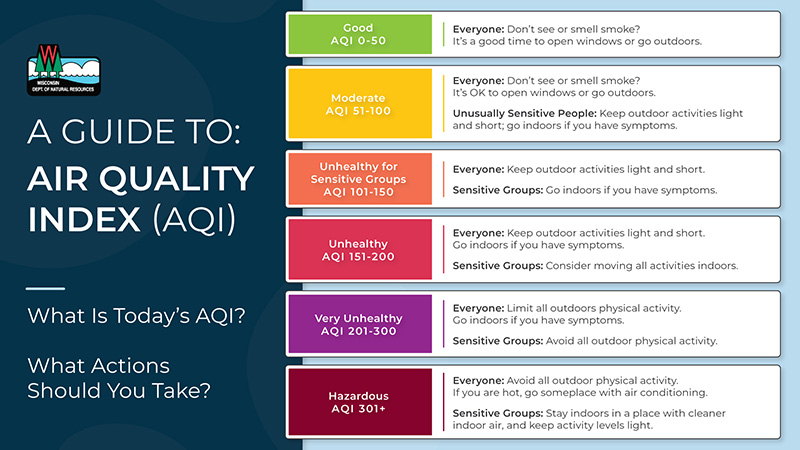
Click the image to enlarge
Wildfire smoke, industrial pollution, and wind patterns can impact air quality levels. Exposure to poor air quality can impact respiratory and cardiovascular systems. Symptoms may range from mild eye and throat irritation to severe heart and lung concerns.
Wildfire smoke can travel to the Milwaukee area and cause poor air quality conditions that can harm health. AQI may increase for days to weeks during a wildfire event.
Who Is More Sensitve to Poor Air Quality?
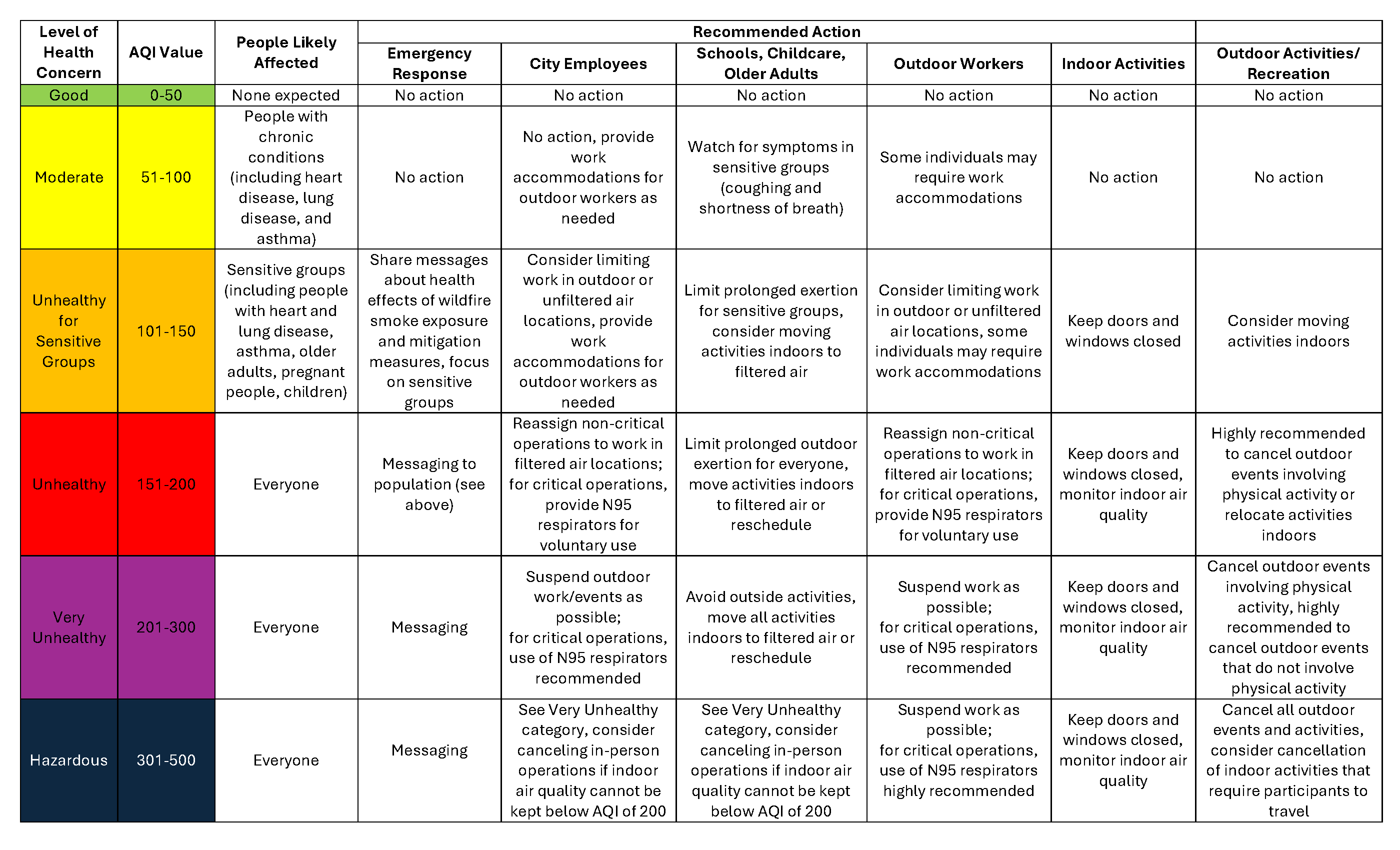
The following groups may experience symptoms including throat irritation or shortness of breath earlier than others. Members of these groups should stay indoors as much as possible when AQI is over 100.
- Children and teens under age 18
- Anyone who is pregnant
- People with asthma or respiratory and heart conditions
- Adults over age 65
How to Protect Yourself When AQI is High
Limit outdoor physical activity
Cancel or relocate indoors for any activities that require vigorous outdoor physical activity when AQI is above 100. When activities cannot be relocated inside, take steps to reduce the amount and intensity of physical activity. Activities may include outdoor labor, running, biking, and playing sports.
Stay indoors as much as possible
Stay inside your home, visit a library or other indoor space to reduce the amount of polluted air that you are breathing.
Keep indoor air clean
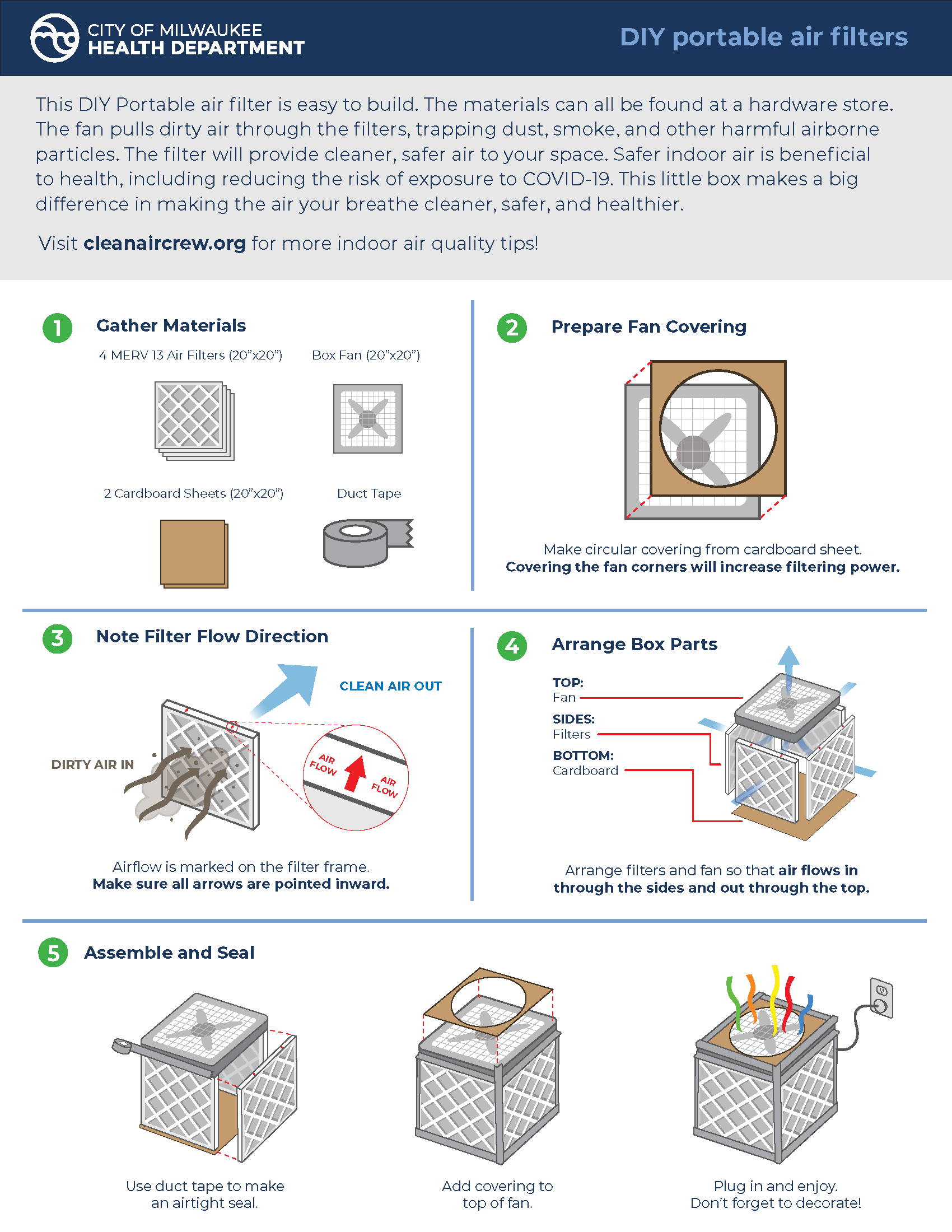
Keep your windows closed and, if possible, run an air purifier or air conditioner to improve air quality indoors.
Wear N95 or KN95 masks when outdoors
When worn tightly and correctly, N95 and KN95 can offer some protection from poor air quality.
Watch for symptoms of poor air quality and/or smoke exposure.
– Symptoms can include headache, sore throat, cough, burning or watery eyes, dizziness, or wheezing
– For those with respiratory or heart conditions -- including asthma, COPD, or heart disease -- make sure to keep inhalers and medications with you. Make a plan with your healthcare provider about what to do on poor air quality days.
– Call 911 if someone has shortness of breath or chest pain.
Considerations for Schools and Children
Children can be vulnerable to health effects from poor air quality. Schools, daycare centers, sports teams, and other groups that work with children should develop indoor alternatives for outdoor activities when AQI exceeds 100.
At home, find indoor activities such as arts and crafts, dancing, cooking, or playing board games.
Considerations for Outdoor Workers
Outdoor workers can be particularly vulnerable to health effects from poor air quality due to the amount of time they spend outdoors. It is recommended that all non-critical outdoor work be canceled or relocated when AQI is above 150. For all required outdoor activities, workers should be provided N95 or KN95 masks.