


Vel R. Phillips Plaza
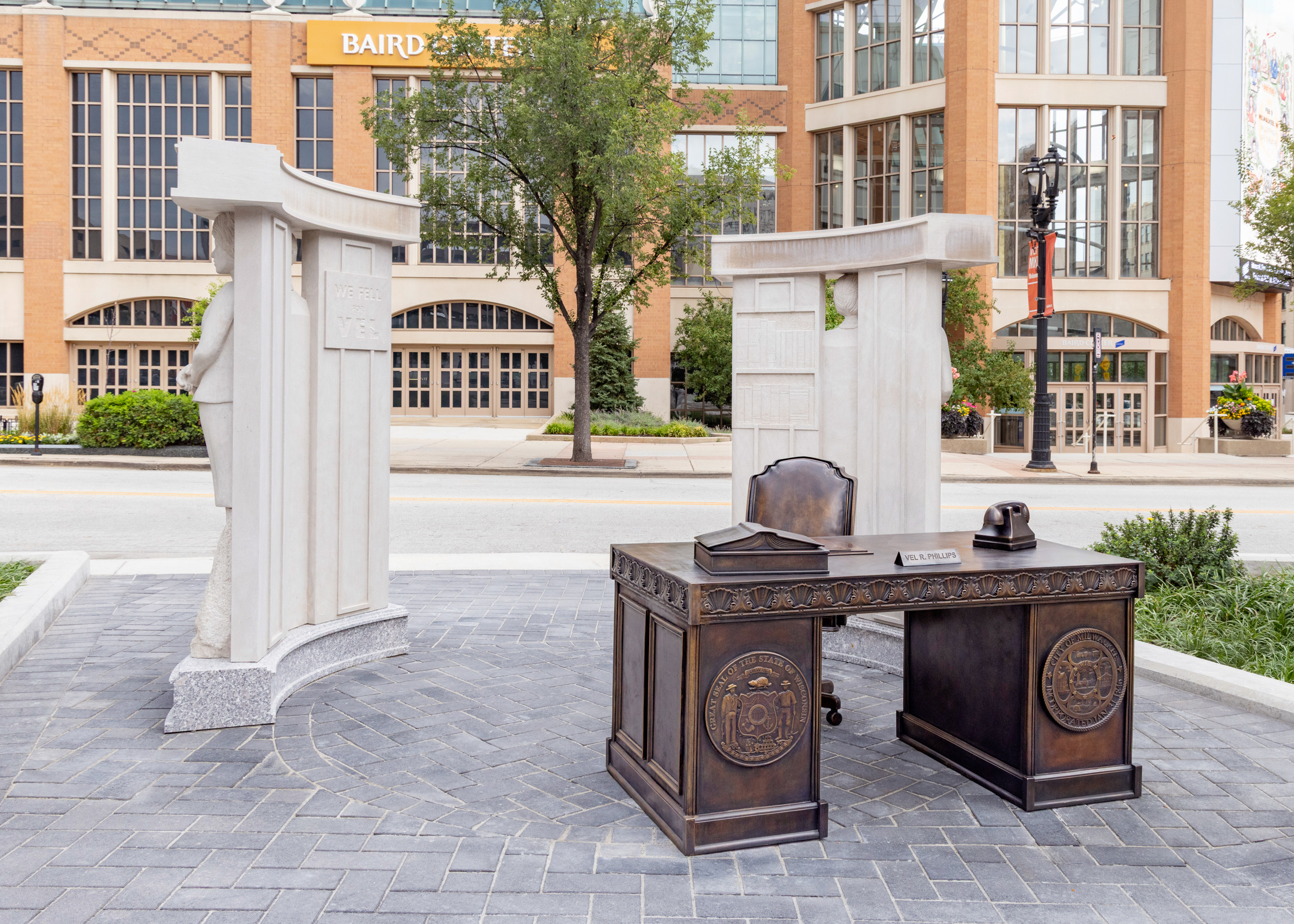
Karyn Olivier | I Didn’t Do It Alone, 2026 | Photo Credit Kevin J. Miyazaki
Commission History
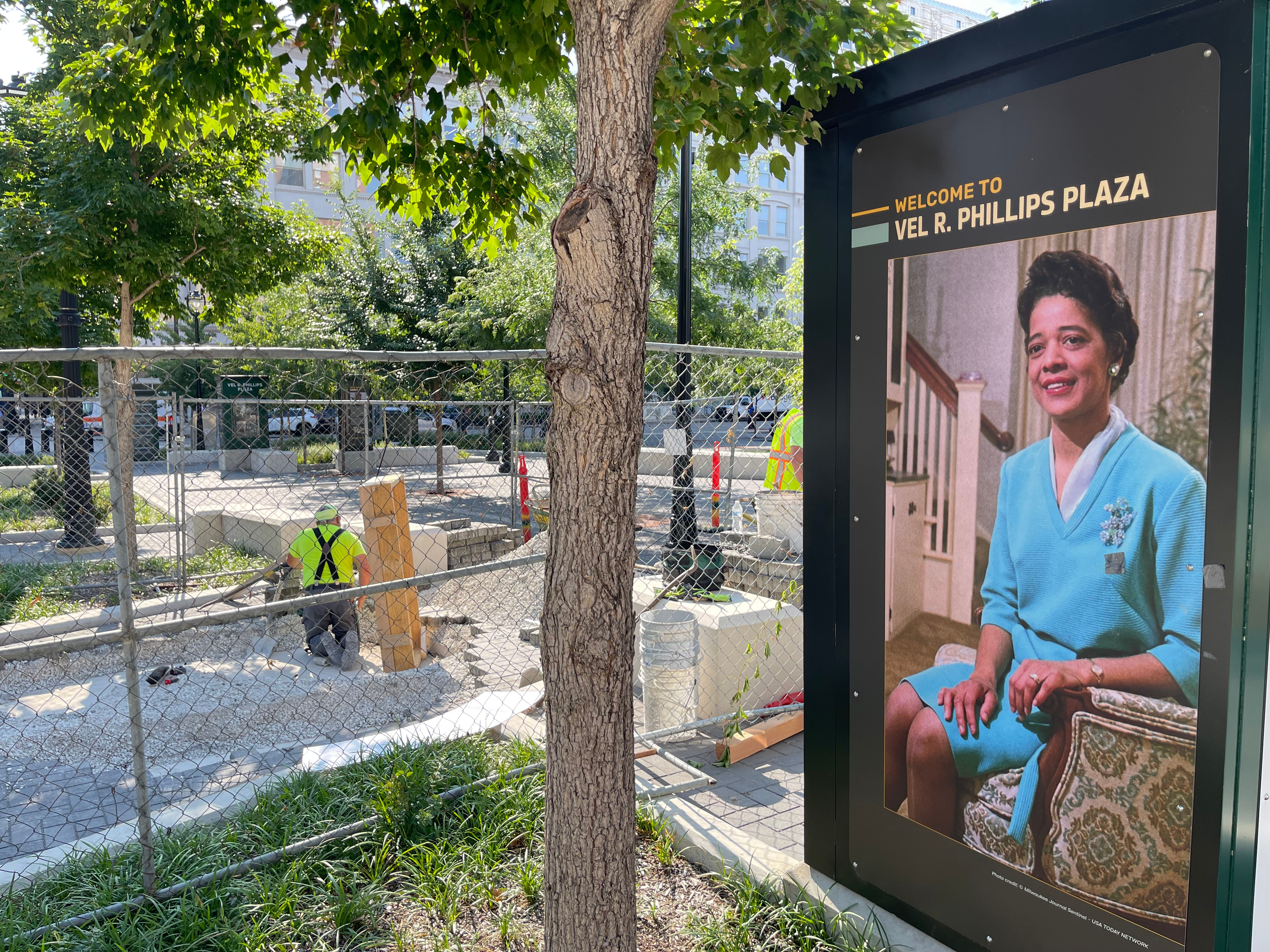
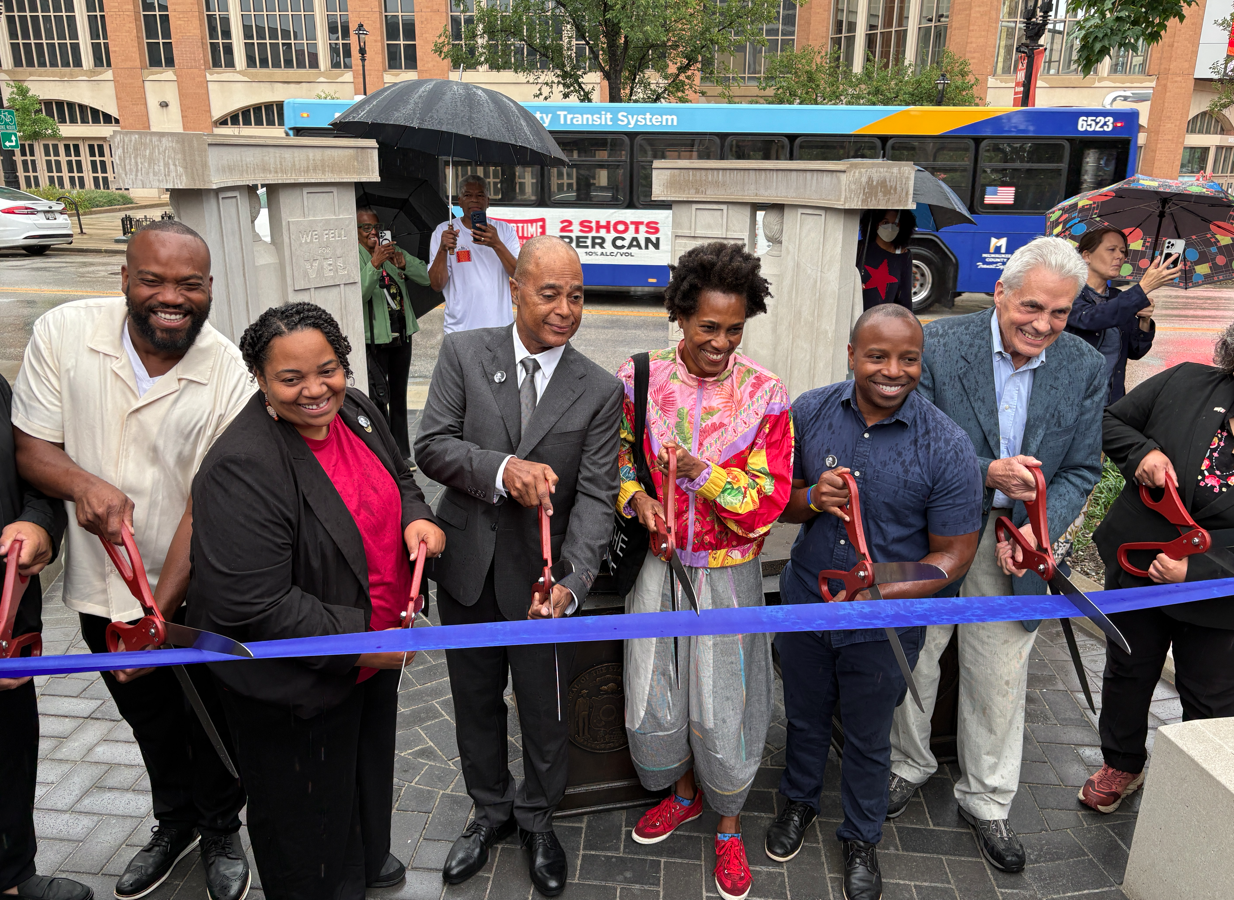
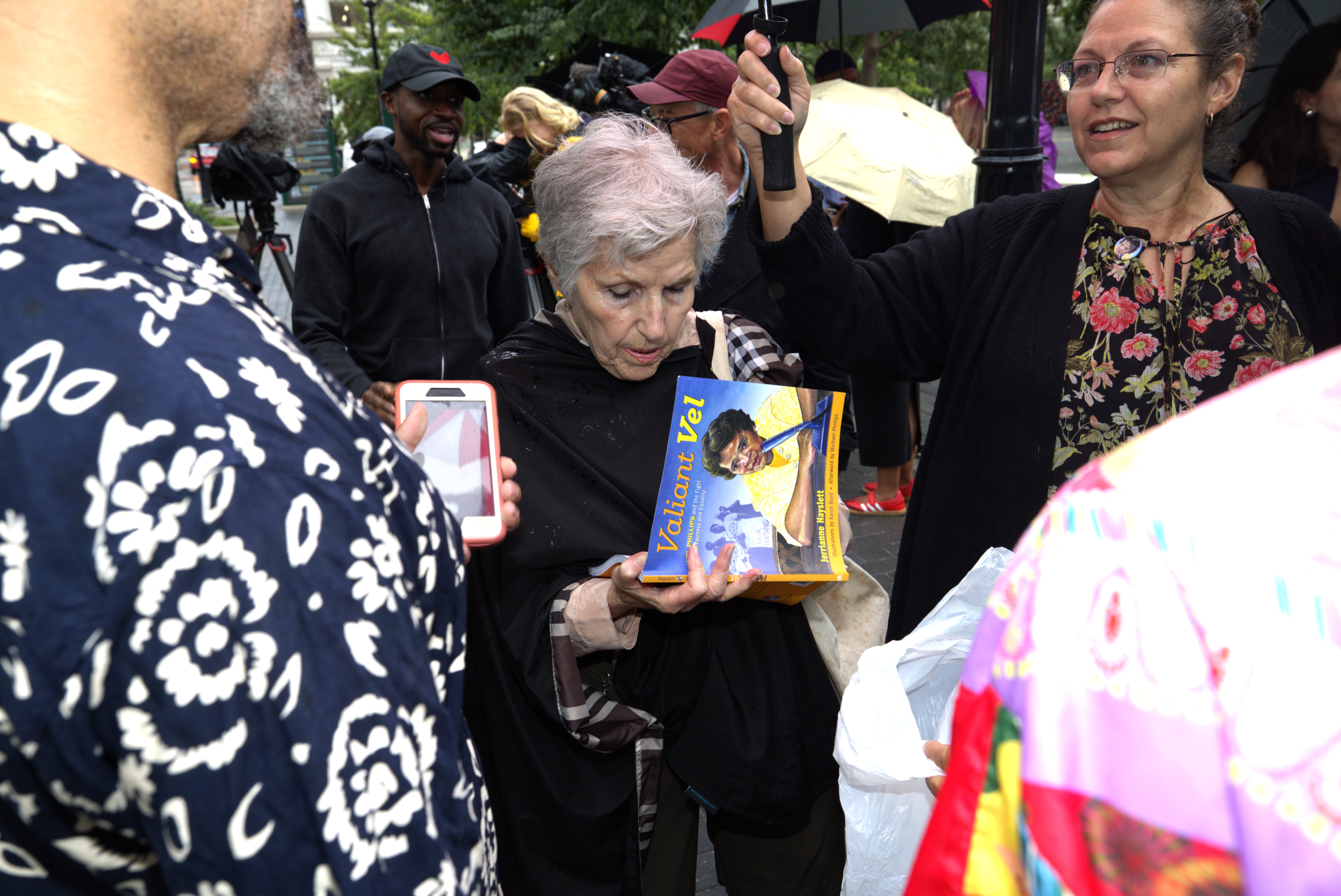
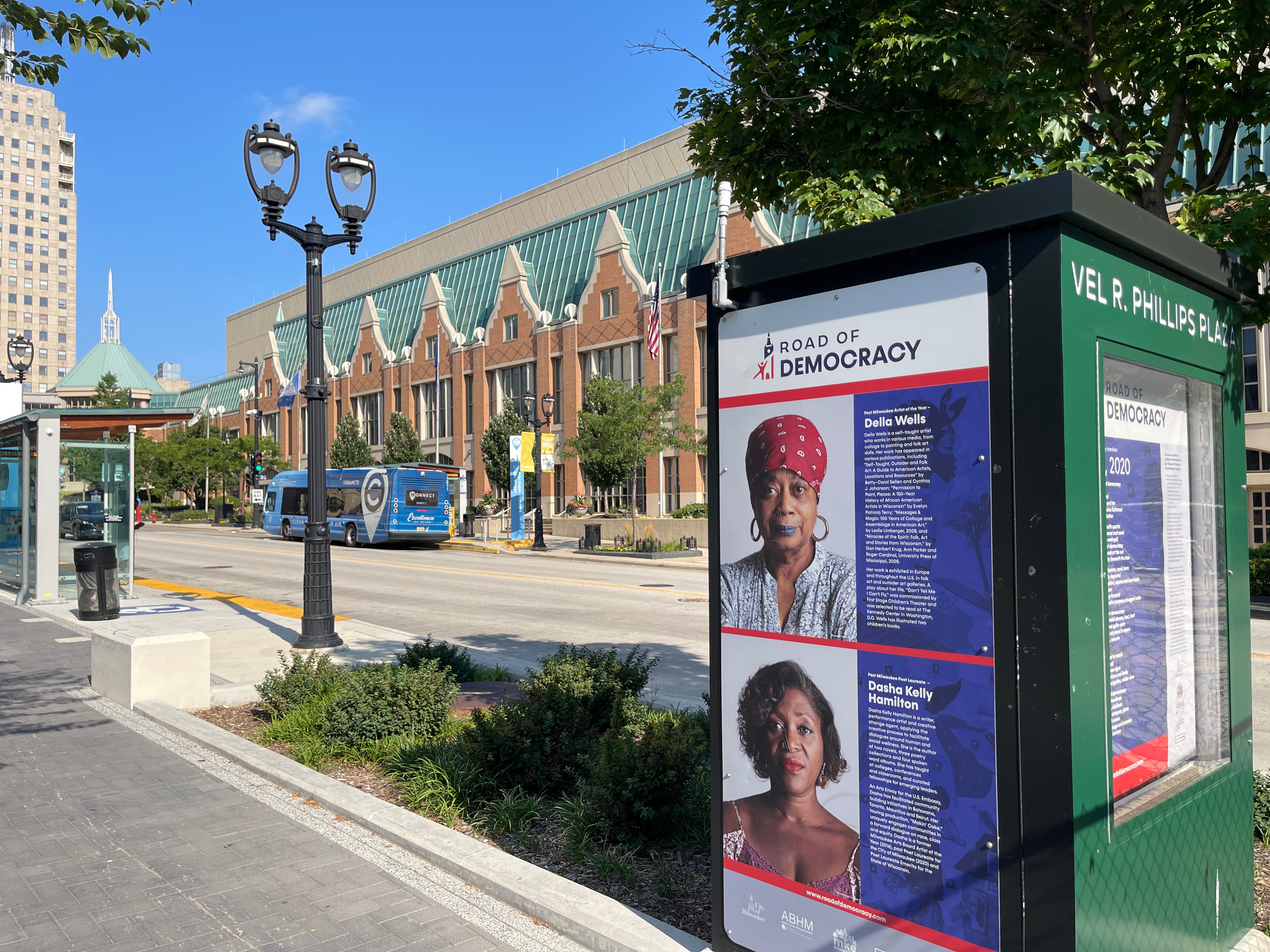
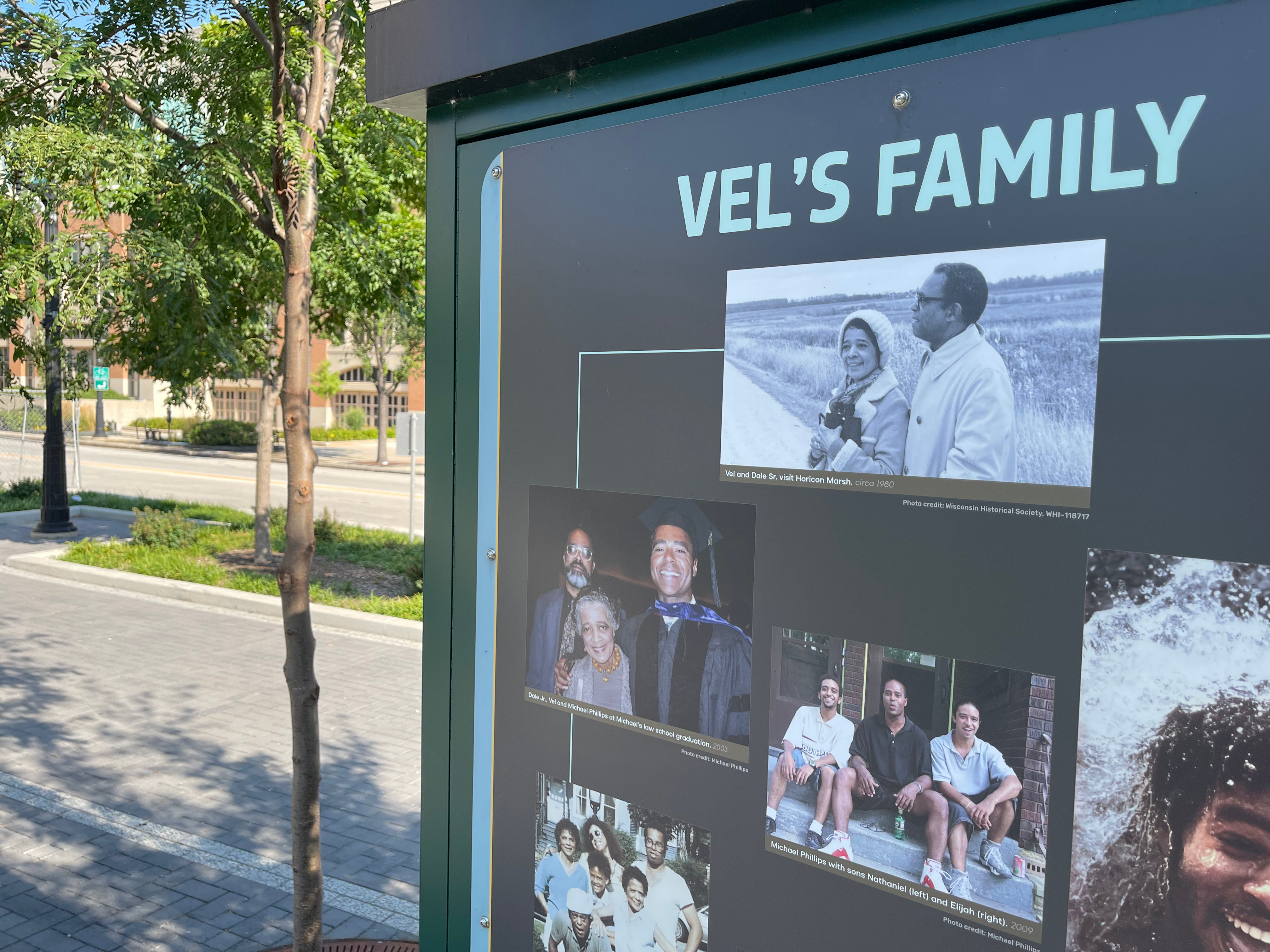
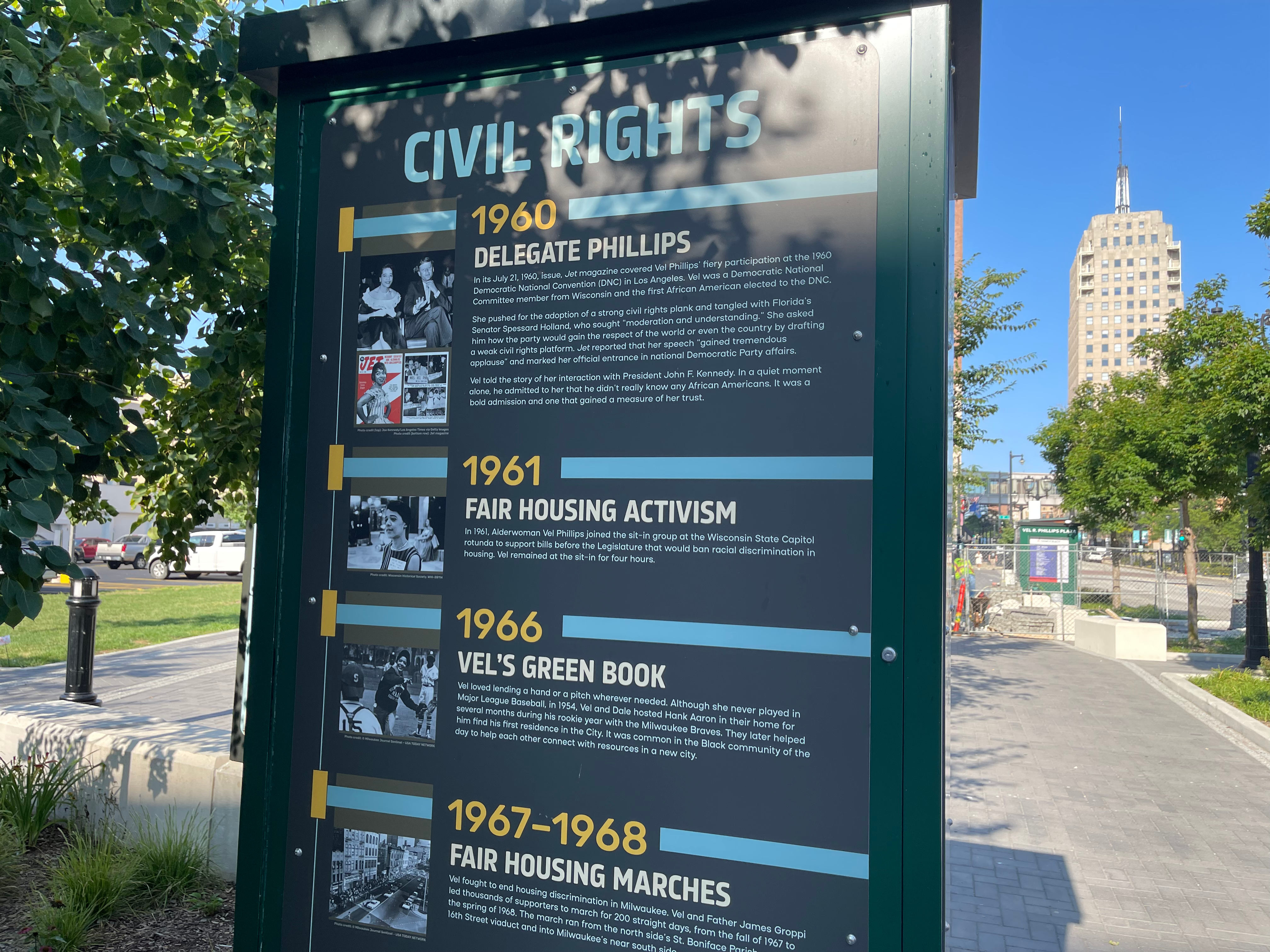
The Vel R. Phillips Plaza was created to honor one of Wisconsin’s incomparable social, cultural and political leaders, Vel R. Phillips.
The City of Milwaukee also set aside funds to commission a unique art work to honor Phillips. Artists responding to the international call for qualifications were asked to address:
- the relevance of their work to Milwaukee’s history and resident interests;
-
how their forms push contemporary artistic practice and engage with issues of urgency and relevance;
-
durability of the artwork;
-
how to engage citizens and visitors enjoying this bustling urban space.
Karyn Olivier was chosen as the artist to honor Vel Phillips by an Art Committee composed of City representatives, curators, museum experts and community members.
I Didn’t Do It Alone is the most substantial art work commissioned by the City of Milwaukee and joins a nation-wide reconsideration of who deserves memorializing in our shared public landscape. Although Olivier borrows some traditional elements of monuments—using cast bronze and carved stone, with objects as well as human figures—she makes contemporary the aesthetic and represents the civic demands of our time, honoring Phillips’ legacy in the past while continuing her legacy into the future.
Of public art Karyn Oliver has said: “Public art is a fiction but you’re creating a real experience.” Olivier combines a realistic “still life” of Vel Phillips’ office with the power figures in an army of supporters and protectors.
The title for this work, I Didn’t Do It Alone (installed in 2026), was a phrase Vel Phillips often used, and like Vel Phillips, Karyn Olivier is interested in the work we share as citizens of this country. After expansive research, Olivier chose to celebrate the collective nature of Phillips’ leadership, representing her activities in the streets and lives of her constituents and not just the many official spaces in her political career. By combining both real and idealized images of political leadership, Olivier asks: what are our expectations of those whom we elect? What is their responsibility to us?
The Plaza
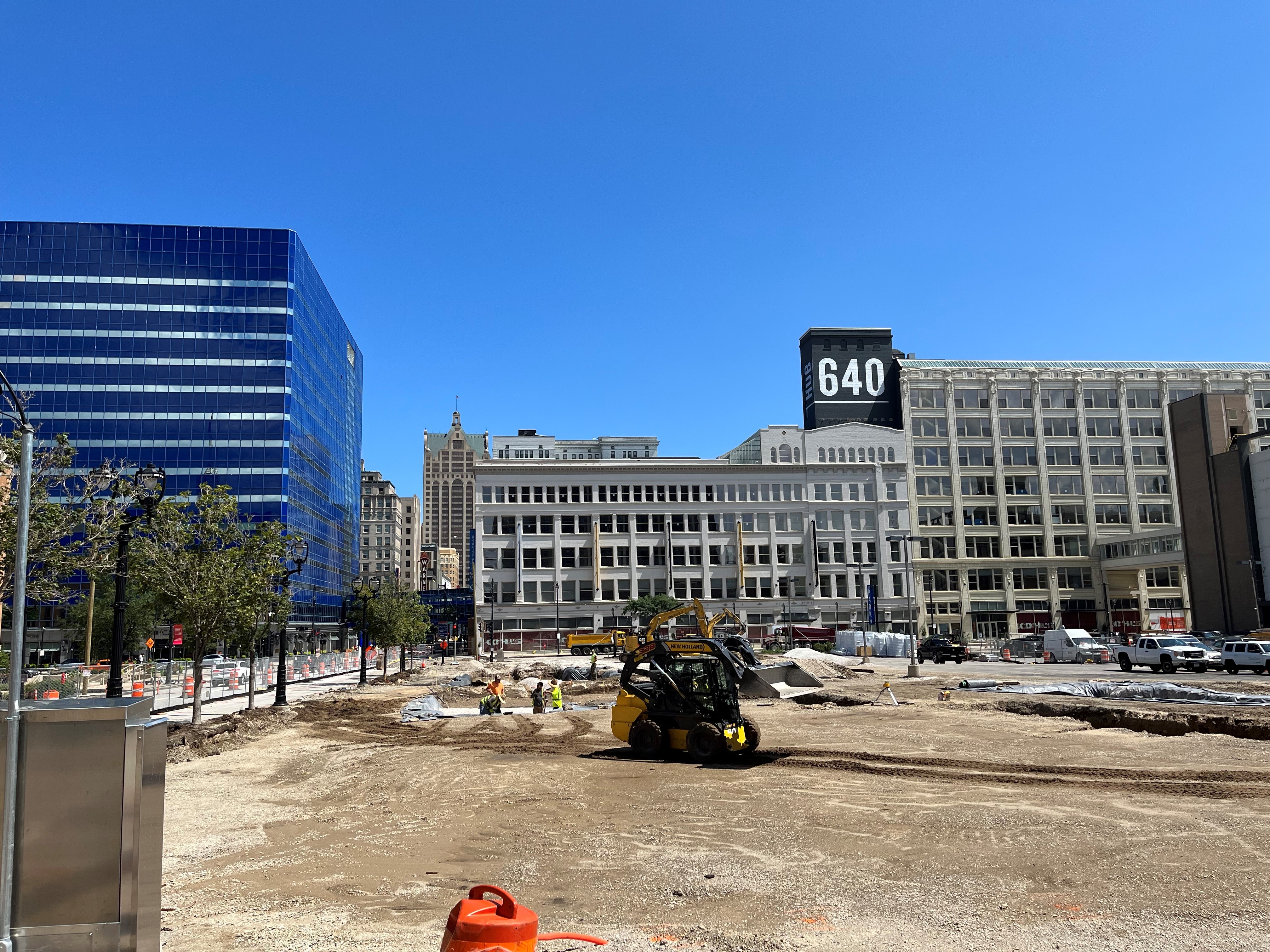
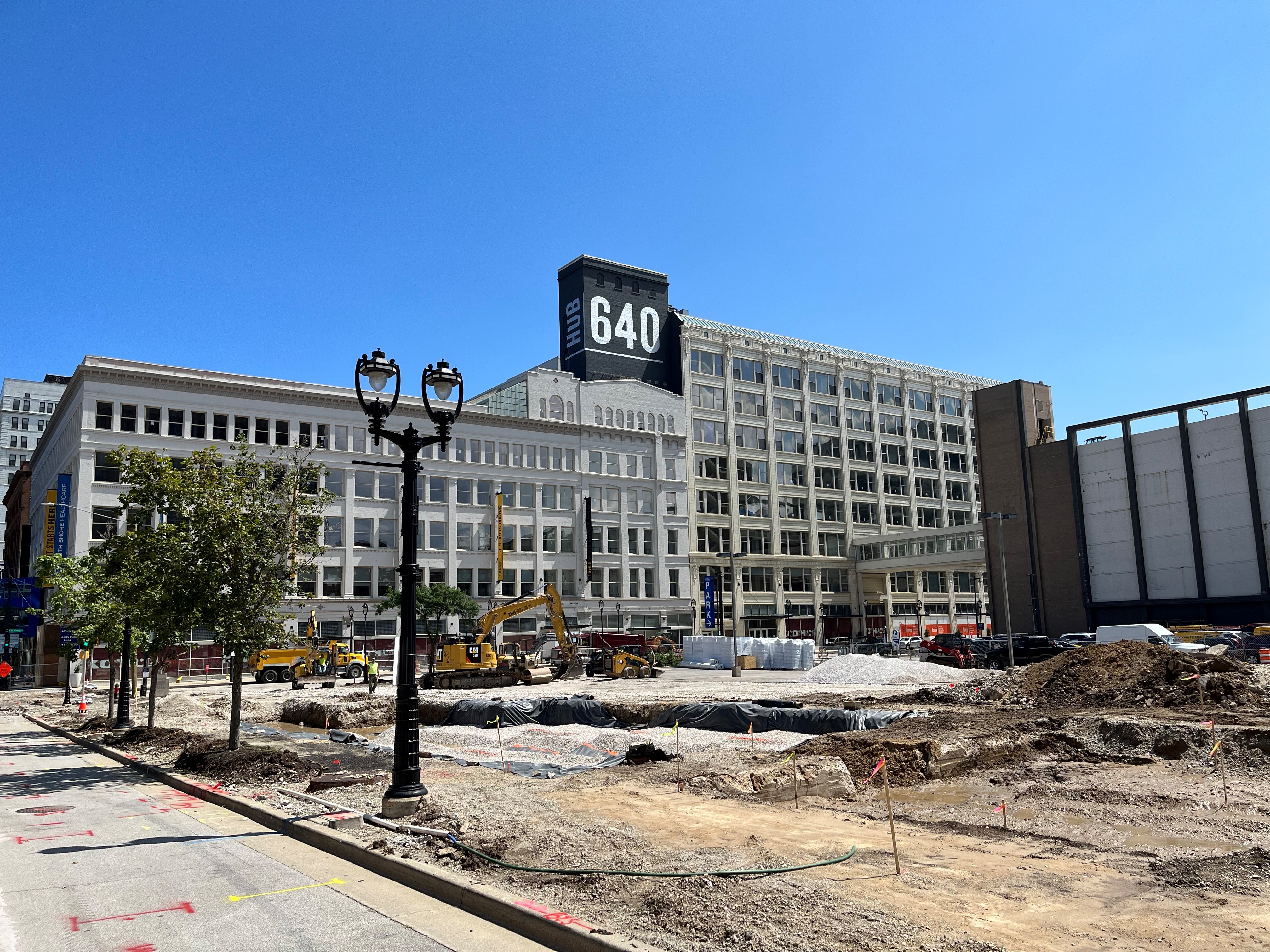
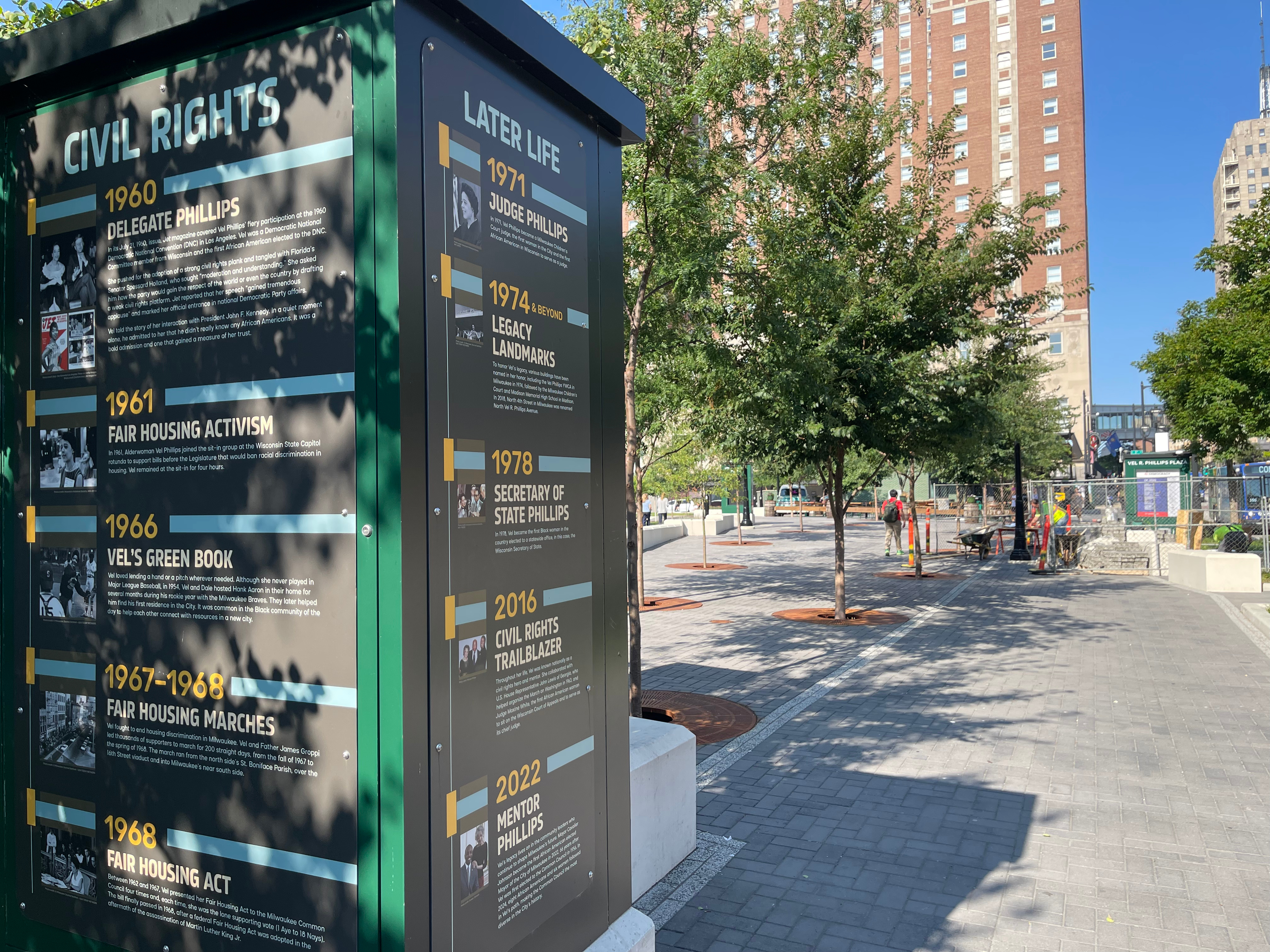
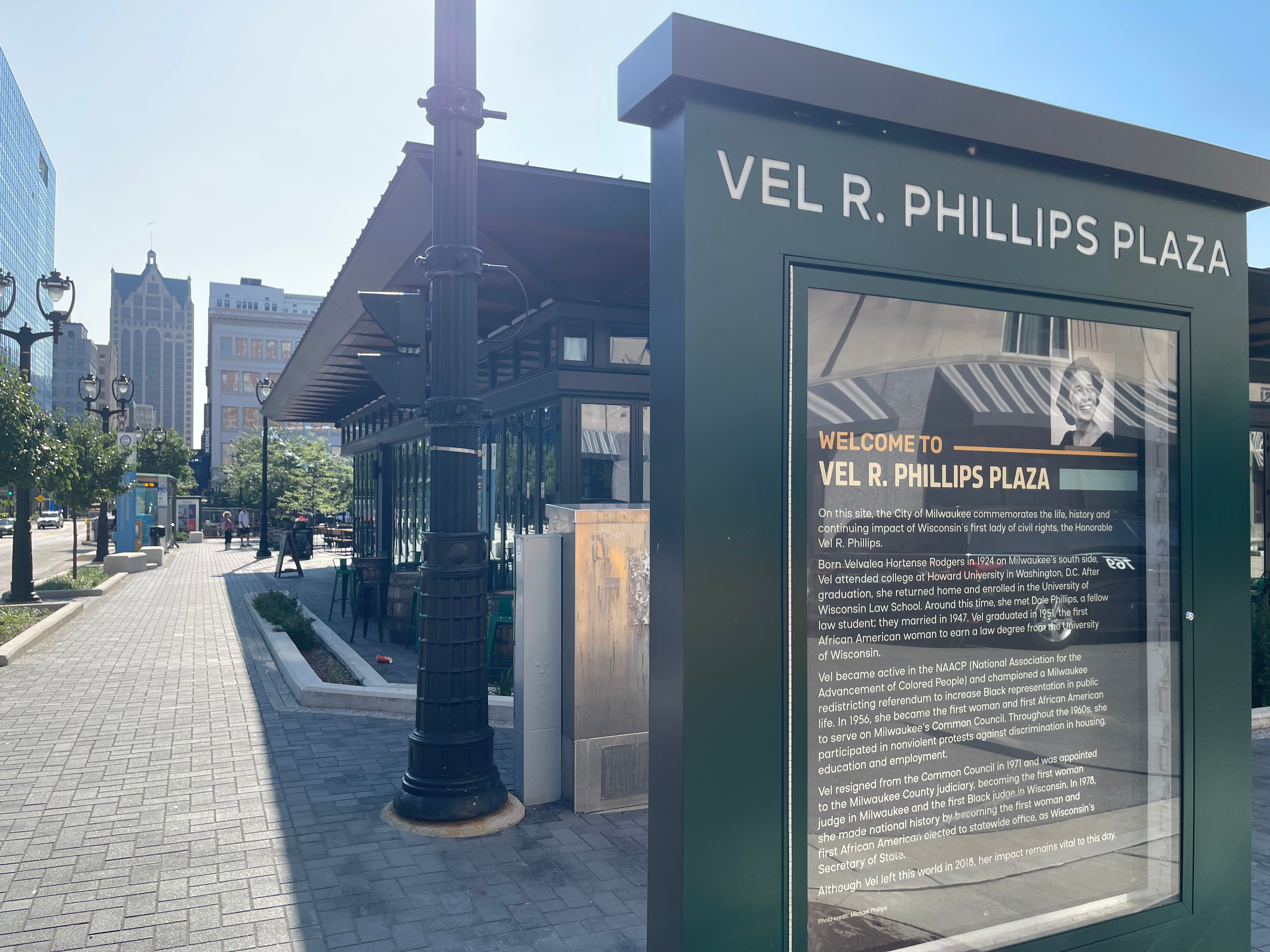
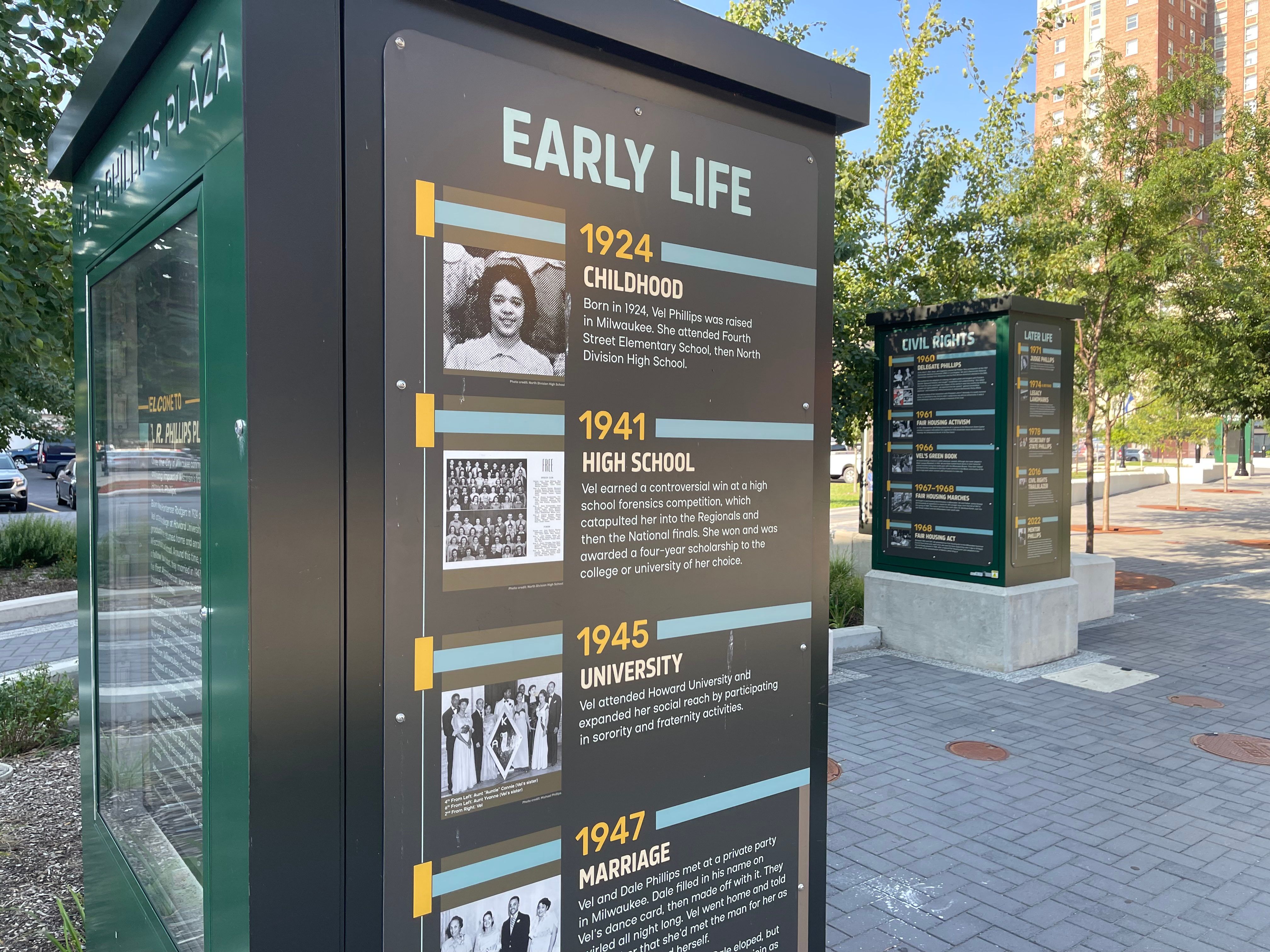
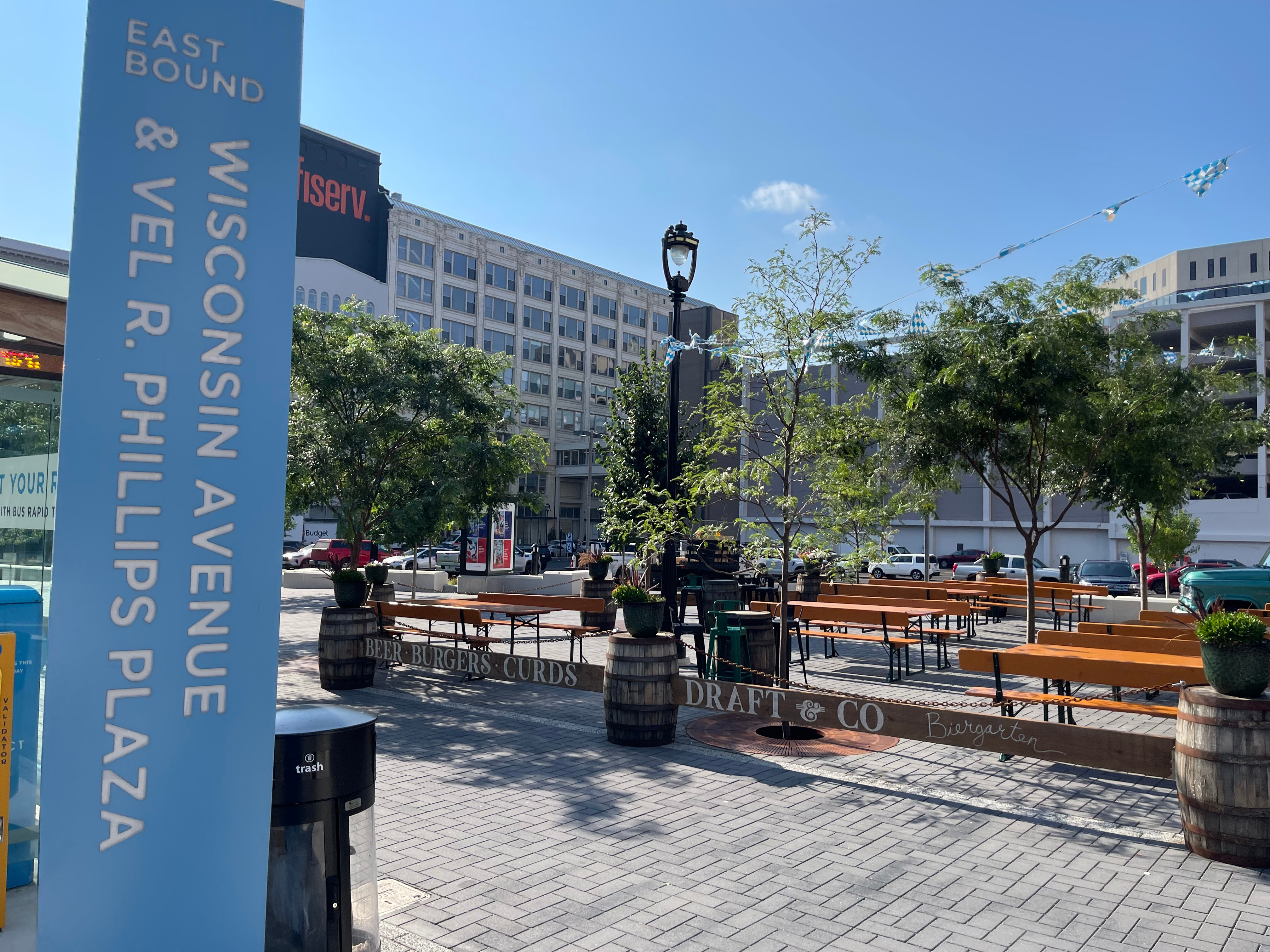
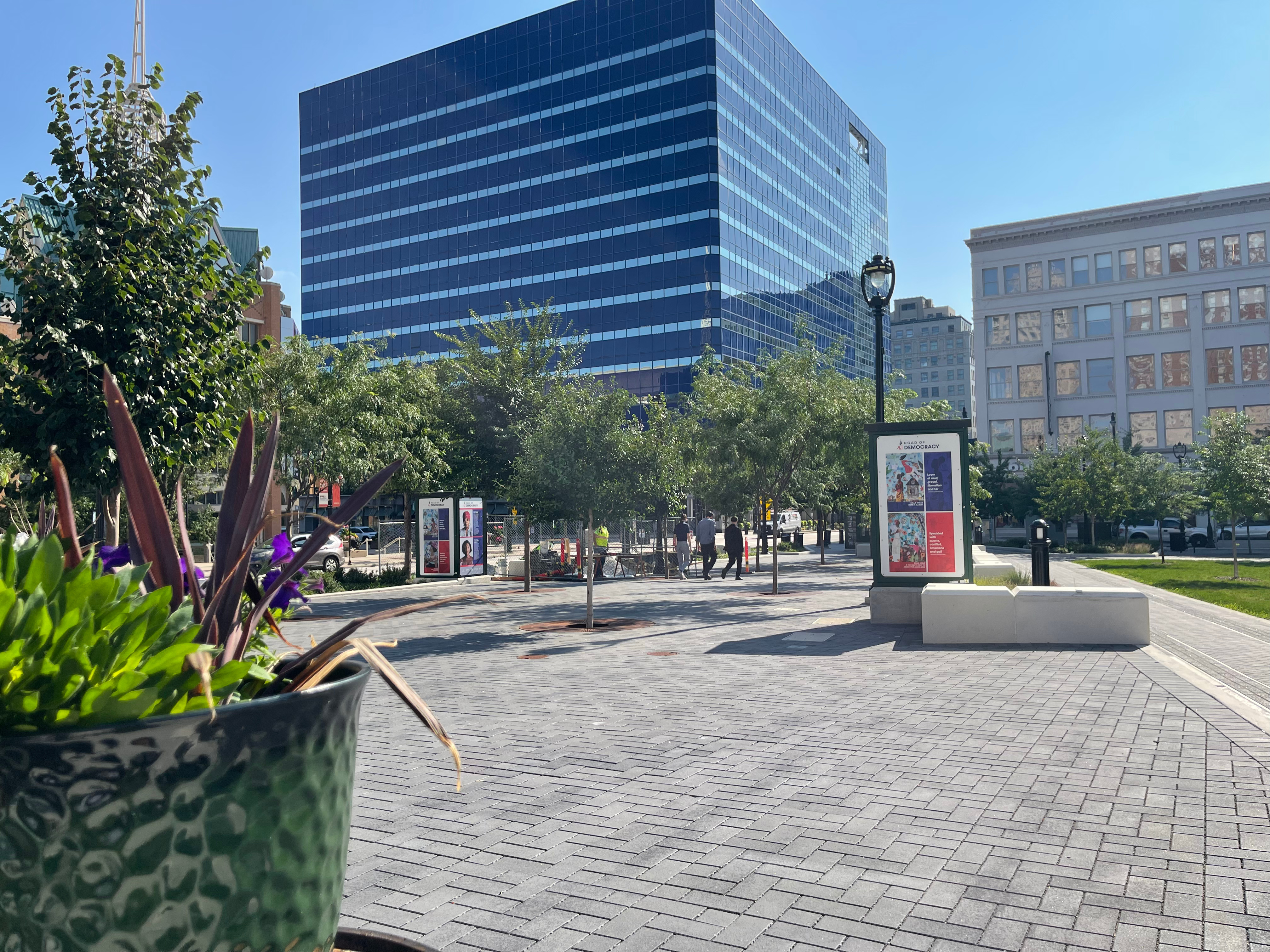
Linking Arms for Political Strength
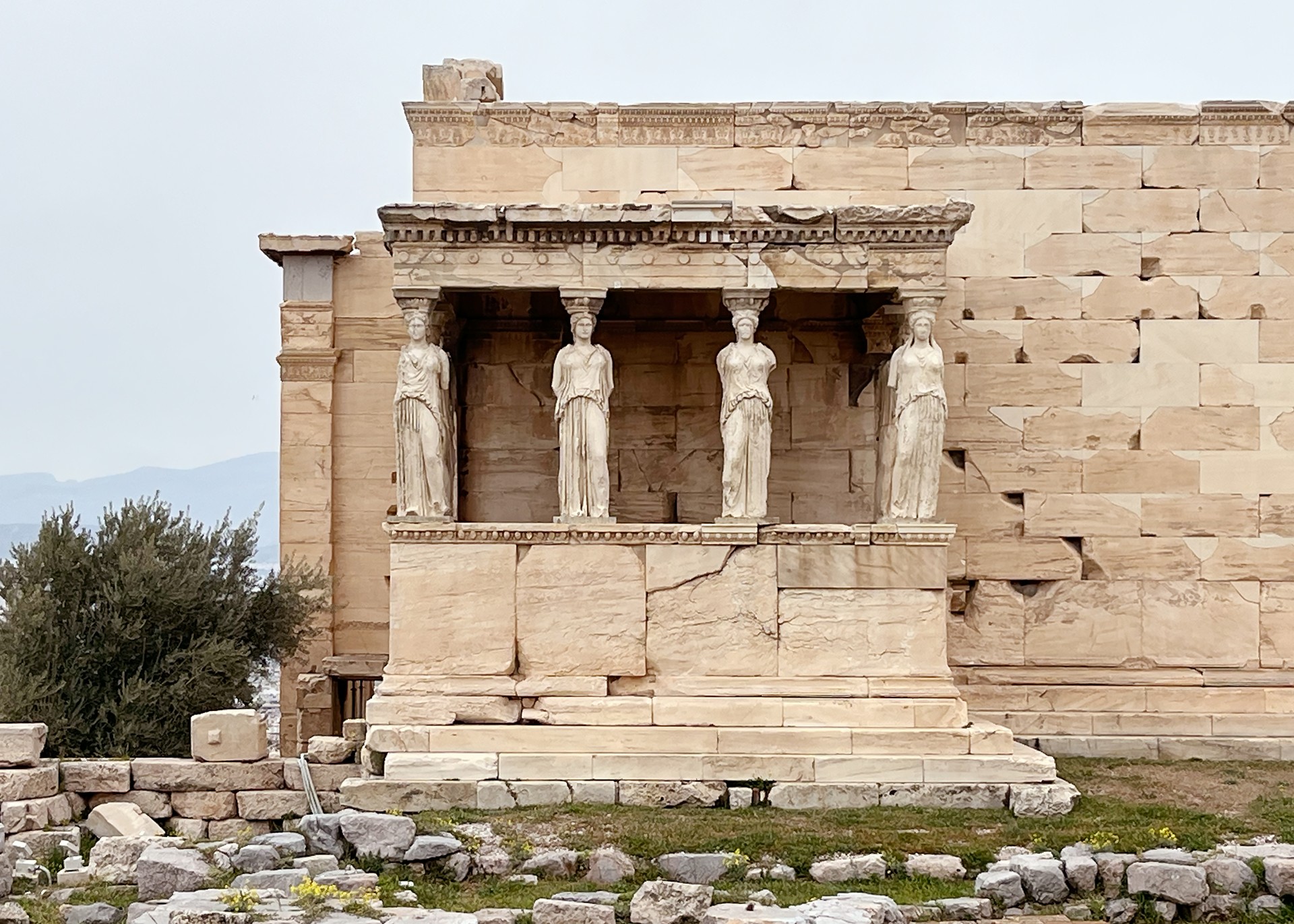
Four female figures (caryatids) on the Erechtheion, Acropolis, Athens, Greece, c. 421-406 BCE | Photo courtesy Marilu Knode
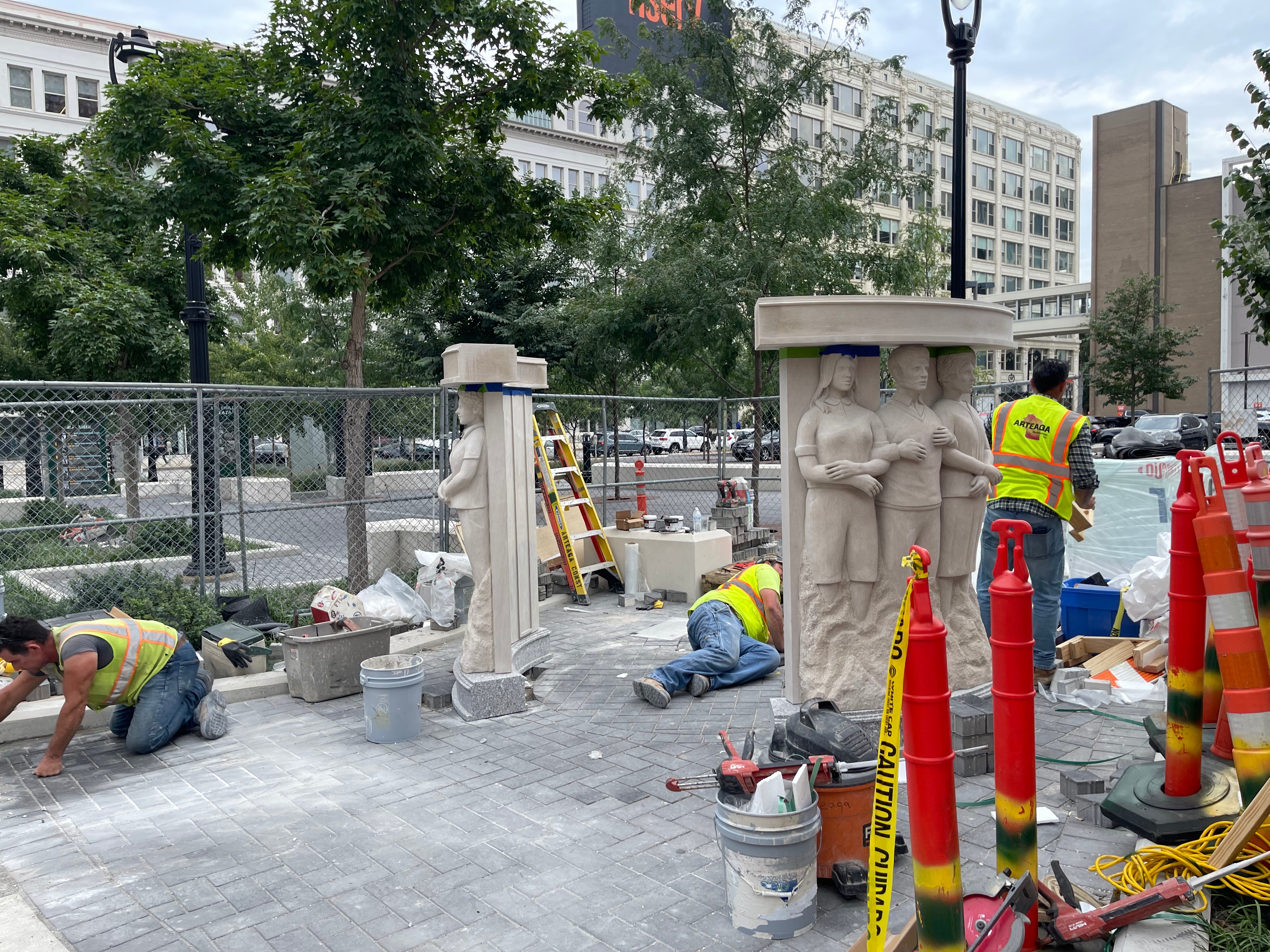
Karyn Olivier represents the citizens of our region through two arcs of stone. The figures support one another, making the whole stronger than the individual parts.
Using figures as support columns is part of an ancient sculptural tradition, the most famous example the female caryatids on the Acropolis in Athens, Greece, created between 421-406 BCE. The hair and clothing of Olivier’s two arcs of figures are drawn from the mid-1960s, when Vel Phillips and others led Milwaukee’s fair housing marches. The figures are unfinished at the bottom, like “the work of democracy” as Olivier has said. The figures emerge from the bedrock of our humanity, leaving space for future generations as they take responsibility for shaping our body politic.
Details from Karyn Olivier's proposal, December 1, 2025 | Images courtesy the Artist and Google
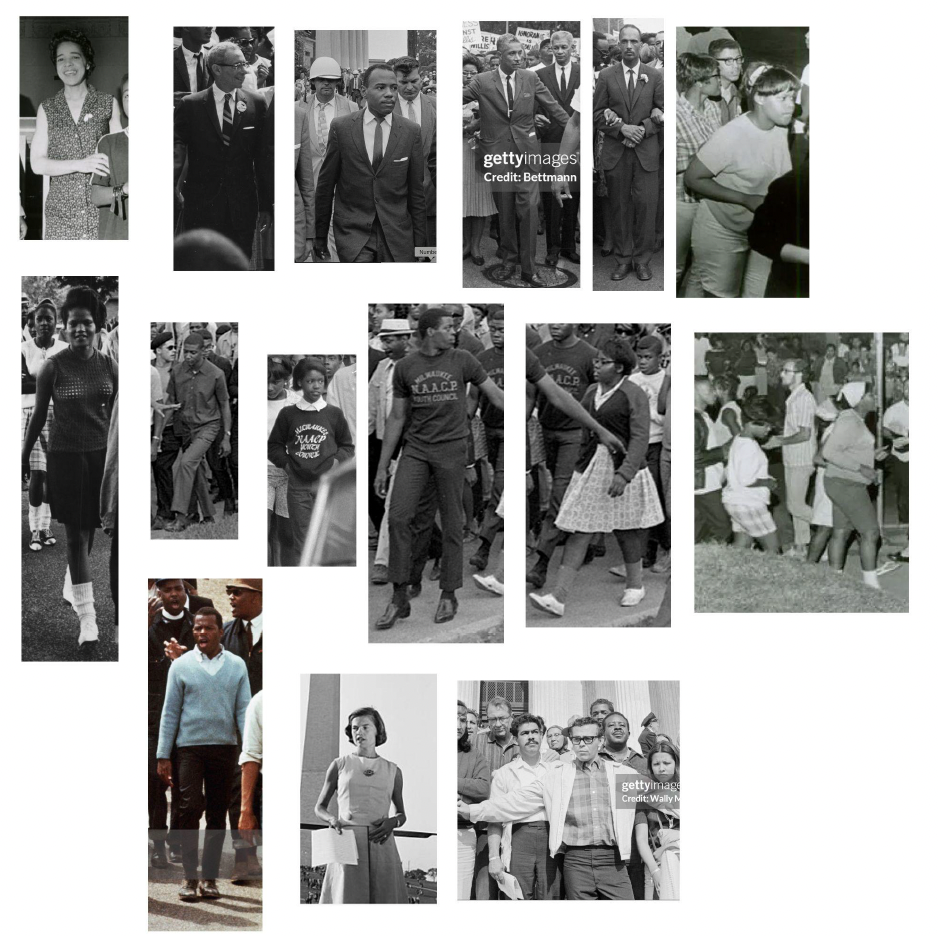
Karyn Olivier writes “The most powerful memorials are those that attempt to bring us in—the bereaved, the stranger, the patriot, the passerby, the victim, the activist, the citizen. They are spaces for gathering and activation that we imbue with power…they evoke the living past and look to our future.” Her figures are abstracted so that viewers might find themselves in these representations, linking across neighborhoods and political divides to create something for the common good.
Phillips' Resolute Desk
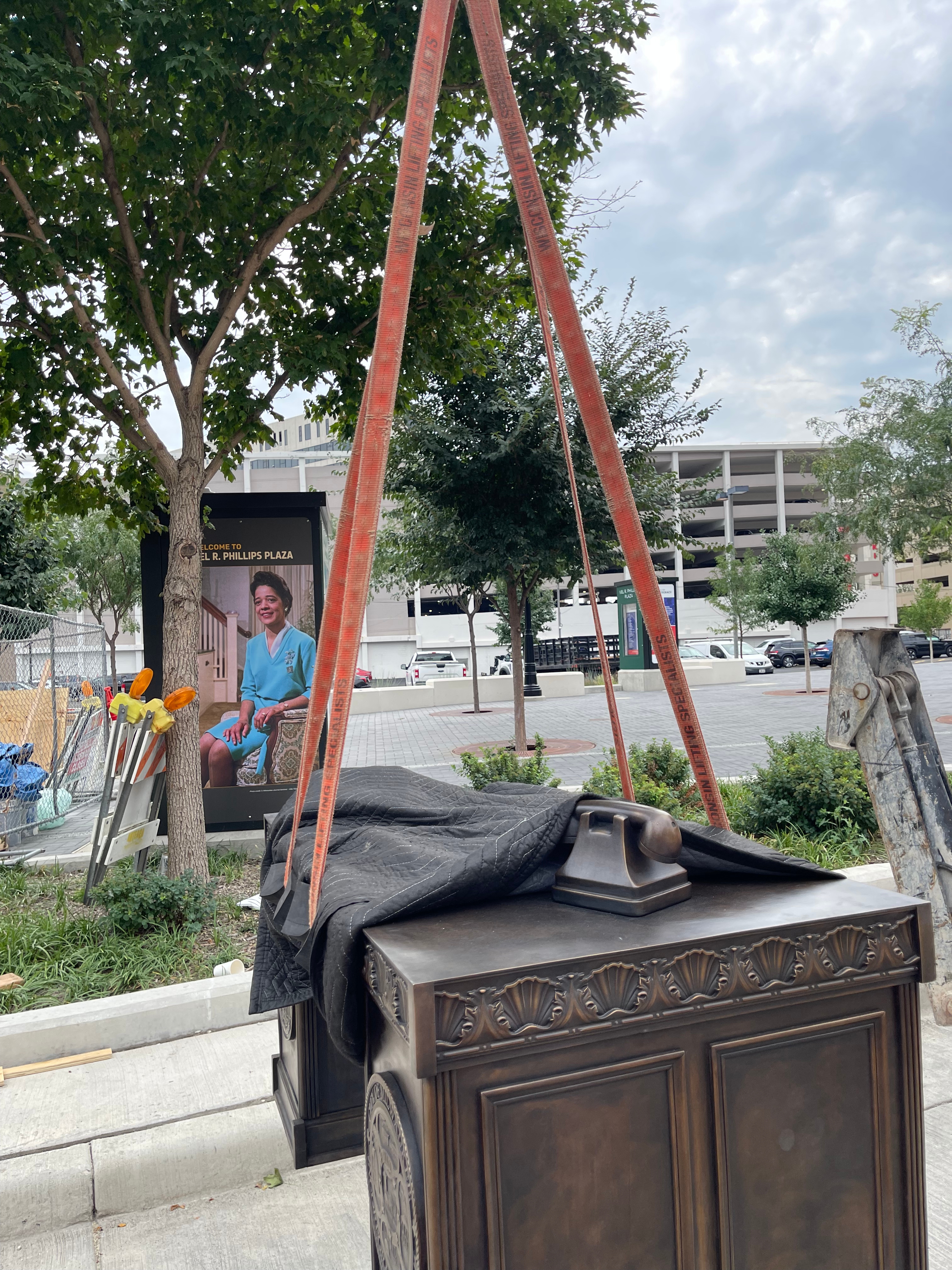
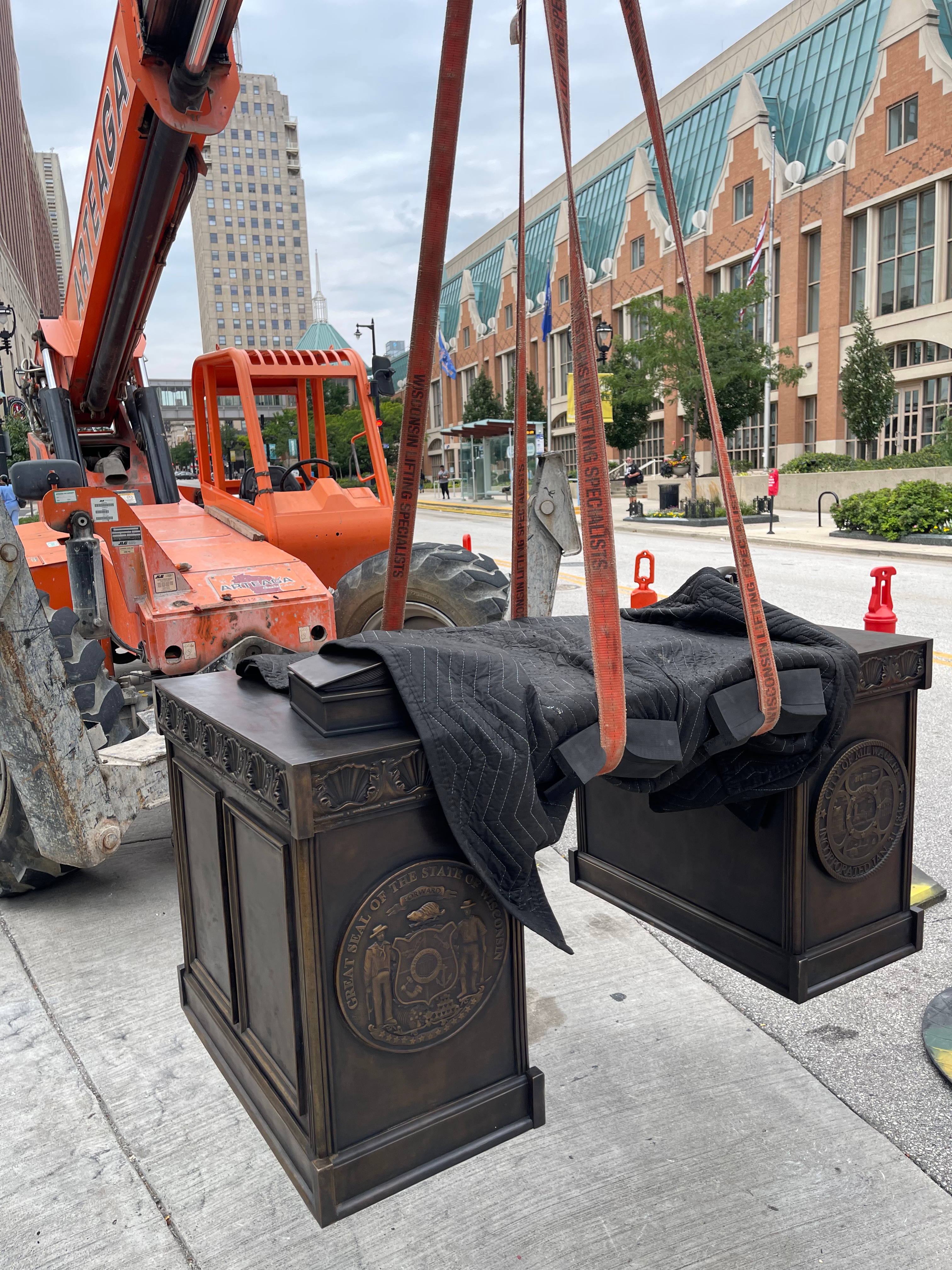
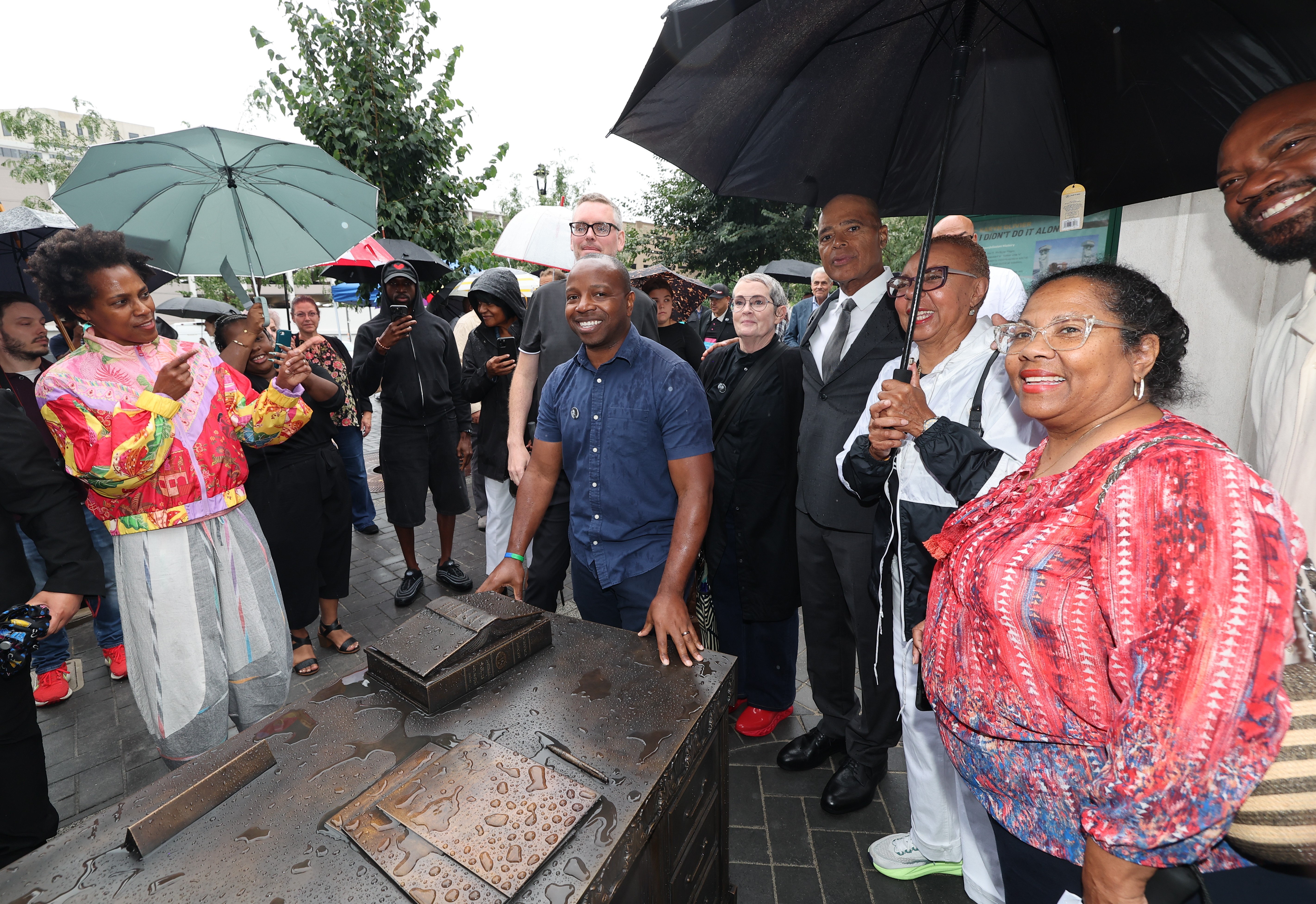
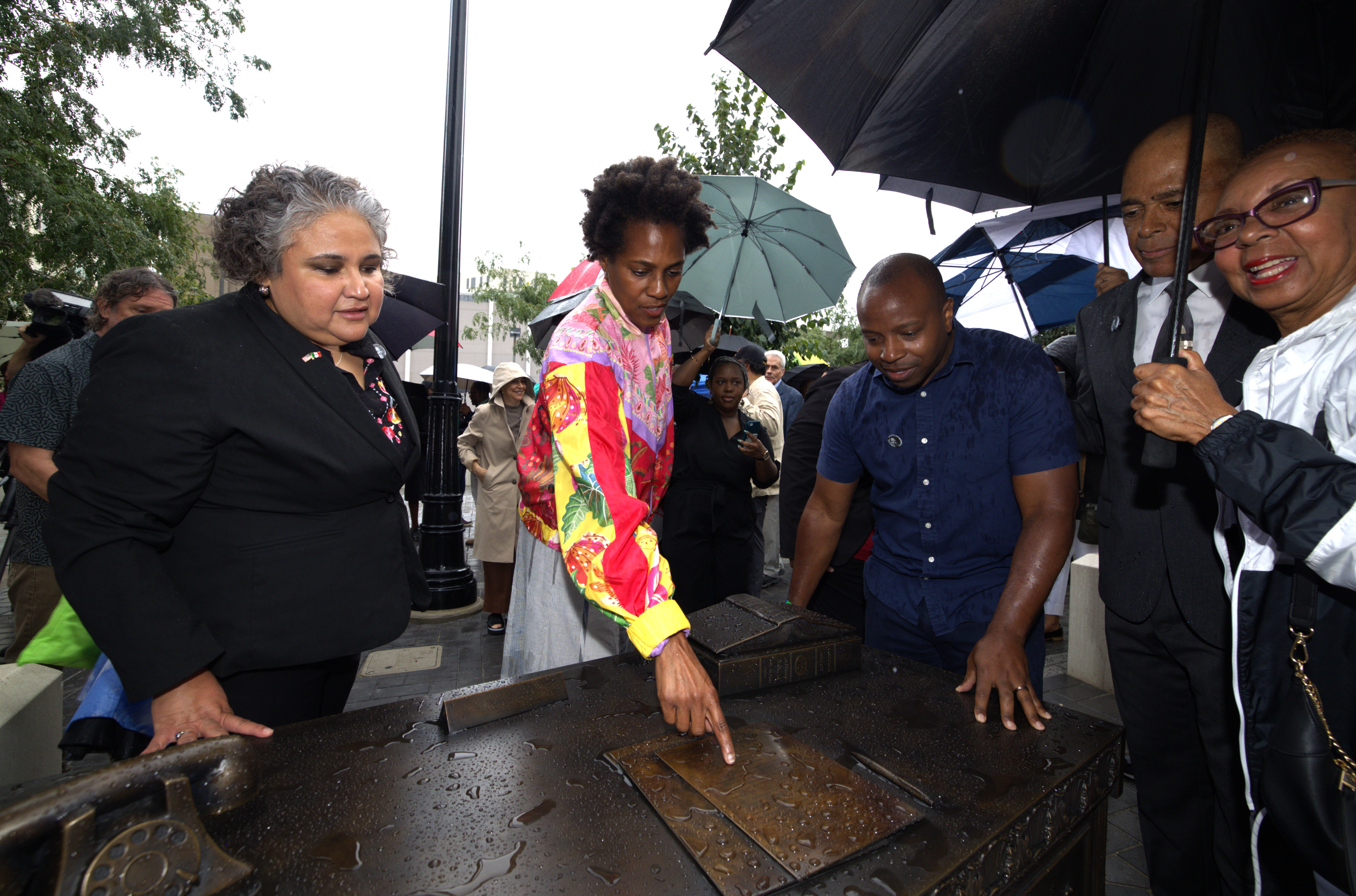
Phillips' Resolute Desk | Photo Credit Kevin J. Miyazaki
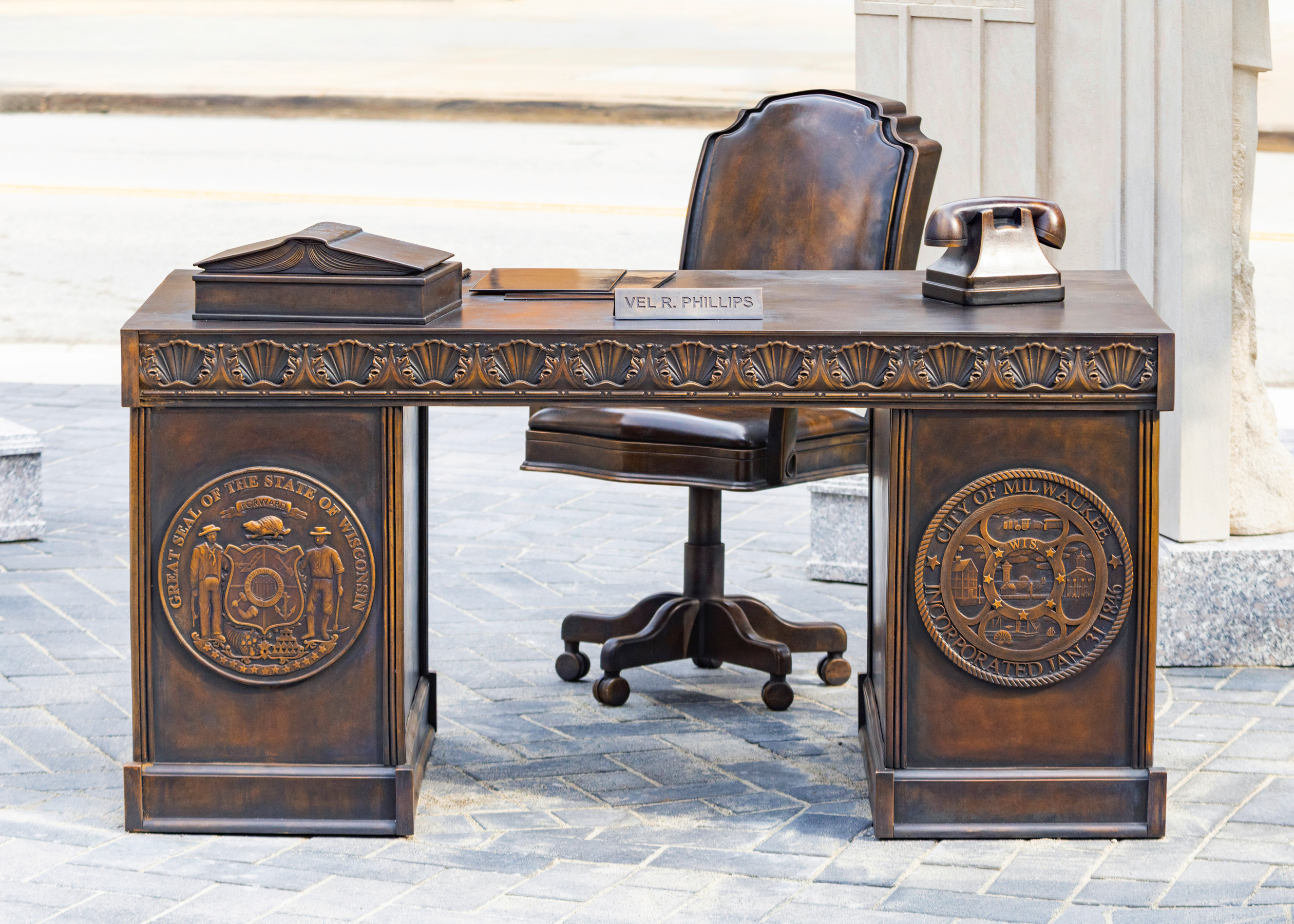
Karyn Olivier observes that the office is where “…the hard political labor in search of action, justice, empathy and possibility” happen.
Olivier’s partner’s desk, based on the American President’s Resolute Desk, exemplifies how Phillips always left space for others, not just her constituents but her political peers and opponents. Atop the desk are objects from a lawyer and politician’s daily routine, including a name plate and telephone, and reference books such as Black’s Law Dictionary, Wisconsin Real Estate Law and Wisconsin Reports. More subtle are the symbols of power, like the State seals and an etched version of Phillips’ fair housing ordinance, typed with hand-written notes, which influenced national law. The bronze chair notes an absence but it is also an invitation or challenge for each of us to step up and step in.
Karyn Olivier’s work reflects on public versus private space, recalling communal nostalgias connected to social and physical experiences and how those phenomena relate to inclusivity and acceptance.
The Artist: Karyn Olivier
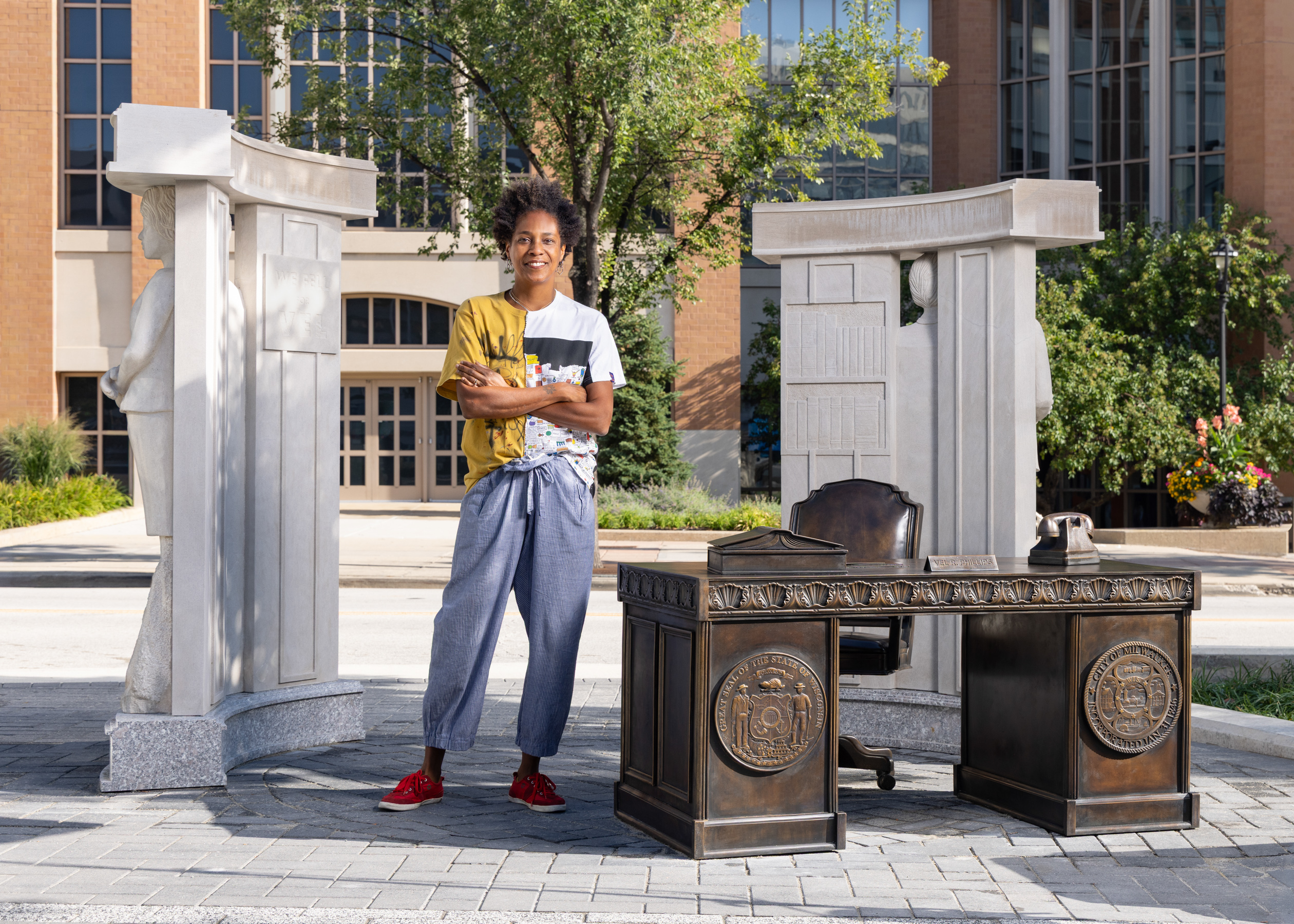
Karyn Olivier was chosen as the artist to honor Vel Phillips by an Art Committee composed of City representatives, curators, museum experts and community members.
I Didn’t Do It Alone is the most substantial art work commissioned by the City of Milwaukee and joins a nation-wide reconsideration of who deserves memorializing in our shared public landscape. Although Olivier borrows some traditional elements of monuments—using cast bronze and carved stone, with objects as well as human figures—she makes contemporary the aesthetic and represents the civic demands of our time, honoring Phillips’ legacy in the past while continuing her legacy into the future.
Of public art Karyn Oliver has said: “Public art is a fiction but you’re creating a real experience.” Olivier combines a realistic “still life” of Vel Phillips’ office with the power figures in an army of supporters and protectors.
The title for this work, I Didn’t Do It Alone (installed in 2026), was a phrase Vel Phillips often used, and like Vel Phillips, Karyn Olivier is interested in the work we share as citizens of this country. After expansive research, Olivier chose to celebrate the collective nature of Phillips’ leadership, representing her activities in the streets and lives of her constituents and not just the many official spaces in her political career. By combining both real and idealized images of political leadership, Olivier asks: what are our expectations of those whom we elect? What is their responsibility to us?
Karyn Olivier | The Battle is Joined, 2017 | Mixed media Photos courtesy Monument Lab, Mural Arts, Public art commission, Vernon Park, Philadelphia, PA, 2017
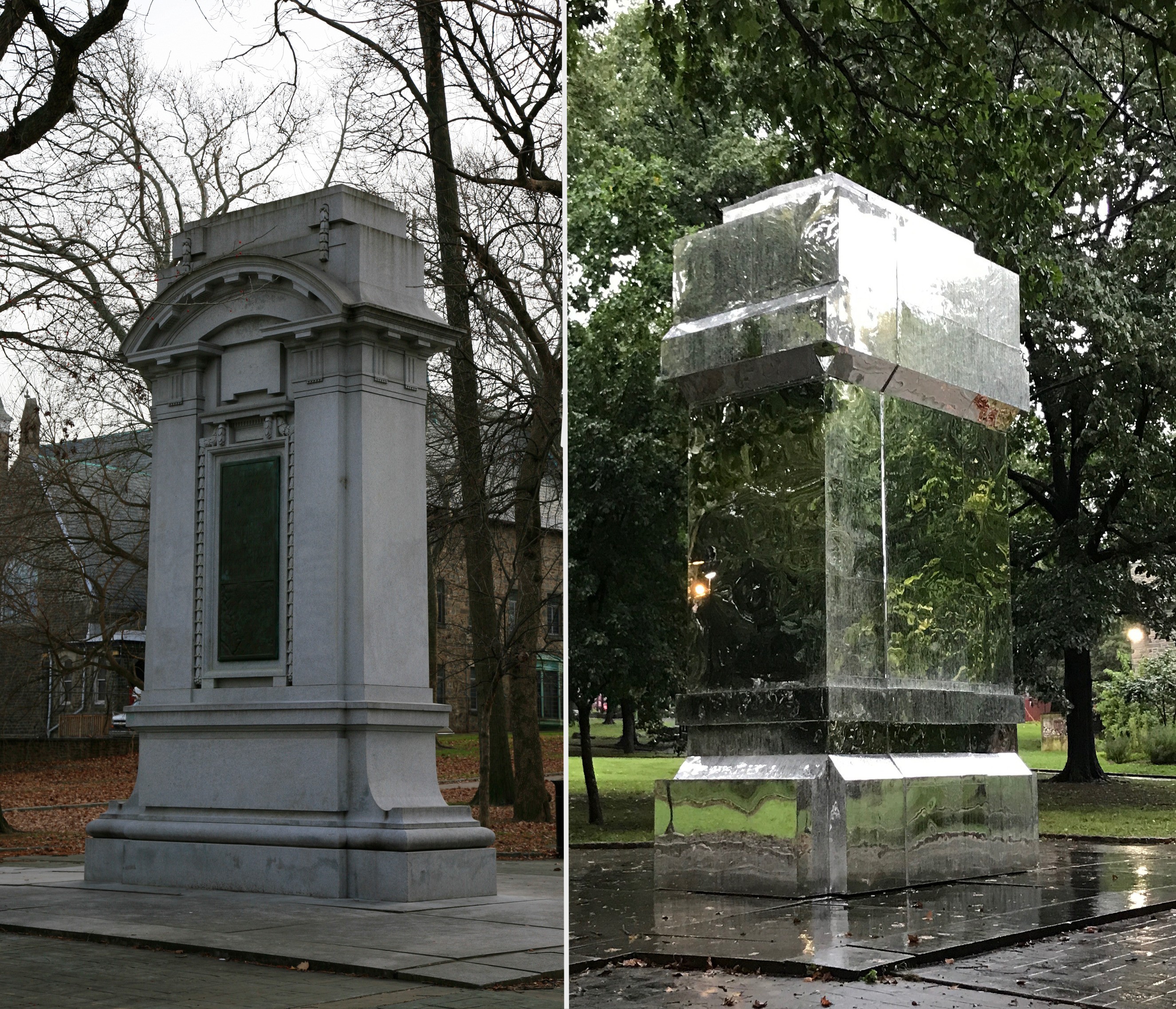
In her numerous permanent public works, gallery and museum installations across the country and abroad, Olivier connects viewers to complex issues of our time using the diverse materials of our shared daily lives.
For a temporary public work from 2017 in Philadelphia, Olivier’s home, the artist sheathed a George Washington Revolutionary War memorial with mirrored panels, masking the past by reflecting the contemporary environment of the area.
Karyn Olivier | Approach, Newark Liberty International Airport Terminal A, 2022 | Powder-coated aluminum, stainless steel and Alucobond | Commissioned by PANYNJ and Public Art Fund | Photo by Zack DeZon
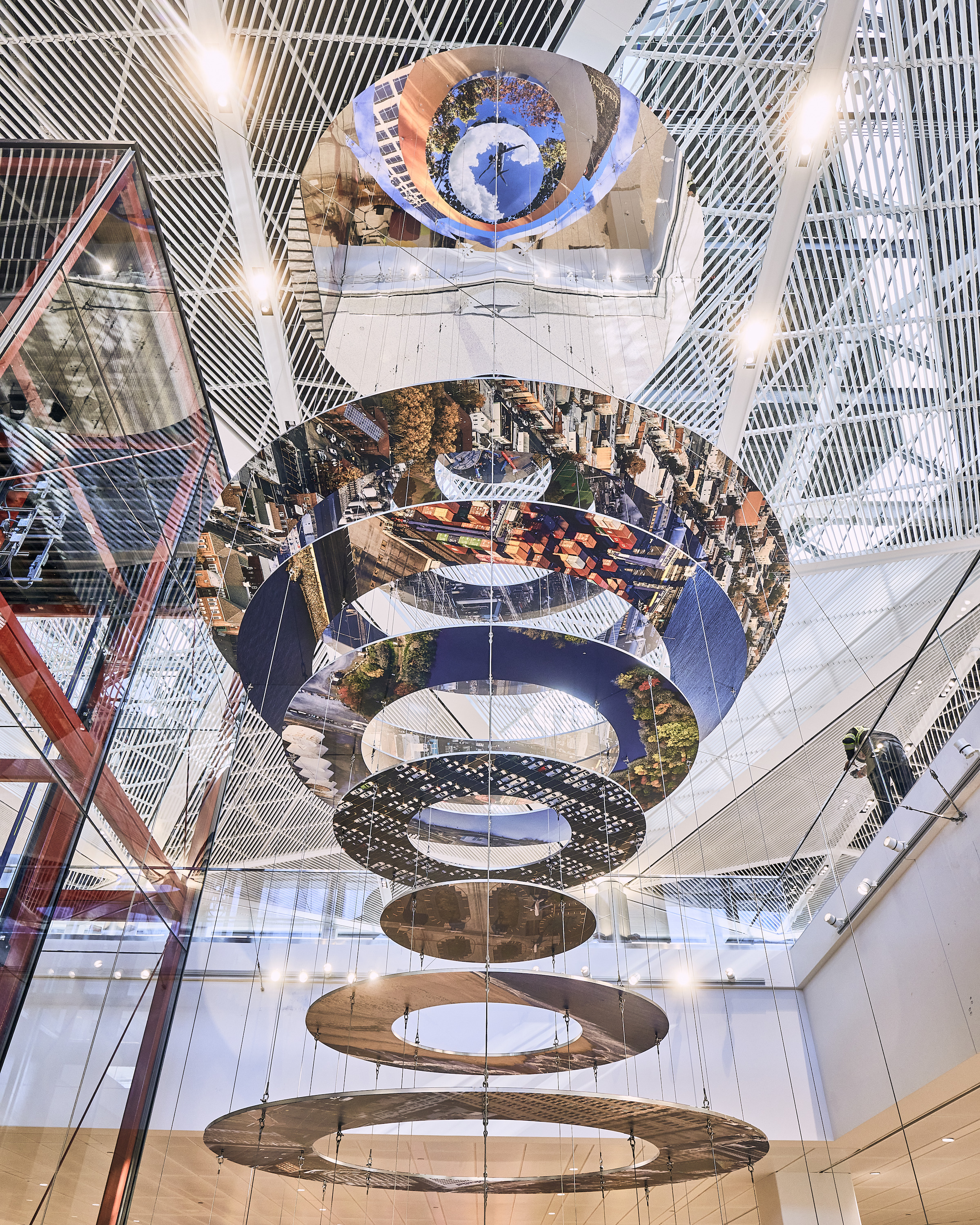
In a permanent work at Newark Liberty International Airport, Olivier took photographs from across the city to represent the vibrant life that exists on the ground.
Through these works Olivier suggests that our social and political spaces are ever fluid, changing to ensure “we, the people”, are reflected in the laws made on our behalf.
Karyn Olivier, born in 1968 in Port of Spain, Trinidad and Tobago, received her BA in Psychology at Dartmouth College, Hanover, New Hampshire, in 1989 and her MFA in Ceramics at the Cranbrook Academy of Art in Bloomfield Hills, Michigan in 2001. Through her numerous permanent public works, gallery, and museum installations across the country and abroad, Olivier connects viewers to complex issues of our time by focusing on the lived experiences of our shared daily lives. She suggests that our social and political spaces are ever fluid and changing, to ensure “we, the people”, are reflected in the spaces and laws made on our behalf.”
The City of Milwaukee thanks Karyn Olivier for her hard work representing Vel Phillips’ life and impact to generations of Milwaukee citizens and visitors alike.
Karyn Olivier would like to thank Rachael Buchwald at Tanya Bonakdar Gallery, New York, for her skilled and detailed project management work, and the fabrication teams at Quarra Stone Company, Madison and Independent Casting, Philadelphia, for bringing the artist’s vision to life.
Many individuals and organizations were involved in stewarding this major commission to life, including: The City of Milwaukee’s Department of City Development and Redevelopment Authority | The Milwaukee Common Council | Vel Phillips’ family | The Alliance (African American Art Alliance) at the Milwaukee Art Museum | America’s Black Holocaust Museum | Bronzeville Center for the Arts | The Haggerty Museum of Art | The Lynden Sculpture Garden | The Milwaukee Art Museum | Milwaukee Downtown Inc. / BID #21 | Northwestern Mutual | And other arts and culture experts in the community.
About Vel R. Phillips

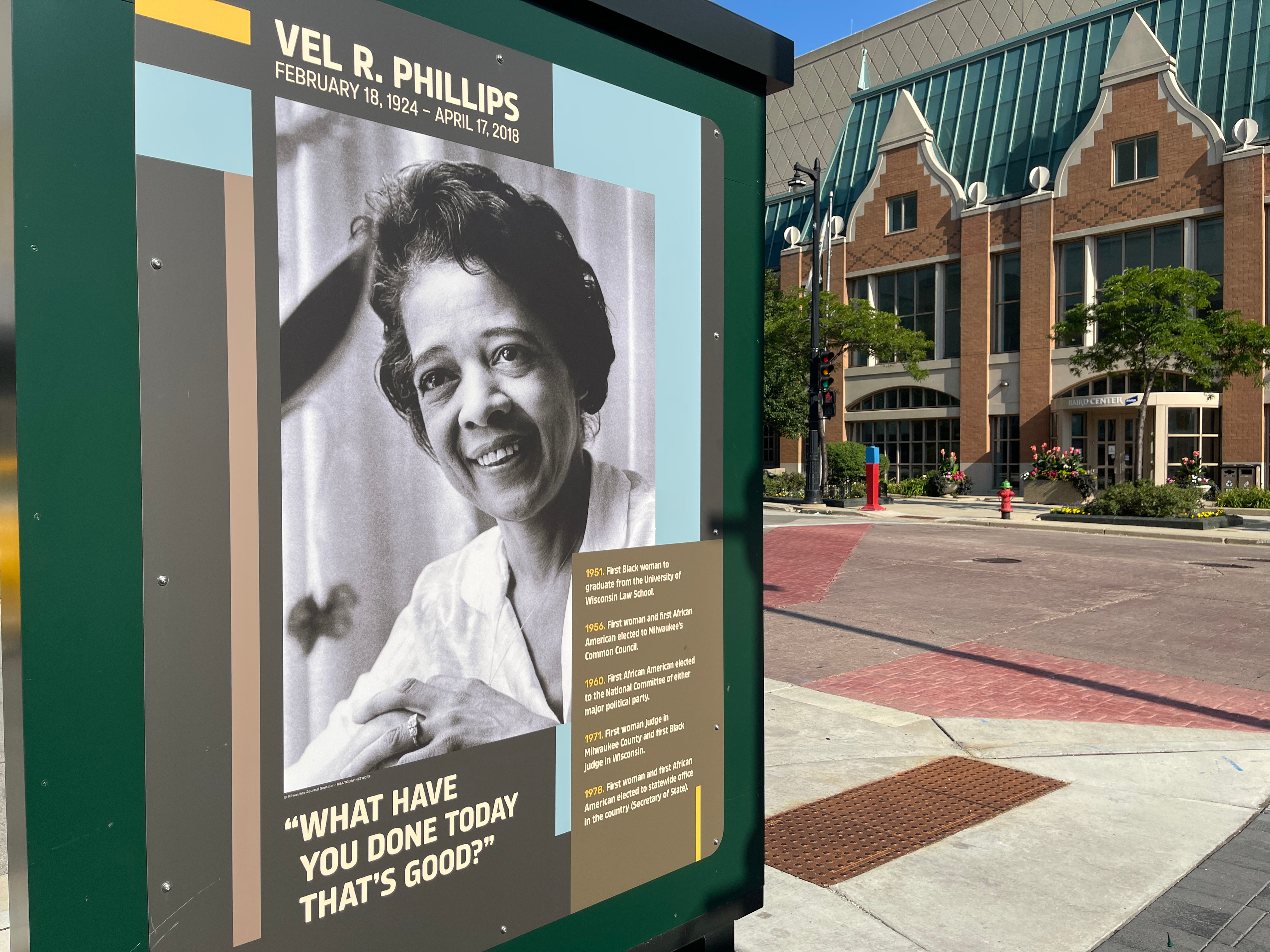
Vel R. Phillips’s life dates:
February 18, 1924 – April 17, 2018
Vel R. Phillips quote:
“What have you done, today, that’s good?”
Vel R. Phillips’s many firsts:
• 1951 First Black woman to graduate from the University of Wisconsin-Madison Law School
• 1956 First woman and first Black citizen elected to Milwaukee’s Common Council
• 1960 First Black citizen elected to the National Committee of either major political party
• 1971 First woman judge in Milwaukee County, and first Black judge in Wisconsin
• 1978 First Black citizen, and first woman, elected to statewide office (Secretary of State)
About the Vel R. Phillips Plaza Area and Redevelopment Plan
The Vel R. Phillips Plaza was created to:
- Serve as an anchor for the business, residential, retail and entertainment densification that is occurring on West Wisconsin Avenue
- Create a new social gathering space in the evolving Westown area
- Provide space for the future expansion of Milwaukee’s light rail (The Hop) and bus systems to serve residents with more public transportation options
- Invest in the previously under-resourced gateway to the areas west and north of downtown
- Expand job opportunities for Milwaukee residents and provide future opportunities for pop-up cultural activities
The Plaza was designed by Kubala Washatko Architects, landscape architect Saiki Design, and civil engineer HNTB.

Schematic drawing of site redevelopment with primary area for artist consideration noted