What is Infant Mortality and How Does it Impact Families?
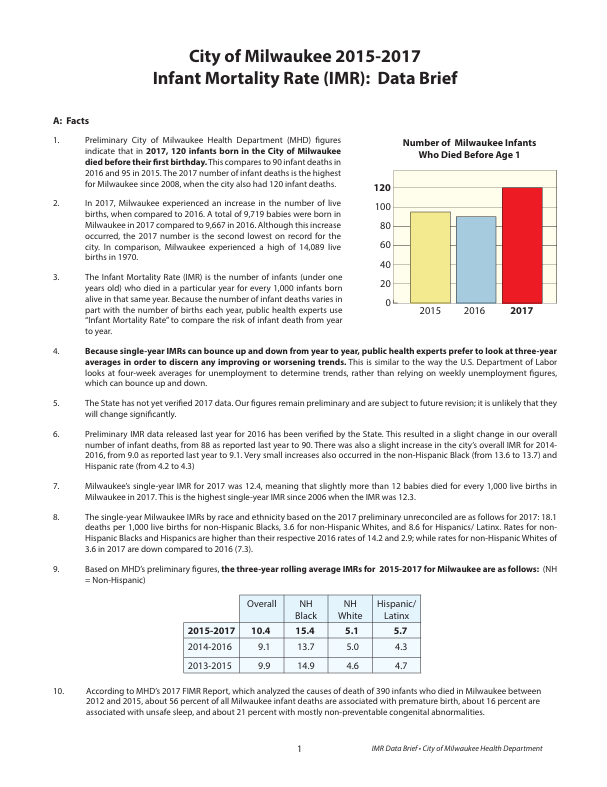
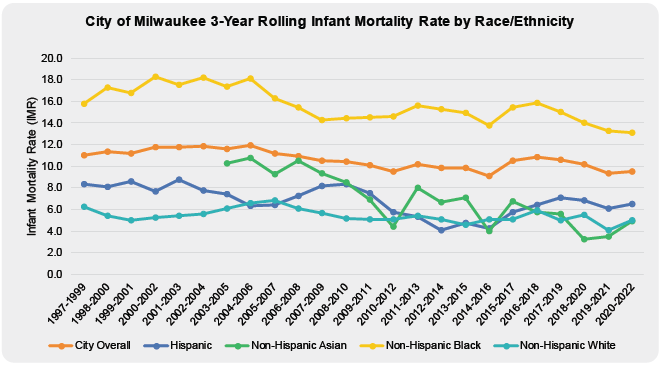
 Infant mortality is the death of an infant before their first birthday. It is often displayed as a rate, shown as the number of deaths per 1,000 live births. Between 2019-2022, Milwaukee’s overall infant mortality rate was 9.2 deaths per 1,000 live births.
Infant mortality is often used as a measure of the wellbeing of communities. The loss of an infant can pose substantial health, emotional, mental, and even financial stress for families.
Infant mortality in Milwaukee has slowly improved over the years, but some communities are still affected more than others. Non‑Hispanic Black infants are 2.5 times more likely to die than non‑Hispanic Asian and White infants, and twice as likely as Hispanic infants. These differences show why focused action is needed to improve birth outcomes for all families.
Causes of Infant Death
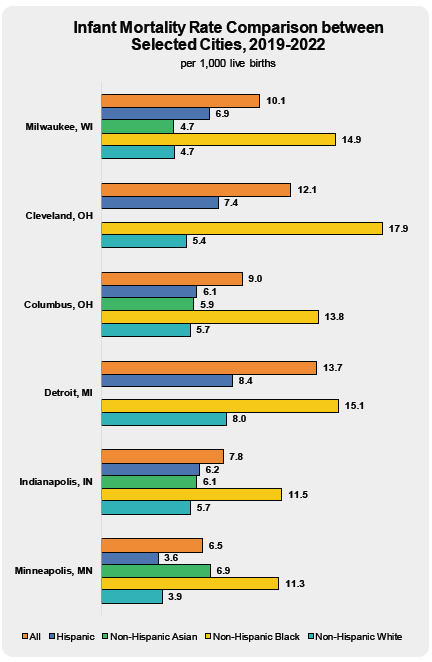
The Big Cities Health Coalition offers a tool that compares Milwaukee’s infant mortality rates to those of similar Midwestern cities. In these comparisons, Milwaukee ranks in the middle. In the graph to the right, the orange bar in each cluster shows the overall infant mortality rate for each city. The other colors represent different racial and ethnic populations.
Between 2019-2022, the top three causes of infant death were:
- Complications of prematurity
- SIDS/SUID/accidental suffocation (includes sleep-related deaths)
- Congenital anomalies
Additional causes of infant death included complications of labor and delivery, infections, and external causes of death (such as car accidents, drowning, and homicides).
Prematurity as a Cause of Infant Death
Premature birth (also called preterm birth) is any birth that occurs before the pregnancy reaches 37 weeks' gestation. It is associated with numerous complications since the baby is born before the lungs, heart, and brain have a chance to reach full development. The health complications caused by prematurity are the leading cause of infant mortality in Milwaukee and have been for over a decade.
- 60% of deliveries that occur at or before 20 weeks of pregnancy resulted in a stillbirth or infant death
- Just over 10% of deliveries that occur between 24 and 27 weeks of pregnancy led to infant death
- By 32 weeks of pregnancy, almost all deliveries result in an infant living beyond their first birthday
Half of all infant deaths occur in the infant’s first week of life, with many of those being very premature infants with significant complications, or who are just born too soon.
Several factors contribute to a higher likelihood of premature birth, including, but not limited to:
- Maternal behaviors like smoking, substance use, and drinking alcohol
- Health conditions like sexually transmitted infections (STIs)
- Starting prenatal care very late or not having enough prenatal care visits
- Having a previous premature birth are all associated with this outcome
- Stress is also a contributing factor, including living with systemic stressors like poverty, unstable housing, or racism
Disproportionate Impacts
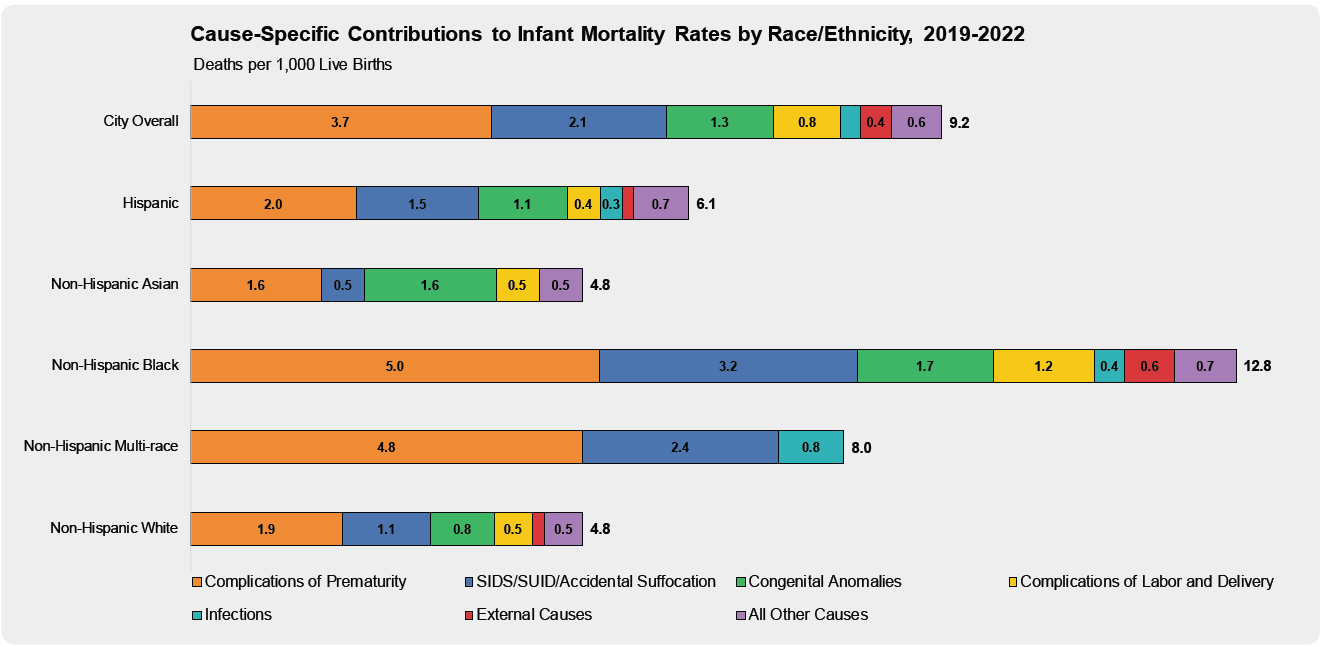 This graph shows how infant mortality rates differ for Milwaukee overall, and for each racial and ethnic group. The color-coded bar shows how different causes of death contribute to each group’s rate. This helps the FIMR Team identify important patterns affecting infant health. The patterns include:
- The top three leading causes of infant death (as shown by the orange, dark blue, and green sections) are also the leading causes across all racial/ethnic populations
- Non-Hispanic Black infants experience the highest risk of loss due to premature birth, SUID/SIDS/accidental suffocation, complications of labor and delivery and external causes
- Non-Hispanic multiracial infants also experience high risk of loss due to premature birth and SUID-related losses
- Congenital anomalies account for a larger portion of deaths among non-Hispanic Asian infants compared with all other racial/ethnic groups
What is Stillbirth and How Does It Impact Families?
 Stillbirth, sometimes called fetal mortality, is when a baby is born without a heartbeat or is not breathing after at least 20 weeks of pregnancy (or the baby weighed at least 350 grams at delivery with no heartbeat and was not breathing). Like infant mortality, stillbirth is measured as a rate per 1,000 total births. From 2019 to 2022, Milwaukee’s stillbirth rate was 6.1 per 1,000 births.
Stillbirths do not always receive the same level of attention as infant deaths, but they can have significant health, emotional, and financial impacts on the pregnant person and their family.
In Milwaukee, the overall stillbirth rate has been flat for a decade. In the non-Hispanic Black population, the stillbirth rate has been decreasing for 15 years, but has flattened over the last few years, and remains higher than the rate of other populations. In comparison, the Hispanic population has seen its stillbirth rate increase over the past several years.
Causes of Stillbirth
Between 2019-2022, the top three causes of infant deaths were:
- Any maternal risk factor
- Unknown causes
- Placental abruption
The top two causes of stillbirth are vague. Maternal risk factors can include behaviors like smoking, and health conditions like sexually transmitted infections (STIs), diabetes, hypertension, and receiving late or no prenatal care. “Undetermined causes” refers to stillbirths where there is no clearly identifiable reason for the loss.
Additional causes of stillbirth include congenital anomalies, and issues relating to the umbilical cord, cervix, and/or placenta.
Most stillbirths occurred between 20-36 weeks of pregnancy. They are relatively rare among full-term pregnancies.
Disproportionate Impacts
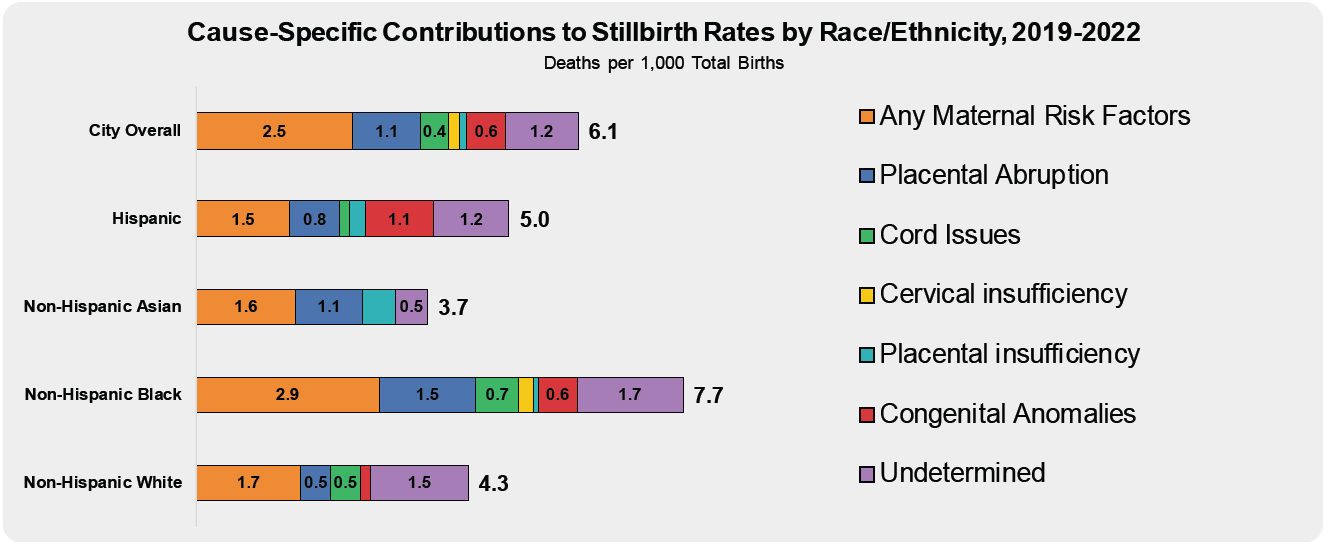
This graph shows how stillbirth rates differ for Milwaukee overall and for each racial and ethnic group. The color-coded sections within each bar show how different causes of death contribute to each stillbirth rate. This helps the FIMR Team identify important patterns. The patterns include:
- Stillbirth in the non-Hispanic Black population is more likely due to maternal risk factors than other racial/ethnic groups
- Congenital anomalies were a contributor to stillbirth for all racial/ethnic groups except non-Hispanic Asian communities
- Stillbirths due to undetermined causes occurred among all groups but made up a larger portion of deaths among non-Hispanic White pregnancies compared with others
What is Fetal Infant Mortality Review (FIMR)?
Fetal and Infant Mortality Review, or FIMR, is the Milwaukee Health Department’s primary infant mortality/stillbirth prevention program.
FIMR is a multidisciplinary process, used across the United States, that reviews the circumstances around a stillbirth or an infant death. FIMR teams work to improve maternal and infant health outcomes and prevent future losses. The teams capture diverse perspectives that inform the FIMR process. The perspectives include:
- Doctors
- Nurses
- Midwives
- Doulas
- Social Workers
- Social Service Providers
- Community-based organizations
- Researchers
The FIMR process is a cycle with several steps that largely fall into 4 phases:
-
Data Collection and Analysis: The main FIMR teams collect information related to each loss and then analyzes it to identify risk factors and trends.
-
Case Review: Certain cases are brought to review teams dedicated to discuss the challenges and gaps found in the data, as well as identifying opportunities for improvement.
-
Community Action: The recommendations created by reviewing the cases go to action teams that focus real-world application.
-
Systems Change: The recommendations will hopefully lead to broader changes that improve care and services for all pregnant people in Milwaukee.
Throughout the process, the top priority is protecting the privacy of the families who have experienced loss. Details about specific individuals, families, providers, or hospitals are never shared beyond the internal MHD FIMR Team.
The Primary Goals of FIMR
- Examine factors that are related to stillbirths and infant deaths, identifying both the gaps in care and systems as well as the opportunities for improvement
- Develop ideas, strategies, and recommendations to improve services and community resources for pregnant and parenting people
- Identify the feasible ideas and develop plans to implement them
- Work together with community partners to put those plans into action, and monitor progress
Milwaukee's FIMR Teams
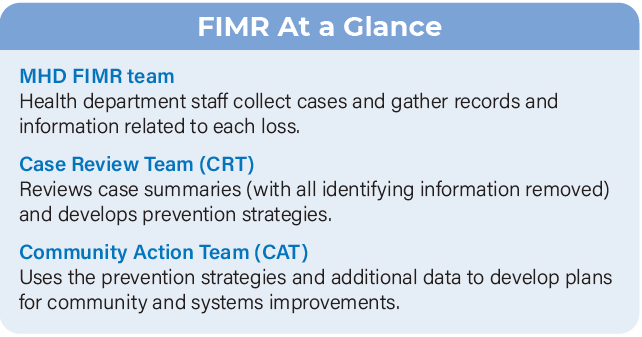
Milwaukee’s FIMR Team(s) has existed since the 1990s, beginning with a focus on targeted areas within the city where most infant deaths and stillbirths were happening. Today, Milwaukee’s FIMR covers the whole county, and the goal remains to use FIMR data to identify communities that are disproportionately impacted, identify relevant solutions, and improve birth outcomes for all Milwaukee families.
CRT and CAT
In addition to the internal MHD FIMR staff, the program consists of two teams: the Case Review Team (CRT) and the Community Action Team (CAT). These teams coordinate with each other to analyze data, create recommendations, and implement strategies to reduce infant deaths and stillbirths
Case Review Team (CRT)
The internal MHD FIMR staff are notified about cases of infant death and stillbirth that happen in Milwaukee County. After confirming cases meet certain eligibility requirements (residency and age at the time of death), MHD gathers records related to the pregnancy and loss. They analyze data to identify common risk factors and trends among cases.
A subset of cases is selected for deeper analysis. MHD conducts deeper analysis of the records and puts together the story of the pregnancy, delivery, and loss (removing all names, dates, and other identifiable details). These case summaries are brought to the CRT, who read the summaries and discuss the elements of the case to identify factors that contributed to the loss, and possible strategies to improve care and services. After the discussion, CRT members come up with recommendations to prevent future stillbirths and infant deaths.
Community Action Team (CAT)
The Community Action Team (CAT) is a new and important part of Milwaukee’s FIMR program. Since launching in October 2024, the team has reviewed recommendations from the Case Review Team and data from past FIMR reports. The team's goal is to identify strategies that are realistic, effective, and meaningful for Milwaukee. As the CAT team sets its priorities, it will bring in more partners to help create action plans and will share those plans as the work moves forward.
How Are Recommendations Determined?

Reducing pregnancy and infant losses will take focused action from individuals, organizations, communities, and policy leaders. MHD’s FIMR Team works across these levels to support collaboration and keep families and those most affected at the center of the work.
The 2025 FIMR Report includes a chapter dedicated to specific strategies to prevent stillbirths and infant losses, but the top three recommendations are:
- Improve access to quality health care and community-based services across all stages of life
- Ensure every person and family can plan their families and access the care that supports those decisions
- Address the root causes of poor birth outcomes and strengthen the conditions that allow families to thrive
FIMR Recommendations
Safe Sleep Environments
Up to 25% of infant losses happen because of unsafe sleep environments which includes couches, air mattresses, or cribs with objects (like toys, blankets, pillows) in them.
- Parents and caregivers can create a sleep plan using the ABCs of Safe Sleep to lower the risk of infant death: babies should sleep Alone, on their Backs, in a Crib (or bassinet), and in a Smoke-Free environment.
- Expecting parents can visit Milwaukee Health Department’s Safe Sleep Program for more information, and learn how to get a Pack 'N Play if needed.
Postpartum Healthcare
- Starting July 1st, 2026, Wisconsin expanded Medicaid coverage for postpartum care from 60 days to 12 months which allows pregnant people to access care during the critical postpartum period, regardless of their birth outcome. (Source: https://www.forwardhealth.wi.gov/kw/pdf/2026-17.pdf)
- Ideally there should be multiple visits in the first 3 months after birth: the first visit should occur within the first 3 weeks and at least one postpartum visit should occur within 2 months.
Mental Health
Up to 20% of women in the U.S. will experience a pregnancy-related mental health condition, which can significantly affect the ability to care for a newborn, manage daily activities, and maintain wellbeing (Source: https://postpartum.net/perinatal-mental-health/)
- Individuals should talk to their healthcare providers if they experience any changes to their mental health during or after pregnancy and should contact their prescriber if they’re already taking mental health-related medications.
- Healthcare providers should ensure that patients are aware of perinatal mental health conditions, treatments, and be compassionate and supportive while discussing these concerns and providing resources and referrals.
Father and Partner Engagement
Involving the pregnant person’s co-parent or partner throughout the pregnancy, delivery, and postpartum period is important, as they are a critical part of the support system. The co-parent or partner should be welcomed and acknowledged at prenatal care appointments, included in pregnancy-related education, and have their questions answered so they can fully participate in and support the pregnant person.
Emergency and Urgent Care
Studies found that patients who are non-Hispanic Black, Hispanic, or who have public insurance may be more likely to use emergency care during pregnancy, with some having their first pregnancy-related healthcare visit at an emergency department.
- Pregnant people should establish care with a healthcare provider as soon as they know they are pregnant (people who need help getting insurance coverage can visit Milwaukee Health Department’s Community Healthcare Access Program (CHAP) for assistance)
- Hospitals should make sure that electronic health records notify providers when a pregnant patient uses an emergency department or urgent care to make follow-up care smoother
Reproductive Life Planning
Both maternal and infant health improve when pregnancies are planned and there is at least 6 months (ideally a year) between delivery and the start of the next pregnancy.
- A pregnant person and their partner should discuss what they want their family to look like and talk with their healthcare provider to best achieve those goals (whether birth control, improving maternal health conditions between pregnancies, or addressing other needs)
- Families who experience a pregnancy or infant loss are encouraged to allow at least 12 months between pregnancies to provide time to address new or existing health condition and prepare for a healthy future pregnancy
Substance Use
The use of alcohol, cigarettes/tobacco, marijuana, and other substances can increase the risk for pregnancy loss or poor health outcomes in the pregnant person, fetus, and infant.
- Individuals trying to get pregnant are encouraged to reduce or stop substance use as early as possible and connect with a healthcare provider to discuss ongoing treatment or management needs
- Healthcare providers should support pregnant patients by explaining the possible side effects a person might go through when reducing/stopping use, as well as screening for substance use concerns in a nonjudgmental, compassionate way


 The 2025 FIMR Report is now available
 Understanding Milwaukee's Birth Outcomes
 Infant mortality is the death of an infant before their first birthday. It is often displayed as a rate, shown as the number of deaths per 1,000 live births. Between 2019-2022, Milwaukee’s overall infant mortality rate was 9.2 deaths per 1,000 live births.