


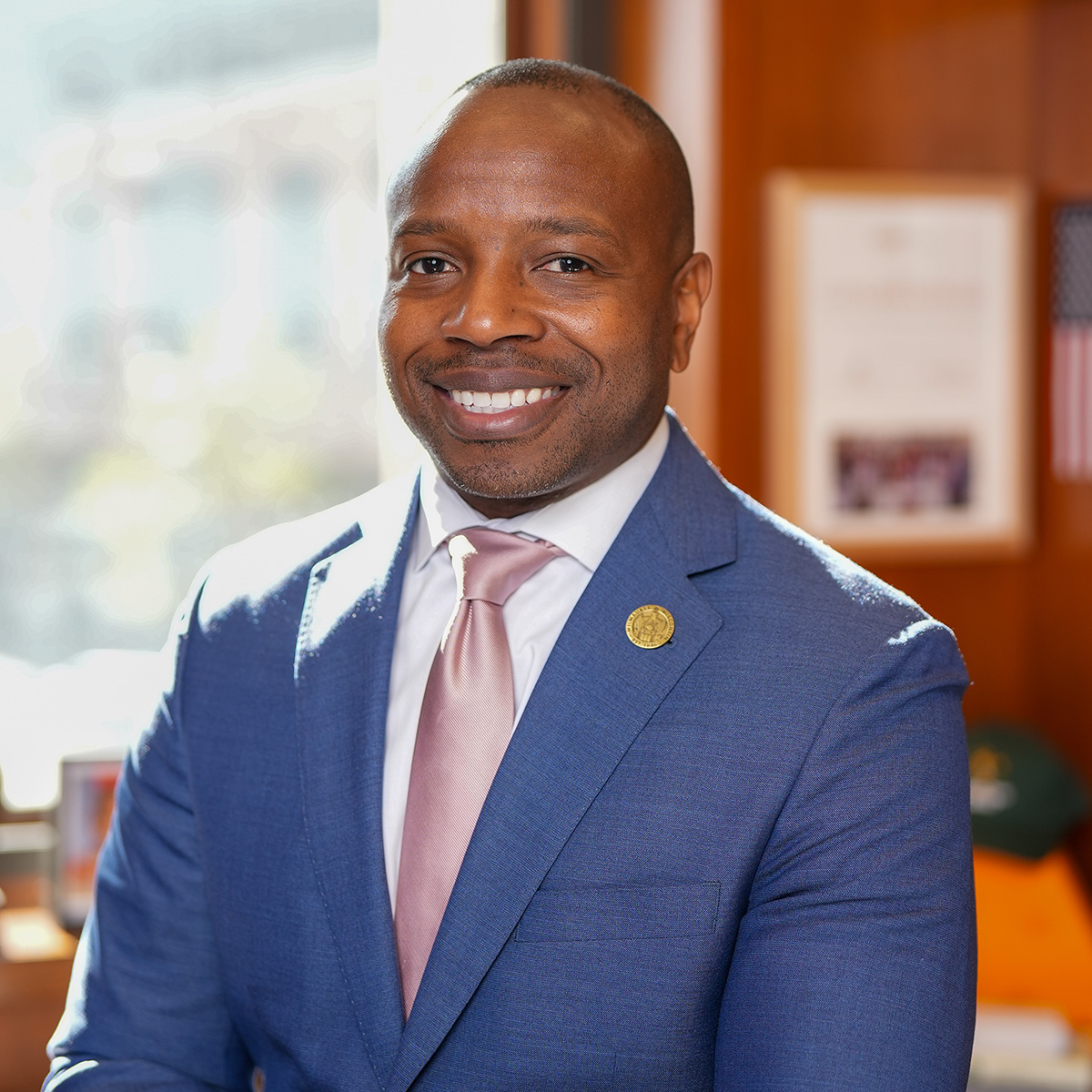
Mayor Johnson's agenda is organized around five policy pillars: building a growing city, creating affordable and healthy neighborhoods, advancing climate and environmental sustainability, maintaining fiscal responsibility, and delivering public safety. Each pillar reflects the administration's commitment to making Milwaukee a city where residents can live, work, and thrive for generations.
Explore the Mayor’s landmark initiatives by policy pillar by clicking on the images below.
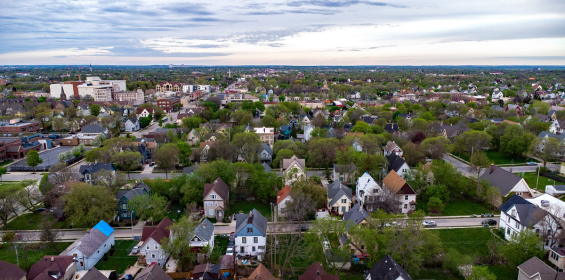
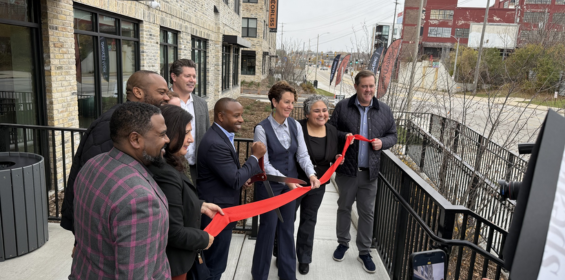
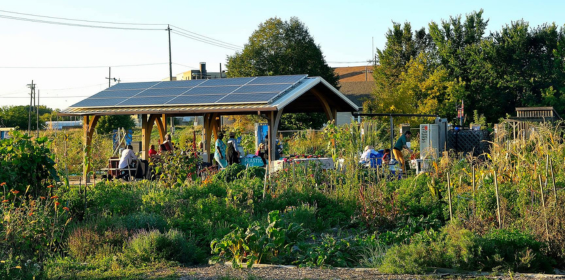

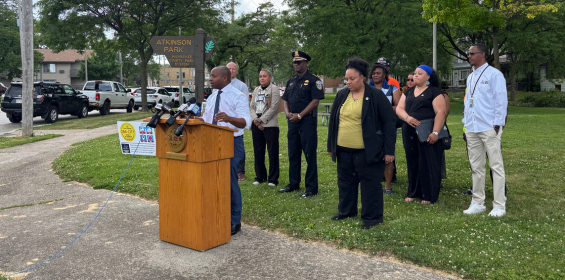
Stay up to date and explore how the City is creating safer streets to stronger neighborhoods, and a more sustainable city. The dashboard below organizes ongoing progress by the Mayor’s policy pillars. Use the filters to explore department accomplishment by year, quarter, or policy pillar.
Affordable & Healthy Neighborhoods
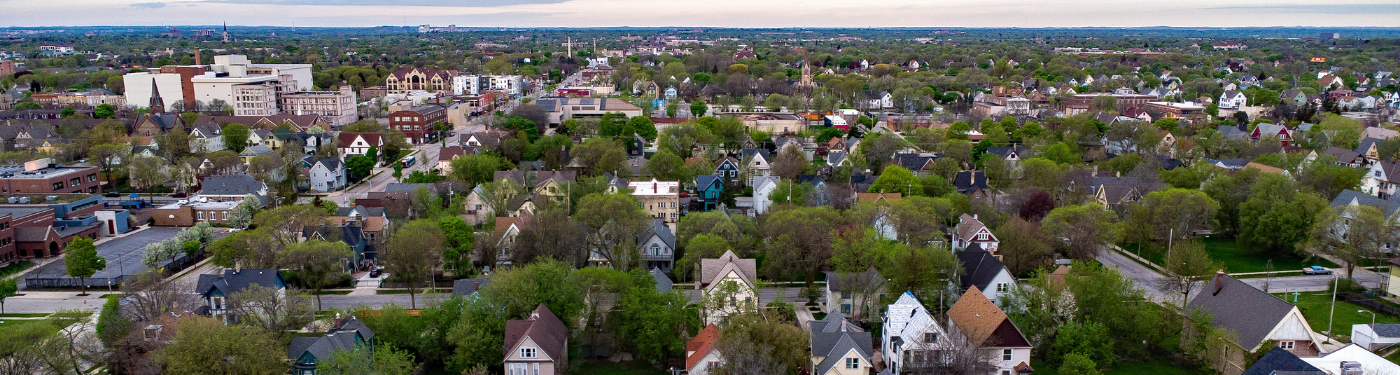
Mayor Johnson believes everything begins at home. That's why he invests in the programs and tools that help Milwaukee residents buy homes, stay in them, and build wealth in the neighborhoods they already call home.
The Workforce Housing Initiative leverages Tax Incremental Financing (TIF) to develop new residential properties and convert underutilized commercial and industrial buildings into revitalized, mixed-use housing throughout Milwaukee for residents earning between 60%-100% of the Area Median Income. These projects provide varied housing options across high-opportunity neighborhoods that are accessible to middle-income earners like teachers and service workers. By developing new housing and converting underutilized spaces into innovative residential properties citywide, this initiative supports economic vitality and ensures that working families can afford to live in communities with access to opportunities, while contributing to sustainable urban density and Milwaukee's broader housing diversity goals.
Preserving and Repairing Homes
Milwaukee's preservation and repair home loan programs offer homeowners 0% interest loans through the Compliance Loan Program and up to $25,000 through the STRONG Homes Loan Program to address property code violations and essential home repairs. These programs support Mayor Johnson's commitment to sustainable homeownership by helping residents maintain their properties and preserve Milwaukee's existing housing stock while strengthening neighborhood stability.
Leveraging Innovative TIF Districts
Backbone Tax Increment Districts leverage Tax Increment Financing to bridge the gap between construction costs and affordable sales prices, accelerating homeownership opportunities through single-family homes built on vacant lots in neighborhoods like Midtown and Harambee. This targeted approach supports Milwaukee's economic resilience by making homeownership development viable when rising construction costs would otherwise make such projects prohibitively expensive, while opening up critical funding for public works and infrastructure investments in these priority communities.
Assisting Home Buyers
The Milwaukee Home Down Payment Assistance Program offers grants of up to $7,000 to eligible Milwaukee residents to overcome financial barriers to homeownership, with increased support available in Community Development Block Grant Areas. This initiative reduces the upfront costs that often deter prospective homeowners and represents Mayor Johnson's complete strategy for addressing both supply and demand in Milwaukee's housing market, ensuring working families can compete and succeed in building wealth through homeownership.
Expanding Urban Tree Canopies
Nature in the City is a key pillar of Mayor Johnson’s Climate & Equity Plan to enhance Milwaukee’s urban ecosystem, anchored by a $12 million U.S. Forest Service urban-forestry grant, one of the largest city awards under the program. The initiative includes protecting environmentally sensitive lands, expanding green and healthy schoolyards, and incentivizing de-paving of commercial lots to reduce urban heat and improve stormwater management. It prioritizes disadvantaged neighborhoods, advancing environmental justice while mitigating heat-related and flooding risks for Milwaukee’s most vulnerable residents.
Build and Grow Citywide
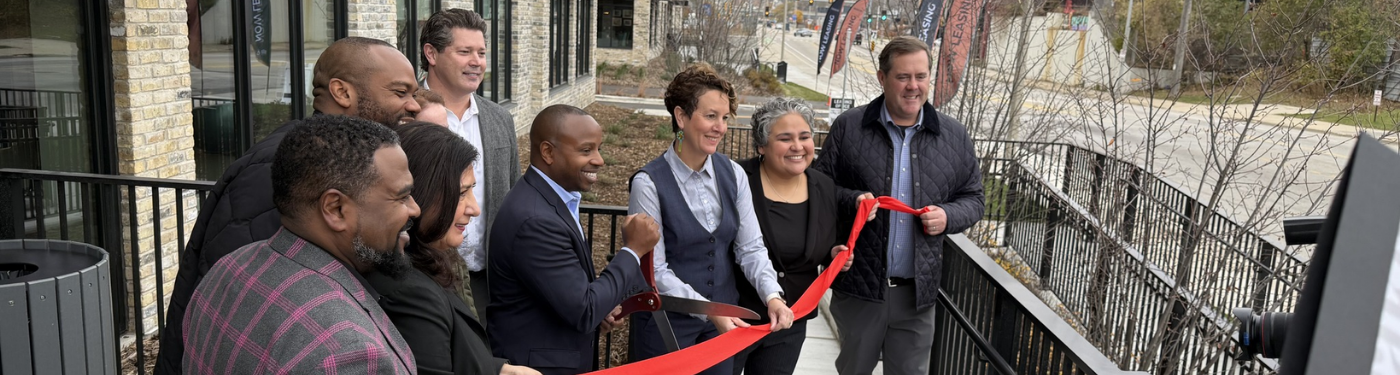
Mayor Johnson has a vision to grow Milwaukee’s population to one million residents. That means building a vibrant, modern urban environment where people want to live, work, and recreate in Milwaukee.
Creating Safe Streets for All
Safe Streets for All (SS4) represents Mayor Johnson's strategic approach to leveraging federal dollars to combat reckless driving, one of his top policy priorities since declaring it a public health crisis as his first act in office. Under Mayor Johnson's leadership, Milwaukee secured a major $4.4 million SS4A grant (with $1.1 million city match totaling $5.5 million) for "Accessible Intersections for All," focusing on 26 intersections along the city's most dangerous streets within the High Injury Network, the 10% of streets where 58% of serious crashes occur.
The Community-Led Traffic Calming Program was also launched by Mayor Johnson to empower residents to request traffic safety measures, for example, Paint the Pavement projects transform intersections with vibrant murals, and interim plazas that reclaim street space for community use. This strategy also targets Milwaukee's High Injury Network, such as the W. Locust Street at Sherman Park project, which delivered an 86% reduction in speeding after installing traffic circles and bump outs. These efforts demonstrate Mayor Johnson's comprehensive approach to leveraging funding to transform Milwaukee's most dangerous corridors while building community engagement in street safety solutions.
Expanding Protected Bikeways
The Bikeways Program represents Mayor Johnson's vision for a healthier, more connected Milwaukee community, leading to his proposal of a citywide bikeways network that promotes safe driving and fights reckless driving through strategic infrastructure investments. Under Mayor Johnson's leadership, Milwaukee achieved his goal of establishing 50 miles of protected bikeways and exceeded that goal one year ahead of schedule with over 51 miles built or under development. This initiative supports Mayor Johnson's vision where families can walk, ride bikes, and be active with safe transportation options for everyone, while reducing traffic interactions and potential hazards that contribute to reckless driving. By creating protected spaces for cyclists and pedestrians, this initiative promotes environmental sustainability and creates vibrant, accessible neighborhoods throughout the city.
Modernizing Permit Processes
The Permit and Development Center represents Mayor Johnson's systems-level transformation of Milwaukee's permitting process. It moves beyond department-specific improvements to restructure City operations for accelerated performance. Through electronic plan submittal (EPLAN) and a dedicated Business Liaison, the Department of Neighborhood Services now provides same-day permitting for walk-ins. These reforms create efficiency-driven service delivery models that support Milwaukee's broader community development and economic growth. Between 2023 and 2025, the Permit and Development Center reduced average permit issuance time by 33% (70 to 47 days), cut average plan review time nearly in half (26 to 14 days), and increased the share of plan reviews completed within 15 days from 19% to 66%. Over the same period, customer appointments grew 54%, customer satisfaction scores improved by 15%, and annual permit volume increased from 26,528 to 31,409.
Transforming Housing Landscapes
The Housing Element transforms Milwaukee's housing landscape by updating residential zoning rules to increase affordability and choice. Grounded in community input, it reduces zoning barriers and allows creative solutions such as additional residences on existing properties. The plan supports walkable urban neighborhoods and residential growth along commercial corridors. It also works to ensure all Milwaukee residents have access to housing solutions across their lifetimes.
Climate & Environmental Sustainability
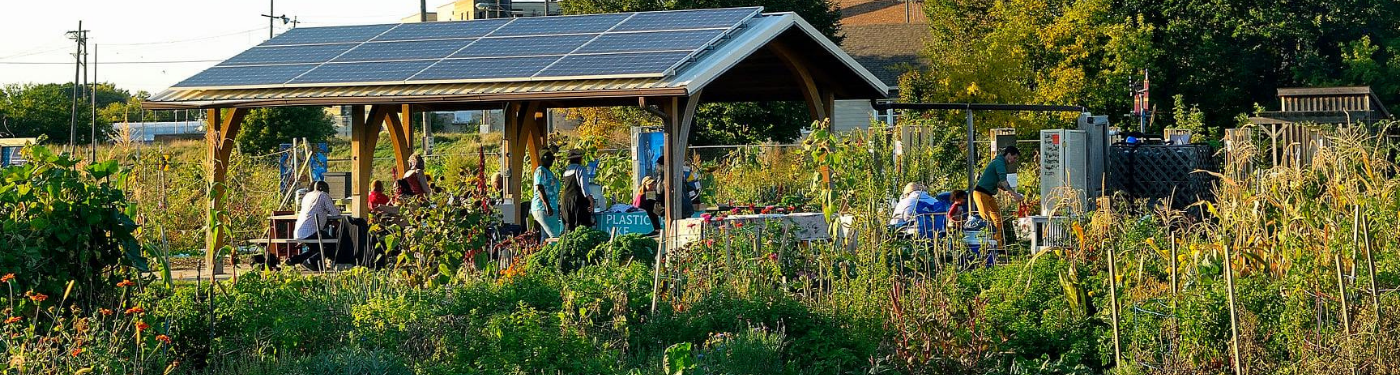
A warming climate presents real challenges for Milwaukee and real opportunities. Mayor Johnson is committed to addressing this crisis in a way that promotes growth, resilience, and protects our natural resources.
Combating Climate Change
The Milwaukee Climate and Equity Plan, sets ambitious targets to reduce community greenhouse gas emissions 45% by 2030 and achieve net zero emissions by 2050. Working with the Environmental Collaboration Office, Mayor Johnson is implementing initiatives across energy, transportation, food, and green infrastructure. These include joining the national Better Climate Challenge to reduce City operations emissions 50% by 2035 and developing a public EV charging network with 53 sites by 2030. Additional efforts convert five MPS schoolyards annually from asphalt to green play spaces and build partnerships to accelerate green jobs in the trades.
Greening the Electric Grid
Greening the Electric Grid and City Operations advances Mayor Johnson's Climate and Equity Plan by transitioning Milwaukee from fossil fuels to renewable energy. Today, 87 of 108 City-owned buildings run on renewable electricity, and 46% of the City's total electricity consumption now comes from renewable sources. The Mitchell Airport solar field powers 500 homes, while utility-scale partnerships supported WE Energies' development of solar farms now powering over 135,000 homes across Wisconsin. Mayor Johnson has also prioritized energy efficiency improvements and LED street lighting conversions that reduce operational costs across City facilities. The plan accelerates the shift away from fossil fuels by converting municipal fleets to electric vehicles and expanding the citywide EV charging network. These efforts target the 21% of local greenhouse gas emissions attributed to transportation while creating clean energy jobs for Milwaukee residents.
Reducing Food Waste and Promoting Sustainability
The Waste Reduction & Sustainable Consumption initiative addresses food waste through FEED MKE and the Mayor's Food Saver Challenge, a public-private partnership improving food redistribution. By reducing methane emissions from organic waste in landfills, the program advances Mayor Johnson's commitment to environmental sustainability and food justice. It tackles food insecurity in low-income neighborhoods while promoting sustainable consumption that strengthens the local economy and reduces environmental impact.
Fiscal Responsibility
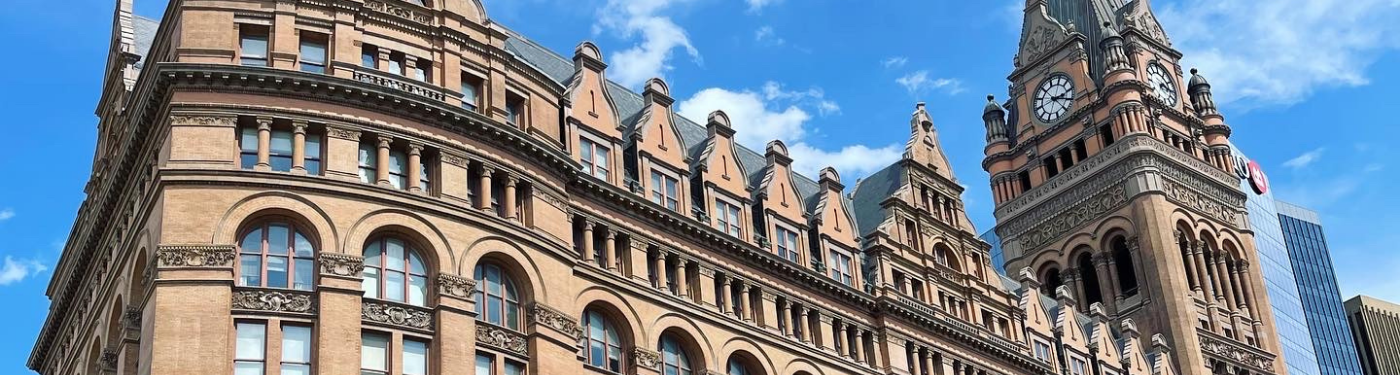
Like everything else, running a City has gotten more expensive in recent years. Mayor Johnson is working hard to ensure that quality and long-term sustainability of the services city residents depend upon.
Enabling Dedicated Revenue Streams
The 2% sales tax marked Milwaukee's transition from the largest U.S. city without a local sales or income tax to having a dedicated revenue stream. This bipartisan shared revenue agreement generates necessary revenues for public safety and pension obligations, stabilizing Milwaukee's long-term financial landscape. It works to ensure the City can maintain vital community services while meeting its long-term financial responsibilities.
Driving Municipal Innovation
The Office of Innovation, established by Mayor Johnson, spearheads strategic planning efforts to enhance the efficiency and stewardship of Milwaukee's city resources through pilot programs and demonstration projects aimed at improving quality of life. This Mayor Johnson initiative identifies and tests innovative solutions that improve how city departments operate and serve residents, collaborating closely with public, non-profit, and private sector partners to recommend, implement, and address challenges and inefficiencies across city operations. Recent pilots include GovAI, an enterprise AI chatbot platform built for government use that delivers citywide access to large language model tools at a fraction of the cost of comparable commercial alternatives.
Public Safety
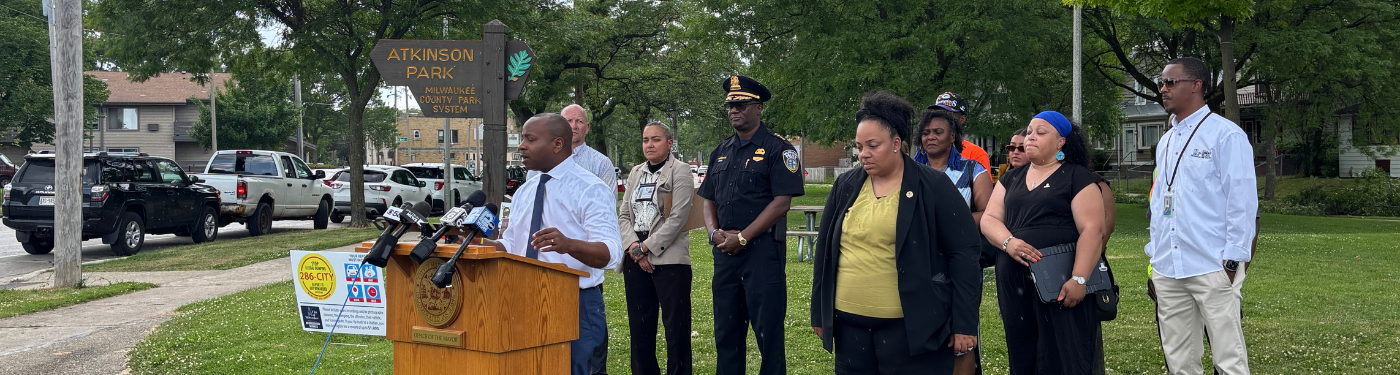
Mayor Johnson's Public Safety Strategy employs a comprehensive three-pronged approach: investing in long-term crime prevention and intervention, holding accountable those who cause death, harm, and destruction, and responding to emergencies with high-quality lifesaving services
Expanding Police Force Capacity
Increasing the size of the police force supports public safety in Milwaukee by expanding the police force through dedicated funding for competitive salaries and comprehensive training to improve clearance rates and stabilize case backlogs. Mayor Johnson secured a dedicated funding stream through sales tax to support the City's ability to maintain a robust police force focused on improving clearance rates and provide justice to victims and families. This initiative establishes a specialized traffic safety unit focused on reducing traffic infractions, ensuring faster response times and more effective crime resolution throughout Milwaukee's neighborhoods.esponse times and more effective crime resolution throughout Milwaukee's neighborhoods.
Preventing Community Violence
The Department of Community Wellness and Safety, established by Mayor Johnson, deploys Critical Response Teams and Violence Interrupters to mediate conflicts and prevent violence escalation. Trauma-informed care is delivered through Promise Keepers and Credible Clinicians and Healers, healing communities affected by violence. Initiatives like Blueprint for Peace and ReCAST empower communities by addressing the social determinants of health driving violence. Youth-focused programs like the Youth Ambassador Program prepare the next generation of community leaders with skills and opportunities to contribute to Milwaukee's future.
Empowering Youth Through Programming
Youth Programming includes Camp RISE for ages 10-13 and Earn and Learn for ages 14-24, providing leadership training, career exploration, and paid work experiences with local organizations. Camp RISE, founded by Mayor Johnson in 2022, the only program in the country that provides youth ages 10-13 with a stipend for work experience. Camp RISE offers six weeks of career exploration, financial literacy, and community service, while Earn and Learn provides youth ages 14-24 with work experience with local businesses and organizations. These programs represent Mayor Johnson's long-view approach to prevention, introducing young people to positive opportunities that strengthen Milwaukee's future workforce while keeping youth engaged in constructive pathways.
Reopening Fire Stations
The Milwaukee Fire Department has reopened fire stations that had been closed during recent years, restoring emergency response capacity in neighborhoods. Fire Station 17, near Mitchell Airport, reopened in 2024 after closing in 2020 and Fire Station 31 on the south side reopened in 2025 after nearly eight years of closure. Under Mayor Johnson, Milwaukee is reinvesting in the emergency response infrastructure that years of budget pressures had made difficult to maintain.
Reducing Overdose Deaths
The Milwaukee Overdose Response Initiative (MORI), led by the Milwaukee Fire Department, deploys mobile integrated health teams pairing community paramedics with peer support specialists. These teams reach residents following nonfatal overdoses and connect them to treatment, harm reduction, and recovery services. In 2024 alone, MFD administered Narcan 960 times through MORI and made 780 community contacts. Mayor Johnson signed legislation in October 2025 accepting a grant from the Advancing a Healthier Wisconsin Endowment to expand MORI's reach. This work advances his commitment to meeting residents where they are and ensuring every community has access to life-saving resources.